How to Change the A/C Filter on a Volvo XC60?

Your vents smell faintly musty every time the AC kicks on, and airflow feels weaker than it used to. That’s almost never a refrigerant problem — it’s a $20 cabin air filter that’s been quietly clogging behind your glove box, and swapping it is one of the easiest jobs you can do yourself.
TL;DR
- The “A/C filter” is Volvo’s cabin air filter, located behind the glove box on the passenger side, not under the hood.
- Most jobs need only a T20 or T25 Torx screwdriver — no special tools required.
- Volvo recommends replacement roughly every 15,000 miles, sooner if you drive in dusty or high-pollen conditions.
- You often don’t need to fully remove the glove box — some model years only require pulling a small access panel below it.
- New filters have a directional arrow — installing it backward reduces airflow and filtration effectiveness, so check orientation before sliding it in.
The Quick Answer
To change the A/C filter on a Volvo XC60, open the passenger door, remove the small access panel below the glove box (held by two Torx screws), unclip the filter housing cover, slide out the old filter, and install the new one facing the correct airflow direction. On most model years this takes about 10–20 minutes with basic hand tools, though some generations require more disassembly than others.
Step 1: Know What You’re Actually Replacing
Your XC60 has two separate air filters, and they’re easy to mix up. The engine air filter sits under the hood and protects the engine from dirt and debris. The cabin air filter — what most people mean by “A/C filter” — is what actually filters the air blowing through your vents, and it’s the one responsible for that musty smell and weak airflow. This guide covers the cabin filter, since that’s the one tied to A/C performance and cabin air quality.
Quick Tip: If your symptom is a smell or weak vent airflow rather than an engine issue, you want the cabin filter, not the engine air filter — they’re in completely different locations and aren’t interchangeable.
Step 2: Gather What You Need
- A T20 or T25 Torx screwdriver (bit size varies by model year — have both on hand)
- The correct replacement cabin filter for your specific model year (confirm part number before ordering, since sizes have changed across generations)
- A flashlight, since the space behind the glove box is tight and dim
Expert Insight: Double-check your filter part number rather than trusting a generic listing. Owners have reported ordering a filter that matched an older generation’s size by mistake, only to find it noticeably too small once they opened the box — confirm fitment against your specific model year before you buy.
Step 3: Access the Filter Housing
- Open the passenger door and locate the small plastic panel just below the glove box.
- Remove the two Torx screws holding it in place.
- Pull the panel down and toward you — it releases from a set of plastic clips, and may need a firm but controlled tug.
- If there’s a wire connector or footwell light attached to the panel, disconnect it before setting the panel fully aside.
On some model years, you’ll find the cabin filter housing directly behind this panel. On others — particularly certain trims and generations — reaching the filter fully requires additional steps, like moving a fuse box aside or removing a side kick panel. If the panel comes off easily and the filter housing is immediately visible, you’re on the simpler path.
Quick Tip: Before removing anything, move the passenger seat all the way back. It sounds unnecessary, but it makes a real difference in how much working room you have with your hands and a screwdriver in that tight space.
Step 4: Remove the Old Filter
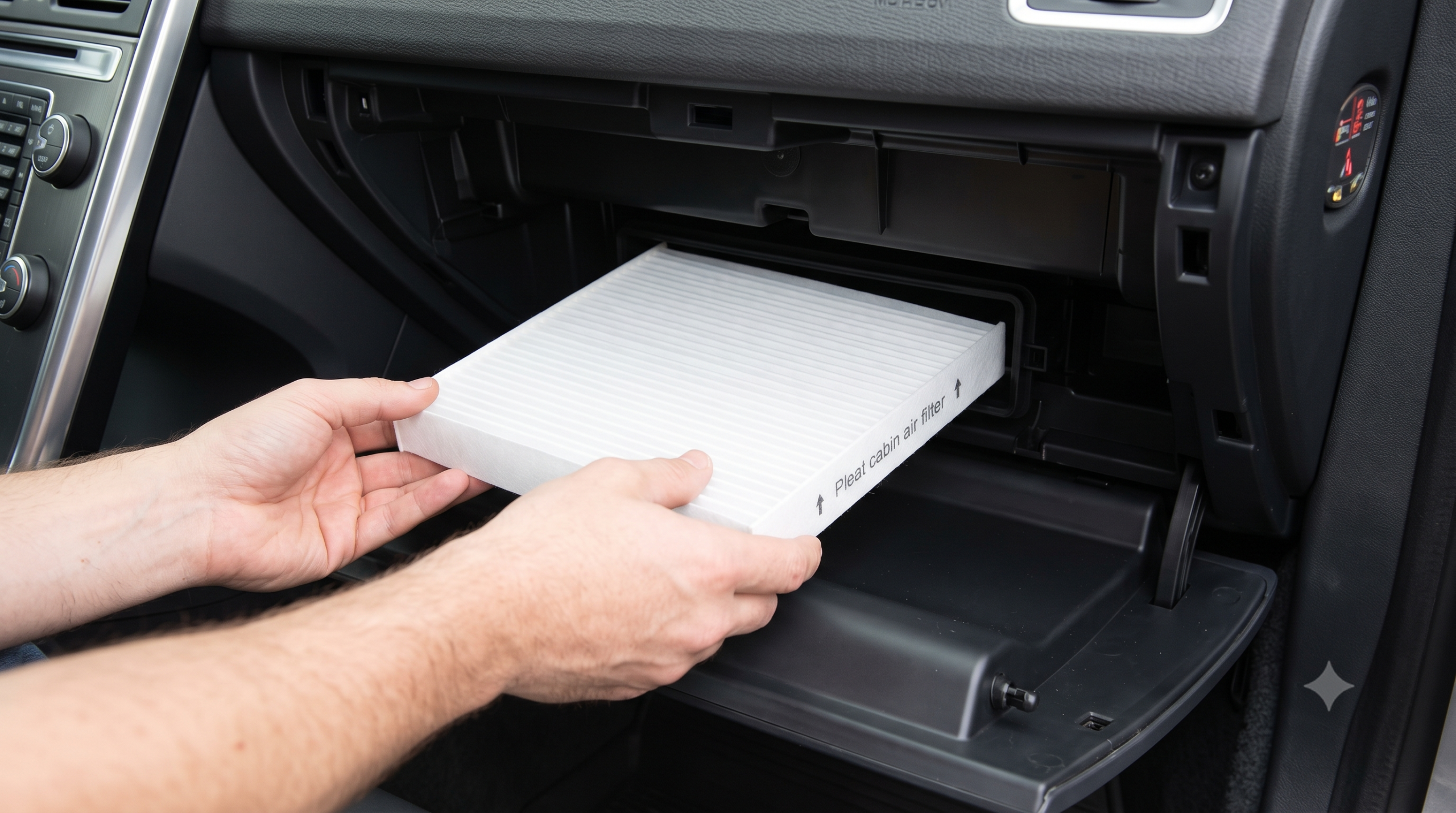
The filter housing cover is typically held by two twist-lock latches. Turn each about a quarter turn to unlock them, then pull the cover down and off — it may still be connected to an air hose, in which case gently set it aside rather than disconnecting it further.
Pull the old filter straight down and out. Take a look at it before tossing it — a heavily discolored, compressed, or debris-packed filter confirms it was overdue.
Real-world scenario: An owner replacing their filter for the first time finds it noticeably harder to pull out than expected, assumes something’s broken, and stops mid-job. In most cases this is normal — the space is simply tight by design, and a bit of firm, careful wiggling (not force against anything that resists strongly) gets it free.
Step 5: Install the New Filter Facing the Right Direction
This is the step people most often get wrong. The new filter has an airflow direction arrow, or a fibrous white side and a wire-mesh side — the white fibrous side generally faces the direction air is coming from (toward the engine/outside), not the cabin. Compress the filter slightly to match the curve of the housing if needed, then slide it into place.
Expert Insight: If your replacement filter only has an arrow and no diagram, don’t guess. Cross-reference your specific filter brand’s installation instructions — Volvo’s OEM filter often shows a small car diagram indicating flow direction that can look reversed at a glance compared to aftermarket brands.
Step 6: Reassemble
Snap the filter housing cover back into its twist-locks, reconnect the access panel below the glove box (including any wiring), and reinstall the two Torx screws. Turn the A/C on and confirm airflow feels normal — a properly seated filter shouldn’t restrict flow noticeably compared to before.
Comparison Table: DIY vs. Shop Replacement
| Factor | DIY | Professional Shop |
|---|---|---|
| Parts cost | $15–$40 | Same part, marked up at some shops |
| Labor cost | $0 (your time) | $80–$200+ in labor |
| Total cost | $15–$40 | $95–$240 |
| Time | 10–20 minutes (30–45 for first-timers) | Often bundled into an oil change visit |
| Tools needed | T20/T25 Torx screwdriver | Shop tools |
Pros and Cons by Owner Type
The Budget-Conscious DIYer
- ✅ One of the cheapest, most beginner-friendly maintenance jobs on the entire car.
- ✅ Meaningful savings — potentially $150+ versus dealer labor pricing.
- ❌ Tight working space means your first attempt may take longer than the “10-minute” estimate suggests.
The Allergy-Sensitive Driver
- ✅ More frequent replacement (every 6 months or 6,000 miles as a check interval) meaningfully reduces pollen and dust exposure inside the cabin.
- ❌ It’s easy to forget this maintenance item since it doesn’t trigger a dashboard warning light like other services.
The First-Time Volvo Owner
- ✅ Basic tools are all that’s required — no specialty equipment.
- ❌ Some model years require extra disassembly (fuse box, kick panel) that isn’t obvious until you’re partway into the job — read ahead for your specific year before starting.
FAQ
Q: Where exactly is the A/C filter on a Volvo XC60? A: It’s the cabin air filter, located behind the glove box on the passenger side — not under the hood, which houses the separate engine air filter.
Q: How often should I replace it? A: Volvo generally recommends about every 15,000 miles, though more frequent checks (every 6 months or 6,000 miles) are worth doing if you drive in dusty, high-pollen, or high-pollution conditions.
Q: Do I need to remove the entire glove box to change it? A: Not always. Many owners successfully replace the filter by removing only the small access panel below the glove box, though some model years and trims require more disassembly.
Q: Which way does the new filter face? A: Match the airflow direction arrow on the new filter, or orient the fibrous white side toward where air enters the system rather than toward the cabin — check your specific filter’s included diagram since orientation markings vary by brand.
Q: Can I use a generic aftermarket filter instead of the Volvo OEM part? A: Yes, as long as you confirm the correct part number for your specific model year — some generic listings have been reported as mismatched to older generations, so double-check fitment before ordering.
Key Takeaways
- The “A/C filter” is the cabin air filter, located behind the passenger-side glove box, not the engine air filter under the hood.
- Most jobs need just a T20/T25 Torx screwdriver and about 15–20 minutes.
- Volvo recommends replacement roughly every 15,000 miles.
- Installing the filter in the wrong airflow direction reduces its effectiveness, so confirm orientation before sealing the housing back up.
- DIY replacement typically costs $15–$40 in parts versus $95–$240 at a shop.
Next Step
Confirm the correct cabin filter part number for your specific XC60 model year before you order — that single check avoids the most common first-timer mistake and gets the whole job done in one sitting.