Does the Volvo XC90 Take Regular Gas?

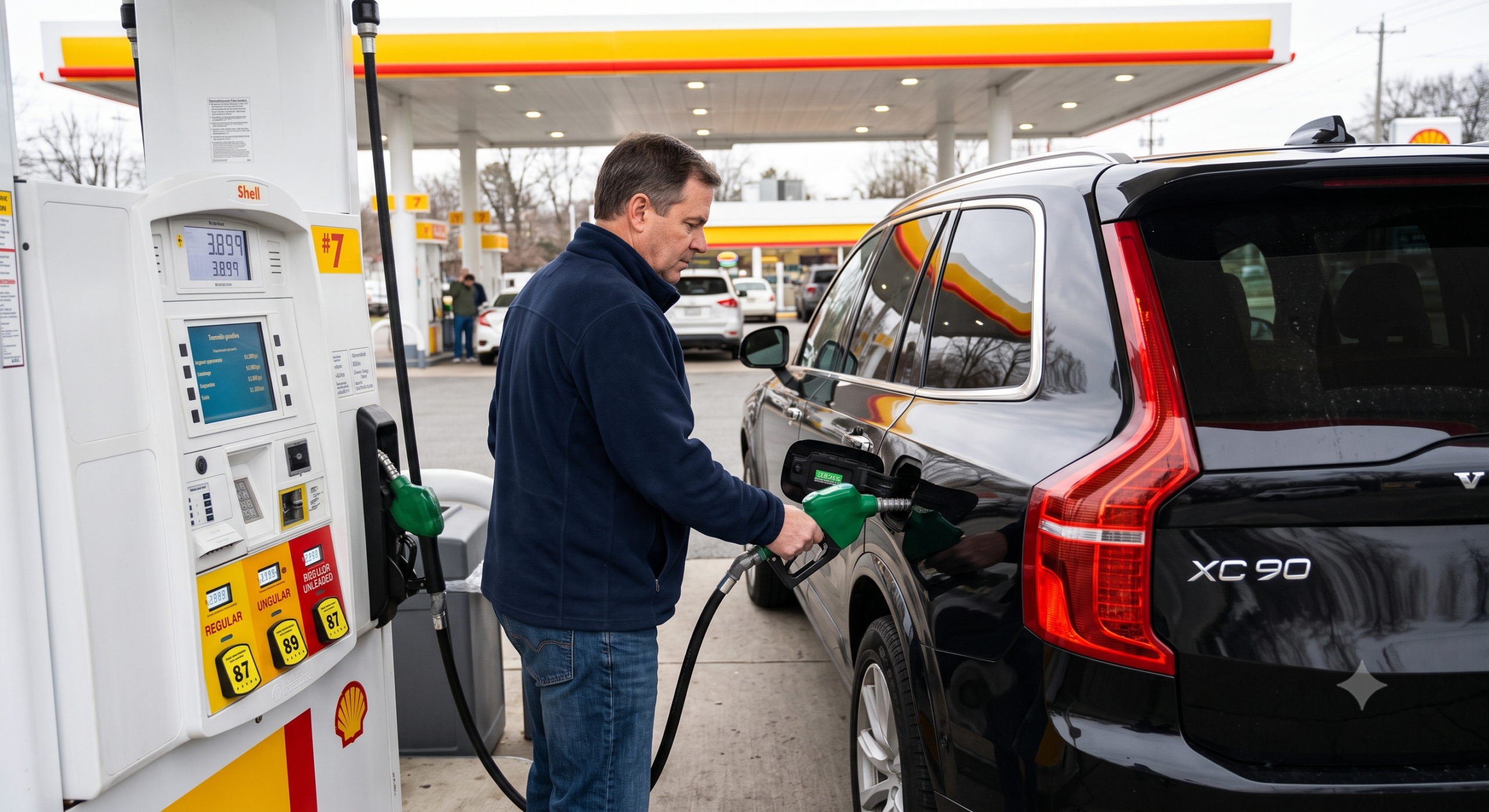
You’re standing at the pump, staring at three buttons, and your Volvo’s manual is sitting at home on the kitchen counter. Regular is cheaper. Premium is right there too. Which one actually belongs in your XC90?
TL;DR:
- Volvo requires premium fuel with an octane rating of 91 or higher for all B4, B5, B6, and T8 engines, and recommends AKI 93 for the best performance and fuel economy
- Regular 87 octane won’t damage a T5 engine’s reliability, but it’s not the recommended choice
- Older, pre-2015 first-generation XC90 models can use 87 octane temporarily, though 91 is still advised for optimal performance
- Running regular in a modern XC90 mainly costs you performance and fuel economy, not your engine
- E10 fuel (10% ethanol) is fine, but E15 and E85 should be avoided
Short answer: No, your modern Volvo XC90 shouldn’t run on regular gas long-term. Volvo requires 91 octane or higher for every current engine option and recommends 93 for the best results. You can put regular in during an emergency without wrecking anything, but it’s not how the SUV was built to run.
What Octane Does the Volvo XC90 Actually Need?
Every current XC90 engine needs premium fuel, not regular. Volvo requires an octane rating of 91 or higher for all B4, B5, B6, and T8 engines, and recommends 93 octane for ideal performance and fuel economy.
Quick Tip: Check the inside of your fuel filler flap. If it has a premium fuel label, that’s your car telling you exactly what it needs — no guessing required.
Here’s the thing that trips people up: “premium” isn’t just marketing. Premium gas is engineered to handle the higher pressure inside turbocharged and supercharged engines, which is exactly what’s under the hood of every current XC90 trim.
Can You Actually Put Regular Gas in an XC90?
You can, and it won’t instantly break anything. The XC90 can run on regular 87 unleaded octane without affecting engine reliability on T5 engines, though premium 91 or higher is what Volvo recommends to optimize performance.
Owner reports back this up. In one long-running forum thread, an XC90 driver ran mid-grade 89 octane for over 2,300 miles and reported no engine noise or drop in performance, with fuel economy staying steady around town. That’s not premium, but it’s also not regular.
Here’s a real-world scenario: you’re on a road trip, the tank’s nearly empty, and the only station for 40 miles has regular and nothing else. Fill up. It’s better to put in regular gas than run empty in an emergency — just top off with premium at the next station you find. Your engine will forgive you. Your wallet, on the other hand, might notice the mileage dip.
Choose regular gas if: you’re in a genuine emergency and premium isn’t available nearby. Choose premium if: you’re doing normal, everyday driving — which, let’s be honest, is basically every other time.
Does Engine Type Change the Answer?
Yes — older and smaller-engine XC90s are more flexible than newer, turbocharged ones. Second-generation XC90s built from 2015 onward require 91-octane premium for optimum performance, while first-generation models from 2006–2014 advise 91 octane but can use 87 temporarily.
If you’ve got a newer plug-in hybrid, don’t assume the electric motor lets you off the hook. Even in hybrid models like the T8 Recharge, the gasoline engine still benefits from premium fuel when it kicks in on longer trips.
Octane Requirements by XC90 Generation
| XC90 Generation / Engine | Minimum Octane | Recommended Octane | Regular Gas OK? |
|---|---|---|---|
| Pre-2015 (T5 base engine) | 87 (temporary) | 91 | Yes, short-term |
| Pre-2015 (T6 engine) | 91 | 91–93 | Not recommended |
| 2015+ B4/B5/B6 | 91 | 93 | Emergency only |
| 2015+ T8 Plug-in Hybrid | 91 | 93 | Emergency only |
Expert Insight: A 2025 dealership fuel guide noted that B6 mild-hybrid systems specifically benefit from premium fuel to optimize both efficiency and acceleration — so “mild hybrid” doesn’t mean “mild fuel needs.”
What Happens If You Use Regular Gas Anyway?
Nothing catastrophic happens immediately, but performance quietly takes a hit. One owner noted that after his wife accidentally filled up with regular, the car “performed like a dog,” with a noticeable hit to both power and gas mileage.
That’s the pattern across most owner reports: no grinding, no smoke, just a car that feels a little less like itself. Think of it like sending a marathon runner out on gas-station coffee instead of their usual breakfast — they’ll finish the run, but they won’t be setting any personal records.
Quick Tip: If you hear a knocking or pinging sound after fueling up, that’s pre-detonation — it happens when the octane is too low for the engine’s compression, and it’s the higher octane in premium fuel that prevents it.
Pros and cons by driver type:
The budget-conscious commuter
- Pro: Saves roughly 30–50 cents per gallon on regular
- Con: Fuel economy losses can eat into those savings over time
The road-tripper
- Pro: Regular gas as a stopgap keeps you moving when premium isn’t available
- Con: Reduced performance towing or climbing grades, where power matters most
The long-term owner
- Pro: None — sticking with recommended octane protects resale condition
- Con: Repeated regular-gas use is the one habit with no upside here
What About Ethanol Blends?
Ethanol content matters more than most owners realize. E10 fuel, meaning gas with 10% ethanol, is fine for the XC90, but E15 and E85 should be avoided entirely.
Higher ethanol blends aren’t built for this engine’s fuel system, and using them risks both performance issues and warranty complications. Stick to standard E10 at any regular station and you’re in safe territory.
Is Premium Gas Worth the Extra Cost?
For most owners, yes — the math is closer than the price gap suggests. With an 18.8-gallon tank and premium costing around 50 cents more per gallon, that’s roughly $9.40 extra per fill-up, which adds up to real money over a year of driving.
But that number only tells half the story. Using the recommended fuel can improve fuel economy by around 2–3% and helps avoid the kind of repair costs that dwarf any savings from cheaper gas. It’s less “extra expense” and more “insurance you pay for at the pump.”
Alternative approach — choose mid-grade (89) if: you want a middle ground between cost and performance and your specific engine hasn’t shown any pinging issues on it, as some owners have done successfully.
FAQ
Does putting regular gas in a Volvo XC90 void the warranty? Using the wrong fuel type generally isn’t what voids warranties — it’s more about avoiding leaded fuel or E15/E85, which can create real problems. Occasional regular gas in an emergency isn’t going to trigger a warranty denial, but it’s not something to make a habit.
Can I mix regular and premium gas in my XC90? Yes, gas tanks blend automatically, and there’s no harm in topping off a tank of premium with regular in a pinch. Just fill back up with premium at your next stop to get back to spec.
Which XC90 engines can safely run on regular gas? Pre-2015 first-generation XC90s can use 87 octane temporarily, while T5-engine models specifically won’t suffer reliability issues on regular. Every 2015-and-newer B4, B5, B6, and T8 model is built around premium.
Will regular gas hurt my gas mileage? Often, yes. Owners have reported noticeably worse fuel economy after accidentally using regular instead of the recommended octane.
How do I know exactly what my XC90 needs? Check the label inside your fuel filler flap — Volvo places a premium fuel label there on every vehicle that requires it — or look up your specific model year and engine code in the owner’s manual.
Key Takeaways
- Modern XC90s (2015+) require 91 octane minimum, with 93 recommended for best performance
- Regular 87 octane won’t ruin your engine, but it will cost you performance and fuel economy
- Older T5-engine XC90s (2006–2014) tolerate regular gas better than newer turbocharged trims
- Stick to E10 ethanol blends; skip E15 and E85 entirely
- The extra cost of premium is often offset by better fuel economy and fewer long-term repair risks
- When in doubt, the fuel filler flap label is your fastest, most reliable answer
What To Do Next
Pop open your fuel filler flap right now and check the label — that thirty-second check settles the debate for your specific XC90, no manual required.