How to Start a Volvo With a Key?

You’re sitting in a Volvo, maybe your own, maybe borrowed, maybe a used one you just picked up, and the ignition doesn’t look like any car you’ve driven before. That’s not you being bad with cars. Volvo has used at least three genuinely different starting systems over the decades, and they all work differently enough to trip up an experienced driver.
TL;DR
- Older Volvos use a traditional key: insert it into the ignition slot and turn clockwise.
- P1/P2-era “semi-keyless” Volvos (like the C30, C70, S40, V50) replace the key slot with a turnable knob, and you insert the fob only if that knob is missing.
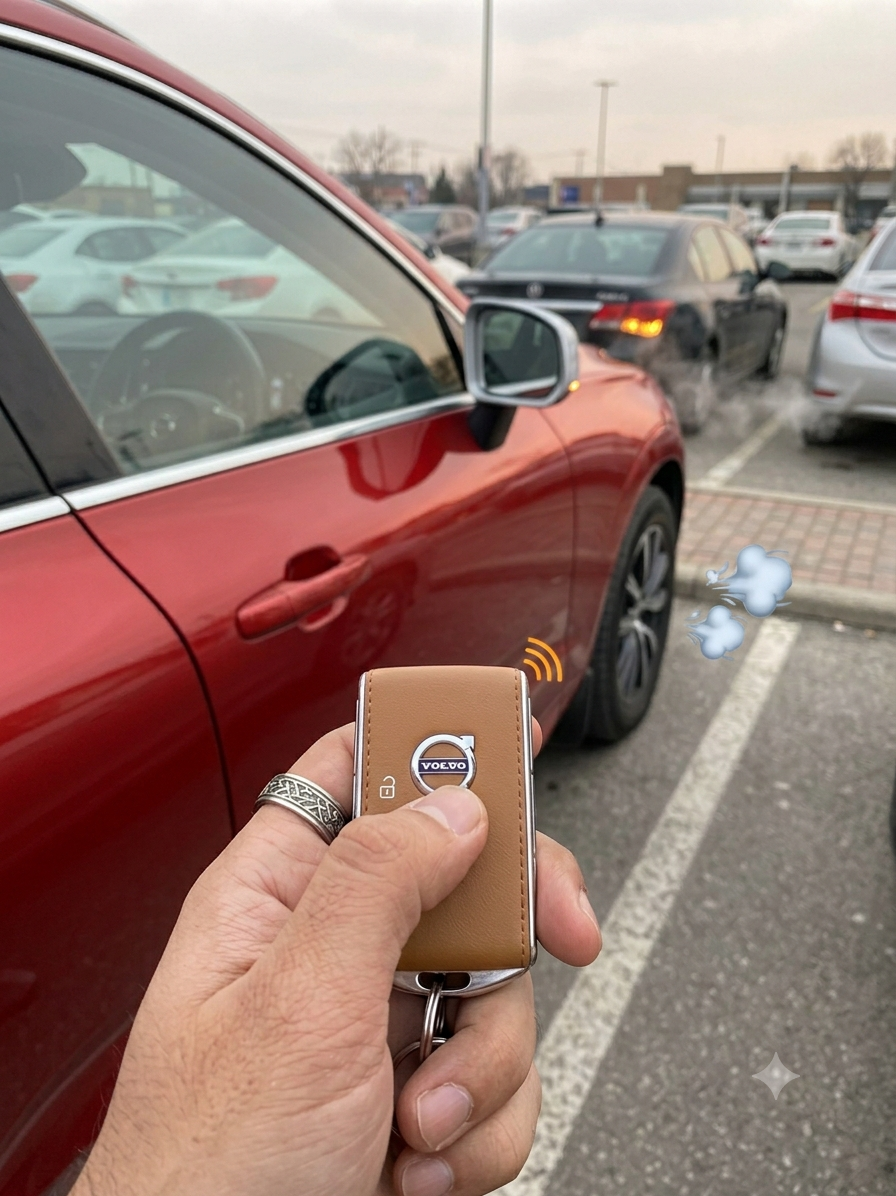
- Modern Volvos use passive keyless start: keep the fob anywhere in the car, press the brake, and push the Start/Stop button.
- Every system has a backup method if the fob battery dies, usually a hidden metal key blade and a designated contact point inside the car.
- Check your owner’s manual or the ignition area itself if you’re unsure which system your Volvo uses; it’s usually obvious once you know what to look for.
The short answer: look at your ignition. A slot means insert and turn. A knob with no slot means twist it like a stove burner. A button next to the wheel with no slot or knob means keep the fob on you, brake, and push. Everything else in this guide covers the details and the backup plans for each.
System 1: The Traditional Key (Insert and Turn)
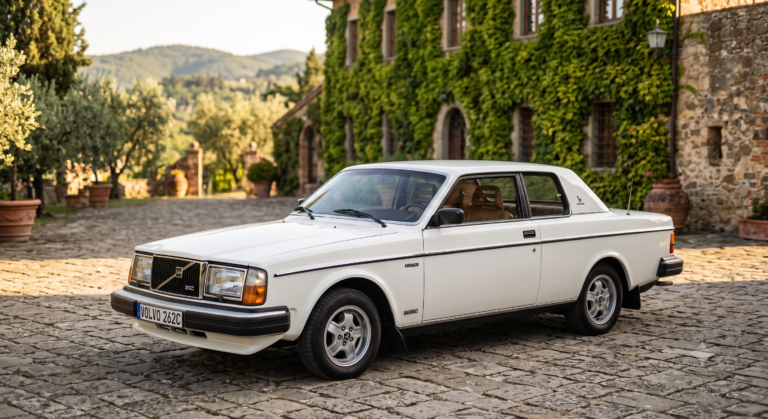
This is the classic method, and it’s still what you’ll find in older Volvos, including many heritage and pre-2000s models. If your Volvo has a visible ignition slot beside the steering column, this is your system.
Steps:
- Insert the key with the pointed end first.
- Turn it clockwise.
- Hold until the engine catches, then release back to the run position.
If it won’t start: confirm the transmission is in Park (automatic) or Neutral (manual) before trying again, since Volvo’s ignition interlock won’t engage otherwise.
Quick Tip: A key that turns hard or feels gritty is often a sign of a worn ignition cylinder rather than a bad key. Don’t force it, since a sheared key in the ignition is a much more expensive problem than a worn cylinder.
System 2: The “Stove Knob” Semi-Keyless System
This one confuses even longtime Volvo owners. Cars like the P1-platform C30, C70, S40, and V50 replaced the traditional key slot with a rotating knob, often nicknamed the “stove burner knob” for its resemblance to a kitchen range dial.
How it works: with the key fob anywhere on you, like your pocket, you simply turn the knob like you would a traditional key. No insertion required, since the fob communicates wirelessly the moment you’re in the car.
If the knob is missing: it’s a common issue on used P1-platform cars, since the knob can be lost or removed by a previous owner. If yours is missing, you can typically start the car by inserting the key fob itself directly into the empty ignition slot in its place.
Expert Insight: This system is genuinely “keyless drive,” not just keyless entry. The distinction matters: keyless entry just means the doors unlock without pressing a button, while keyless drive means you never have to touch or insert the key to start the engine at all.
System 3: Modern Push-Button Start
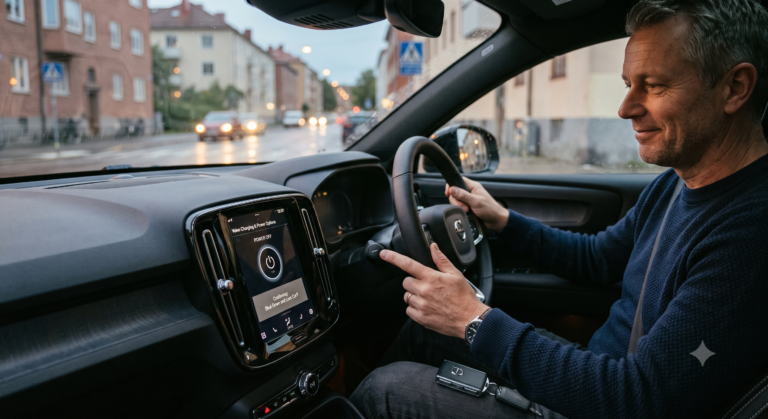
Every current Volvo, and most models built over roughly the last decade, uses this system. There’s no ignition slot and no knob, just a Start/Stop button next to the steering wheel.
Steps:
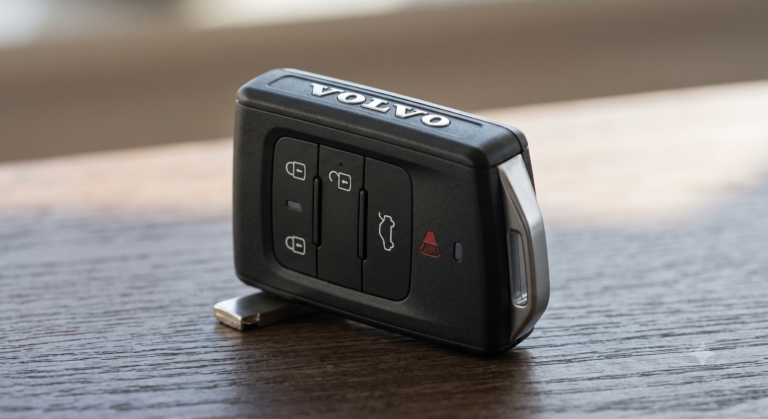
- Have the key fob anywhere inside the car, a pocket, bag, or cupholder all work.
- Sit down, close the door, and press the brake pedal.
- Push the Start/Stop button.
- Wait for the dashboard to fully illuminate before shifting into gear.
Real-world scenario: You’re loading groceries into your Volvo with the fob buried in your coat. You get in, brake, push start, and drive off without ever touching the fob directly, exactly the convenience this system was built around.
Comparing the Three Systems
| System | Found In | How You Start It | Backup If Fob Dies |
|---|---|---|---|
| Traditional key | Older/classic Volvos | Insert key, turn clockwise | Replace battery in fob if equipped; mechanical key otherwise |
| Semi-keyless knob | P1-platform (C30, C70, S40, V50) and similar era | Turn the knob with fob nearby | Insert fob directly into knob’s slot if knob is missing |
| Push-button start | Current and recent Volvos | Fob in car, brake, push button | Hidden backup reader inside the car reads the fob’s passive chip |
Choose to check your ignition area first if: you genuinely don’t know which system you have, since a quick look tells you more than guessing from the model year alone.
Choose the owner’s manual if: your Volvo is a less common trim or an imported model, since starting procedures occasionally vary by market even within the same model year.
What To Do If the Key Won’t Start the Car
For traditional key systems:
- Confirm the gear is in Park or Neutral
- Check for a weak 12V battery if the dash lights are dim
- Inspect the key for wear if it turns with unusual resistance
For push-button systems:
- Confirm the fob is genuinely inside the cabin, not left in a bag in the trunk
- Use the vehicle’s hidden backup reader, usually in the tunnel console near the cupholders, if the dashboard shows “key not detected”
- Access the hidden mechanical key blade inside the fob to unlock the door manually if remote unlock also fails
Pros and Cons by Owner Type
The classic car enthusiast (owns an older Volvo with a traditional key):
- Pros: Simple, mechanical, and easy to troubleshoot without electronics.
- Cons: No backup if you lose the physical key; replacement often requires cutting a new blade and reprogramming an immobilizer chip.
The used P1-platform owner (C30, C70, S40, V50):
- Pros: Genuine keyless drive convenience well ahead of its time for its era.
- Cons: A missing ignition knob is a surprisingly common used-car annoyance, and replacements aren’t always in stock at every parts counter.
The modern Volvo owner (push-button start):
- Pros: The most convenient system, with a genuine backup plan built in for dead fob batteries.
- Cons: New drivers sometimes instinctively search for a key slot that simply doesn’t exist.
FAQ
How do I know which starting system my Volvo has? Look at the area right of your steering wheel. A visible slot means a traditional key. A round knob with no slot means the semi-keyless system. A flat button with neither means push-button start.
Can I start any Volvo without touching the key fob at all? Only on modern push-button start models, since the fob just needs to be inside the car. Traditional key and semi-keyless systems still require you to physically turn something.
What do I do if my Volvo’s ignition knob is missing? On P1-platform models like the C30 or C70, you can typically insert the key fob directly into the empty knob slot to start the car, though replacing the actual knob is the more permanent fix.
Does a dead key fob battery stop any of these systems from working? No system leaves you fully stranded. Traditional keys don’t rely on a battery at all, semi-keyless models let you insert the fob directly, and push-button models have a dedicated backup reader inside the cabin.
Is a Volvo with a turning knob considered keyless entry or keyless drive? It’s keyless drive, a step beyond basic keyless entry, since you never insert or turn a traditional key to start the engine, only the fob-linked knob.
Key Takeaways
- Volvo has used three distinct starting systems across its model history: traditional key, semi-keyless knob, and push-button start.
- Check the ignition area itself to identify which system your Volvo uses.
- Every system has a backup plan for a dead or missing key component.
- Push-button start models never require touching the fob directly, just having it somewhere in the cabin.
- When in doubt, the owner’s manual confirms the exact procedure for your specific model and year.
What’s Next
Take a quick look at your Volvo’s ignition area today so you know exactly which starting system you’re working with before you ever need the backup method.