Will a Volvo XC90 Rust?

A shopper in upstate New York once put a 71,000-mile XC90 up on a dealer’s lift before signing anything — and walked away when the frame, exhaust, and driveshaft looked like they’d spent a decade at the bottom of a lake. That’s the nightmare scenario. It’s also not the whole story.
TL;DR
- Yes, Volvo XC90s can rust — mainly the exhaust, subframe, rear suspension, and underbody, not the painted body panels.
- Volvo backs every new XC90 with a 12-year, unlimited-mile corrosion warranty, but it only covers panels that rust through from a manufacturing defect — not surface rust.
- Older XC90s (2003–2014, especially 2003–2009) show up far more often in rust complaints than 2016-and-newer models built on Volvo’s newer SPA platform.
- Salt-belt states and coastal areas make the biggest difference — climate matters more than model year in most owner reports.
- A yearly underbody wash and, in harsh climates, professional rust-proofing can keep a healthy XC90 rust-free well past 100,000 miles.
Will a Volvo XC90 Rust?
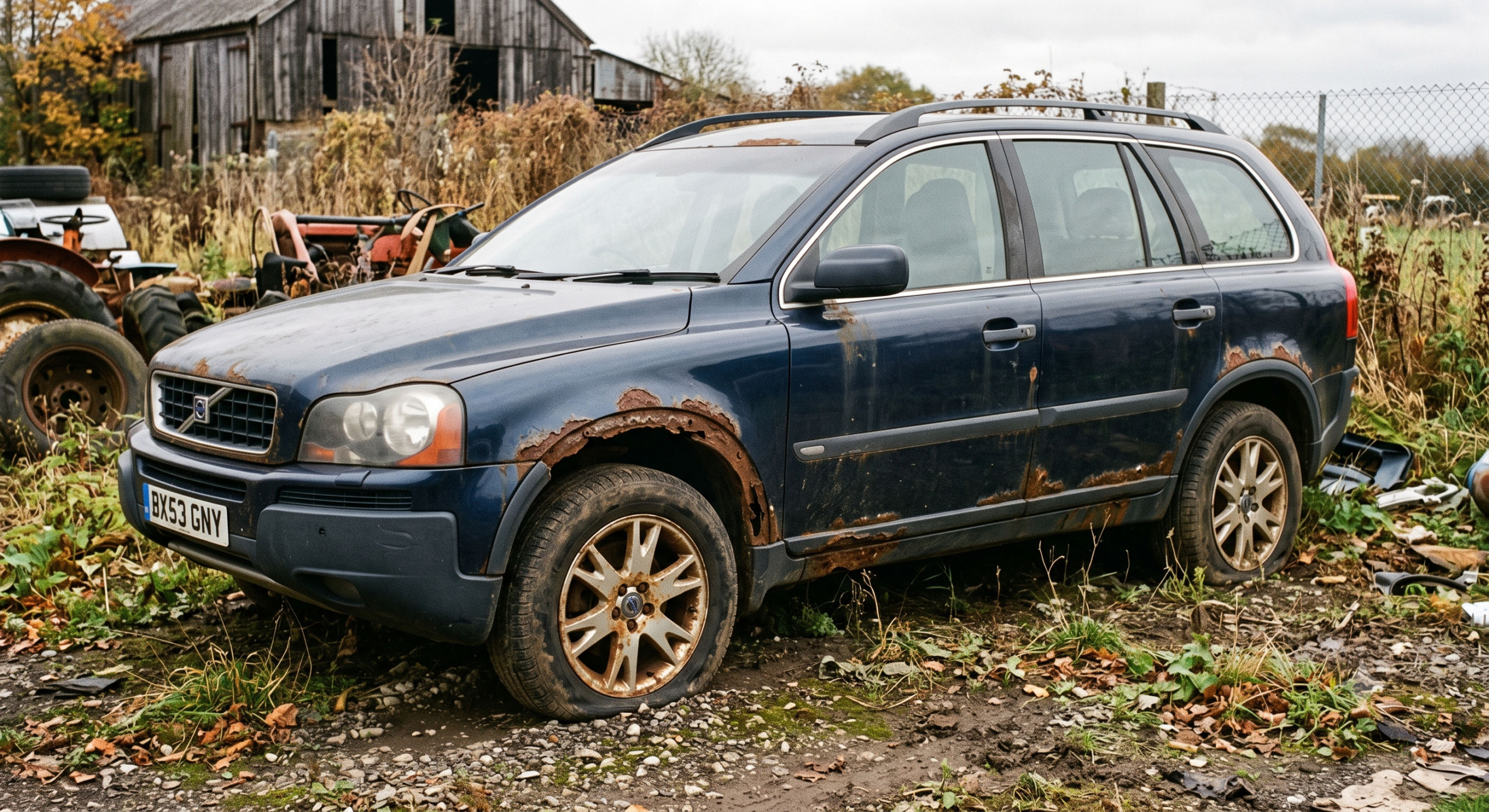
Yes — but usually not where you’d expect. Owner reports and forum threads consistently point to the exhaust system, subframe, rear suspension components, and underbody as the areas that rust first, while the painted sheet metal on the doors, hood, and fenders tends to hold up well. <cite index=”7-1″>One owner’s 2004 XC90 had zero body panel rust after 14 winters in Minnesota, aside from a few rock chips near the windshield.</cite> A software engineer who’s driven Volvos for a decade and cross-referenced this against RepairPal’s owner-reported data pulled together the trouble spots below.
Pull-quote: Volvo XC90 rust is a road-salt problem more than a Volvo problem — the exhaust and subframe take the hit first.
Where Volvo XC90 Rust Actually Shows Up
The underside of the car does the dirty work, so that’s where corrosion starts. Here’s the pecking order, worst to least common, based on owner complaints across Volvo forums.
Exhaust System and Heat Shields
This is the single most common rust complaint. <cite index=”2-1″>One new XC90 owner reported rust on the exhaust system straight from the factory, and was told at the first service visit that it’s normal.</cite> It’s cosmetic, not structural, and won’t fail an inspection in most states.
Subframe, Rear Suspension, and Driveshaft
This is the one worth actually worrying about. <cite index=”2-1″>A buyer inspecting a 71,000-mile 2016 XC90 on a lift found the frame, exhaust, driveshaft, CV joints, and transfer case flange rusted badly enough that an independent inspector told him to walk away.</cite> On the older P2-platform XC90s (2003–2014), <cite index=”7-1″>the strut mounting area is called out as a critical rust zone, and corrosion there can be hard to spot until the strut is removed.</cite>
Rocker Panels and Door Sills
Small paint bubbles near the sills show up occasionally in owner threads, usually starting small and staying cosmetic if caught early.
Fuel Filler Area and Rear Bumper Mounts
Less common, but a few high-mileage, coastal-climate cars have shown corrosion around the fuel filler bracket and where the rear bumper joins the body.
Quick Tip: If you’re buying used, skip the showroom walk-around and get the car on a lift. Rust that matters lives underneath, not on the paint you can see standing in a parking lot.
Why Some XC90s Rust More Than Others
It comes down to three things: age, climate, and platform.
Model year matters. The XC90 switched to Volvo’s newer SPA platform in 2016, with revised underbody coatings and construction. Complaints about serious underbody corrosion skew heavily toward 2003–2014 models, particularly cars built before 2010.
Climate matters more. <cite index=”5-1″>One UK owner’s 2009 XC90 developed corrosion around the fuel filler and a cracked rear body seam after four years in coastal Scotland, despite passing an MOT inspection just five days earlier with no advisories.</cite> Road salt and sea air are the two biggest accelerants, full stop — a garage-kept XC90 in Arizona and a driveway-parked one in Buffalo are basically different cars by year eight.
Storage habits can backfire. Oddly, a heated garage after a salty winter drive can make things worse, not better, since it keeps the salt brine wet and reactive on the metal instead of letting it dry and flake off.
<cite index=”6-1″>Modern rust-resistant design has also helped: many newer cars use rust-proof plastic for rocker panels and skip chrome trim that can trigger galvanic corrosion where dissimilar metals meet.</cite> The XC90’s newer generation benefits from these same industry-wide shifts.
Comparison: XC90 Rust Risk by Generation
| Factor | 2003–2014 (1st gen) | 2015 (transition year) | 2016–present (2nd gen, SPA) |
|---|---|---|---|
| Common rust zones | Subframe, strut mounts, exhaust | Similar to 1st gen | Mostly exhaust and heat shields |
| Owner complaint volume | Higher, especially pre-2010 | Moderate | Lower |
| Corrosion warranty | 12 years/unlimited miles (2005+) | 12 years/unlimited miles | 12 years/unlimited miles |
| Underbody coating | Older-generation e-coat | Older-generation e-coat | Updated coatings, SPA platform |
| Best used-buy climate fit | Dry/inland states | Dry/inland states | Any, with normal care |
What Volvo’s Corrosion Warranty Actually Covers
Every new Volvo, including the XC90, comes with <cite index=”12-1″>12 years and unlimited miles of coverage against corrosion perforation — meaning rust that has eaten all the way through a body panel.</cite> That sounds generous, and on paper it is. <cite index=”12-1″>Only Audi, BMW, and Mini match that length of coverage among mainstream competitors.</cite>
The catch is in the definition. <cite index=”10-1″>The rust has to go all the way through the panel — front to back — on original, unmodified body panels for a claim to even be considered.</cite> Surface rust, exhaust rust, subframe rust, and rust on anything that’s had prior bodywork typically won’t qualify. <cite index=”10-1″>Owner accounts describe claims getting declined even without prior accident repair, with one body shop confirming rust was coming from the inside out — pointing to a materials or process issue rather than owner neglect.</cite>
Expert Insight: Treat the 12-year warranty as a backstop for a true manufacturing defect, not a substitute for maintenance. In practice, very few owners report a paid-out perforation claim — most rust problems people actually deal with (exhaust, subframe, suspension) fall outside what the warranty covers anyway.
Real-world scenario: Say you buy a 2019 XC90 in Chicago and notice a small bubble under the paint on a rear door at year nine. If it’s rusting from the inside out on an untouched panel, you have a real shot at a covered repair. If that same bubble showed up after a fender-bender got patched by a non-Volvo shop, expect a denial.
How to Keep a Volvo XC90 From Rusting
- Wash the underbody after winter drives on salted roads, not just the exterior paint. A touchless car wash with an undercarriage jet works fine.
- Get it professionally rust-proofed if you live anywhere near the coast or in the salt belt. <cite index=”7-1″>Owners in these climates recommend annual or biannual applications of a penetrating product like Fluid Film, Krown, or a similar oil-based treatment over wax-based options.</cite>
- Inspect the strut mounting area on pre-2016 models at every tire rotation — it’s a known weak spot and easy to miss with the strut still installed.
- Avoid parking in a heated garage right after a salty drive. Let the underside dry out in a cold, dry space instead.
- Get a pre-purchase inspection on a lift for any used XC90, especially one from a salt or coastal state.
Quick Tip: Ask a seller directly whether the car has ever had rust-proofing applied and whether they have receipts. A documented history of annual undercoating is one of the best signals of a well-cared-for XC90.
Pros and Cons by Buyer Type
The Snowbelt Commuter
- Pro: The 12-year corrosion warranty offers real peace of mind for panel rust.
- Pro: A yearly rust-proofing habit is affordable relative to the car’s price.
- Con: Underbody and suspension rust risk is genuinely higher here than almost anywhere else.
The Coastal Buyer
- Pro: Sea air rarely touches painted panels as fast as it hits exposed metal underneath.
- Con: Salt air is a slower but steadier corrosion driver than road salt — the fuel filler and rear seams need regular checks.
The Used-Car Shopper in a Dry Climate
- Pro: An XC90 that’s spent its life in Arizona, Colorado, or similar can be essentially rust-free even at 10+ years old.
- Pro: You can often skip aggressive rust-proofing altogether.
- Con: Watch for cars that were relocated from a salt state — a clean title doesn’t reveal rust history.
Alternatives Worth a Look
Choose the Volvo XC90 if: you want strong safety ratings, a comfortable third row, and you’re willing to keep up with underbody maintenance in harsh climates.
Choose the Audi Q7 instead if: you want matching 12-year corrosion coverage with a stainless exhaust system that sidesteps the XC90’s most common rust complaint.
Choose a Toyota Highlander instead if: rust anxiety is a dealbreaker and you’d rather trade some luxury feel for a reputation for minimal corrosion issues across ownership.
FAQ
Does the Volvo XC90 rust more than other luxury SUVs? Not dramatically. Rust complaints cluster around specific parts — exhaust, subframe, rear suspension — rather than widespread body rust, and climate plays a bigger role than brand in most reported cases.
Which XC90 model years rust the most? Pre-2016 models, especially 2003–2009, show up most often in rust complaints. The 2016-and-newer generation on Volvo’s SPA platform has fewer reported underbody corrosion issues.
Is exhaust rust on an XC90 something to worry about? Usually not structurally, though it looks alarming. <cite index=”2-1″>Some owners report exhaust rust appearing even on new vehicles, and dealers have called it a normal cosmetic issue rather than a defect.</cite>
Will Volvo fix rust for free under warranty? Only if it’s true perforation — rust all the way through an original, unmodified body panel — within 12 years. Surface rust, mechanical component rust, and rust following prior bodywork typically aren’t covered.
How can I tell if a used XC90 has rust problems before buying? Put it on a lift and look at the subframe, exhaust, driveshaft, and strut mounting points, not just the painted body. A pre-purchase inspection by an independent mechanic is worth the $100–150 it usually costs.
Key Takeaways
- Volvo XC90 rust concentrates in the exhaust, subframe, rear suspension, and underbody — not the painted body panels.
- The 12-year corrosion warranty is real, but it only covers true panel perforation from a manufacturing defect, not general wear.
- Pre-2016 (1st-generation) XC90s show up more often in serious rust complaints than 2016-and-newer models.
- Climate and maintenance habits matter as much as, or more than, model year.
- A lift inspection before buying used, plus annual underbody rust-proofing in harsh climates, is the best defense.
Next Step
If you’re shopping for a used XC90, don’t skip the lift inspection — ask the seller or dealer to put it up before you sign anything, and check the subframe and strut mounts yourself if you can.