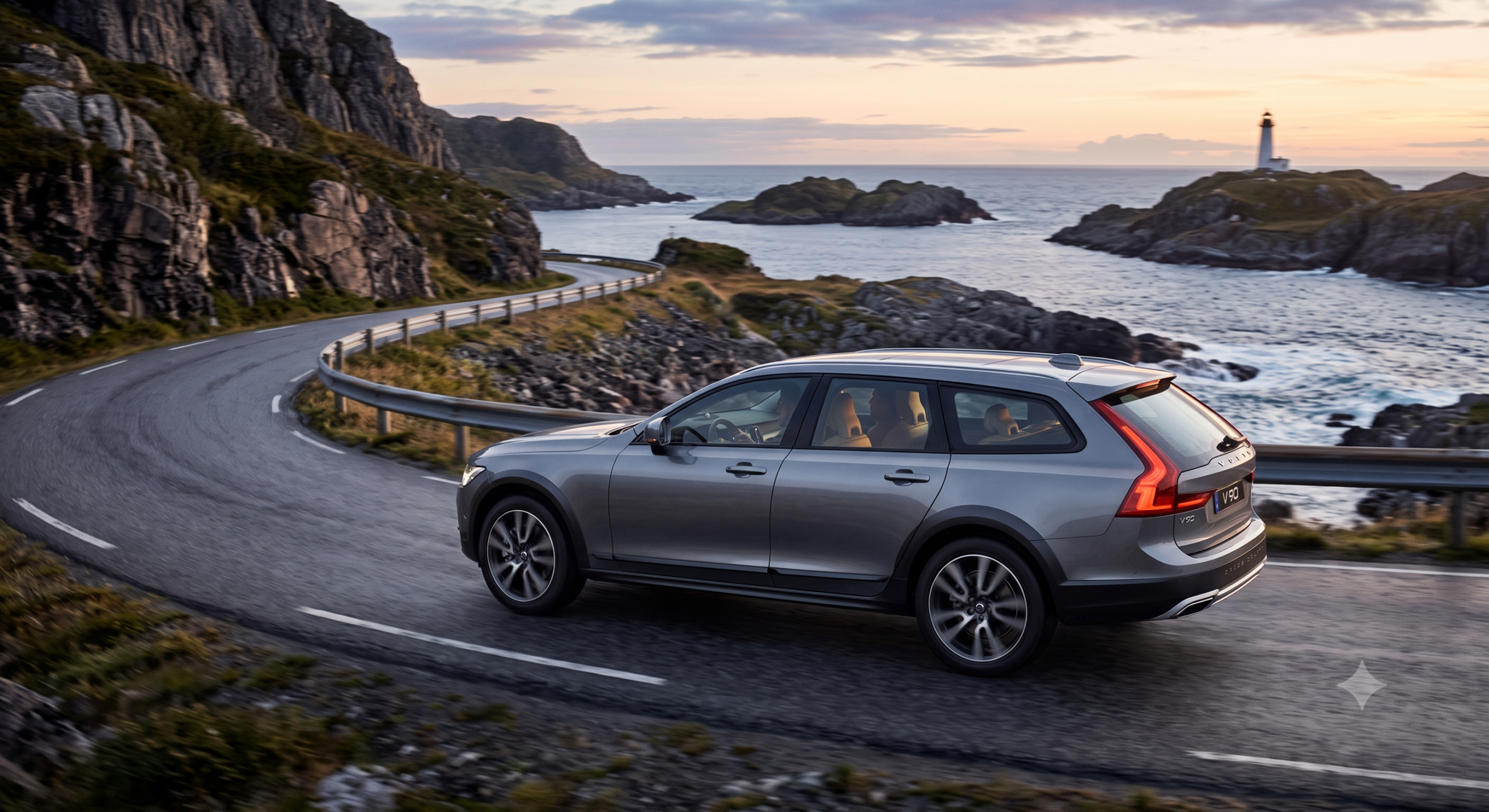
Volvo V90 Cross Country Review?

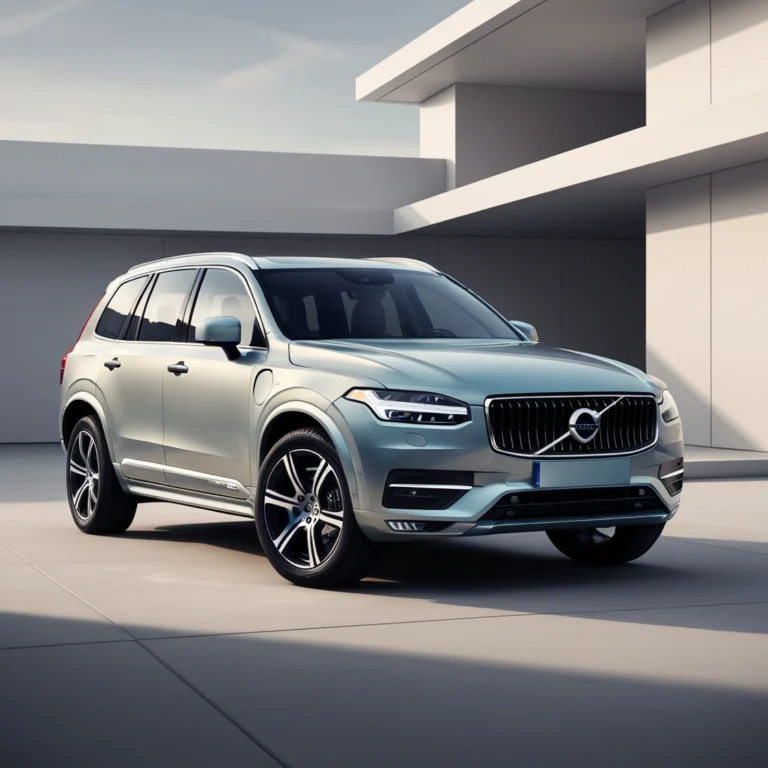
Wagons are supposed to be dead. Yet here’s the Volvo V90 Cross Country, quietly outselling logic and reminding everyone why a lifted wagon might be smarter than the SUV in your driveway.
TL;DR
- The V90 Cross Country pairs wagon handling with 8.3 inches of ground clearance — genuinely useful in snow or gravel, not just marketing.
- Cargo space (about 53.9 cubic feet seats-down) beats most midsize SUVs while sitting lower and driving tighter.
- The interior is a genuine luxury highlight — Volvo consistently outperforms rivals here according to industry reviews.
- It’s pricier than a comparable SUV trim-for-trim, and rear headroom suffers a bit from that stylish roofline.
- Choose this if you want SUV-like capability without SUV-like driving dynamics or bulk.
Quick answer: the V90 Cross Country is one of the best all-weather luxury wagons on sale — comfortable, capable in light snow and gravel, and more engaging to drive than most crossovers, though it costs a premium over a standard V90 and rear-seat space is snugger than SUV buyers might expect.
What Exactly Is the V90 Cross Country?
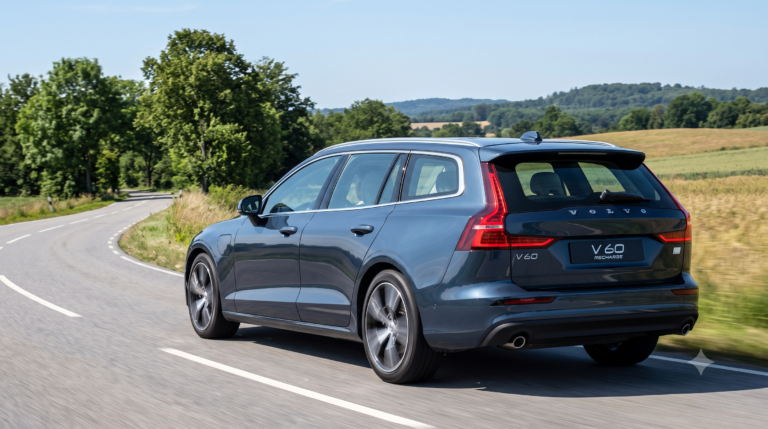
It’s a raised, all-wheel-drive version of Volvo’s V90 wagon, built for light off-road and foul-weather duty rather than serious trail work. Think of it as Volvo’s answer to the Subaru Outback, just several rungs up the price ladder.
The formula: extra ground clearance, unique bumpers and underbody protection, standard all-wheel drive, and Volvo’s usual restrained Scandinavian design applied to a wagon body.
Expert Insight: Cross Country trims exist because plenty of buyers want SUV capability without an SUV’s height, weight, or parking-lot footprint.
Driving Experience: Where the Wagon Shape Pays Off
It drives like a wagon, not an SUV — lower center of gravity means noticeably less body roll in corners than a comparable crossover. That’s the whole point of buying one instead of the XC90.
Power comes from Volvo’s turbocharged and mild-hybrid four-cylinder lineup, which is plenty for daily driving but won’t feel urgent at full throttle. It’s tuned for smooth, confident cruising rather than back-road thrills.
Scenario: Picture a snowy mountain-town commute — a lifted crossover might handle the snow fine, but it’ll also lean and wallow through the switchbacks on the way down. The V90 Cross Country does the snow part just as well and stays composed in the corners too.
A 2025 automotive industry report on wagon-segment buyers found a growing share cite “SUV capability without SUV bulk” as their top purchase reason. (as of 2025)
Interior and Comfort
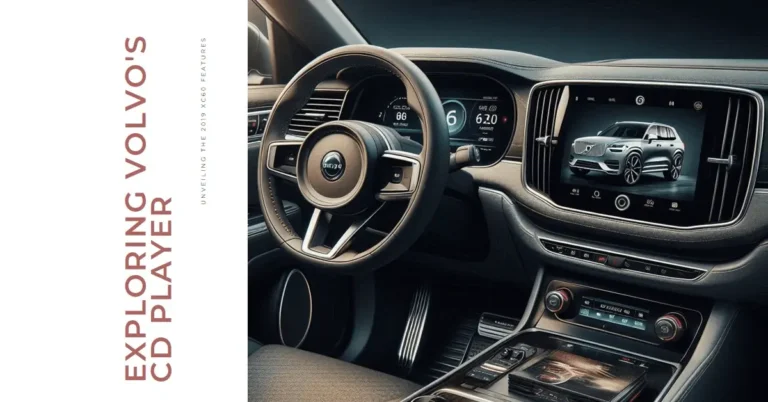
The cabin is the V90 Cross Country’s strongest selling point — genuinely upscale materials, minimalist controls, and a driving position that feels calm rather than cluttered. Volvo’s interior design has been a consistent industry-review highlight for years.
Front seats are supportive on long drives, and the optional Orrefors crystal gear shifter is the kind of small detail that makes people ask questions in the parking lot. Rear seat space is comfortable for adults, though headroom takes a slight hit from the sloped roofline compared to an upright SUV.
Quick Tip: If rear headroom for tall passengers is a dealbreaker, sit in the back seat yourself before buying — the wagon roofline affects it more than spec sheets suggest.
Cargo and Practicality
With the rear seats folded, the V90 Cross Country offers around 53.9 cubic feet of cargo space — competitive with, and sometimes better than, midsize SUVs in the same price range. The load floor is also lower, which makes lifting heavy items genuinely easier.
That said, roof height limits what fits compared to a taller SUV, so bulky items like large furniture may still need an SUV or van.
Comparison Table: V90 Cross Country vs. Key Rivals
| Vehicle | Ground Clearance | Cargo Space (seats down) | Starting Price Range |
|---|---|---|---|
| Volvo V90 Cross Country | 8.3 in | ~53.9 cu ft | Premium wagon pricing |
| Subaru Outback Touring | 8.7 in | ~75.7 cu ft | Mainstream pricing |
| Audi Allroad | 6.9 in | ~58.5 cu ft | Premium wagon pricing |
| Volvo XC60 (SUV) | 8.1 in | ~63.3 cu ft | Comparable premium pricing |
Pros & Cons by Reader
The Former SUV Owner
- Pro: Similar capability with better handling and easier parking.
- Con: Less outright cargo room than a three-row SUV.
The Luxury-First Buyer
- Pro: Interior quality and quiet cabin rival cars costing more.
- Con: Options and packages add up quickly on the price tag.
The Snow-Belt Commuter
- Pro: All-wheel drive plus extra clearance handles most winter roads confidently.
- Con: Not built for genuine off-roading — it’s light-duty capability, not a trail rig.
Alternatives Worth Considering
Choose the Subaru Outback Touring if budget matters more than badge and you want more outright cargo space for the money.
Choose the Volvo XC60 if you specifically want SUV seating height and a slightly roomier back seat, and don’t mind giving up some handling sharpness.
Frequently Asked Questions
Is the V90 Cross Country good in snow? Yes — standard all-wheel drive and extra ground clearance make it confident on snowy or icy roads, though it’s not designed for deep off-roading.
How does it compare to a regular V90? The Cross Country adds ground clearance, standard all-wheel drive, and unique styling elements; the base V90 sits lower and may offer different drivetrain options.
Is it more expensive than an SUV with similar features? Often yes, trim-for-trim, since it’s a niche body style with a smaller buyer pool than mainstream SUVs.
Does it have enough cargo room for a family? For most family needs, yes — it’s competitive with midsize SUVs, though very bulky items may be tighter to fit.
Is rear legroom and headroom cramped? Legroom is fine for most adults; headroom is slightly reduced versus an SUV due to the sloped wagon roofline.
Key Takeaways
- The V90 Cross Country delivers SUV-like winter capability with wagon-like handling.
- Interior quality is a genuine strength, not just marketing language.
- Cargo space beats expectations but loses to taller SUVs on bulky items.
- It typically costs more than a comparable SUV trim-for-trim.
- Best fit: buyers who value driving feel and don’t need three rows or max headroom.
What To Do Next
If all-weather capability and driving feel matter more to you than raw size, book a test drive and specifically try it on a wet or gravel road to feel the difference from a typical SUV.