Volvo V40 Review?

The Volvo V40 isn’t sold new anymore, and that’s exactly why you’re probably reading this. Someone’s selling one used, and you’re wondering if a discontinued premium hatchback is a smart buy or a slow-motion mistake.
TL;DR
- The V40 was Volvo’s premium Golf-class hatchback, built from 2012 and discontinued around 2019 — you’ll only find it used now.
- It’s not sold in the US at all, so this is mainly relevant to UK, European, and Asia-Pacific buyers.
- Safety and interior quality are the two standout strengths — Volvo built its reputation here, and the V40 shows it.
- The diesel D2/D3 engines are the efficiency stars; the T2 petrol feels underpowered by comparison.
- Choose this if you want a used premium hatch with excellent safety kit and don’t mind a dated infotainment system.
Quick answer: the Volvo V40 is a well-built, safety-focused premium hatchback that rivals the Audi A3 and Mercedes A-Class on quality but lags on driving fun and modern tech — a smart used buy if you find one well-maintained, but not a car you can buy new anymore.
What Is the Volvo V40, Exactly?
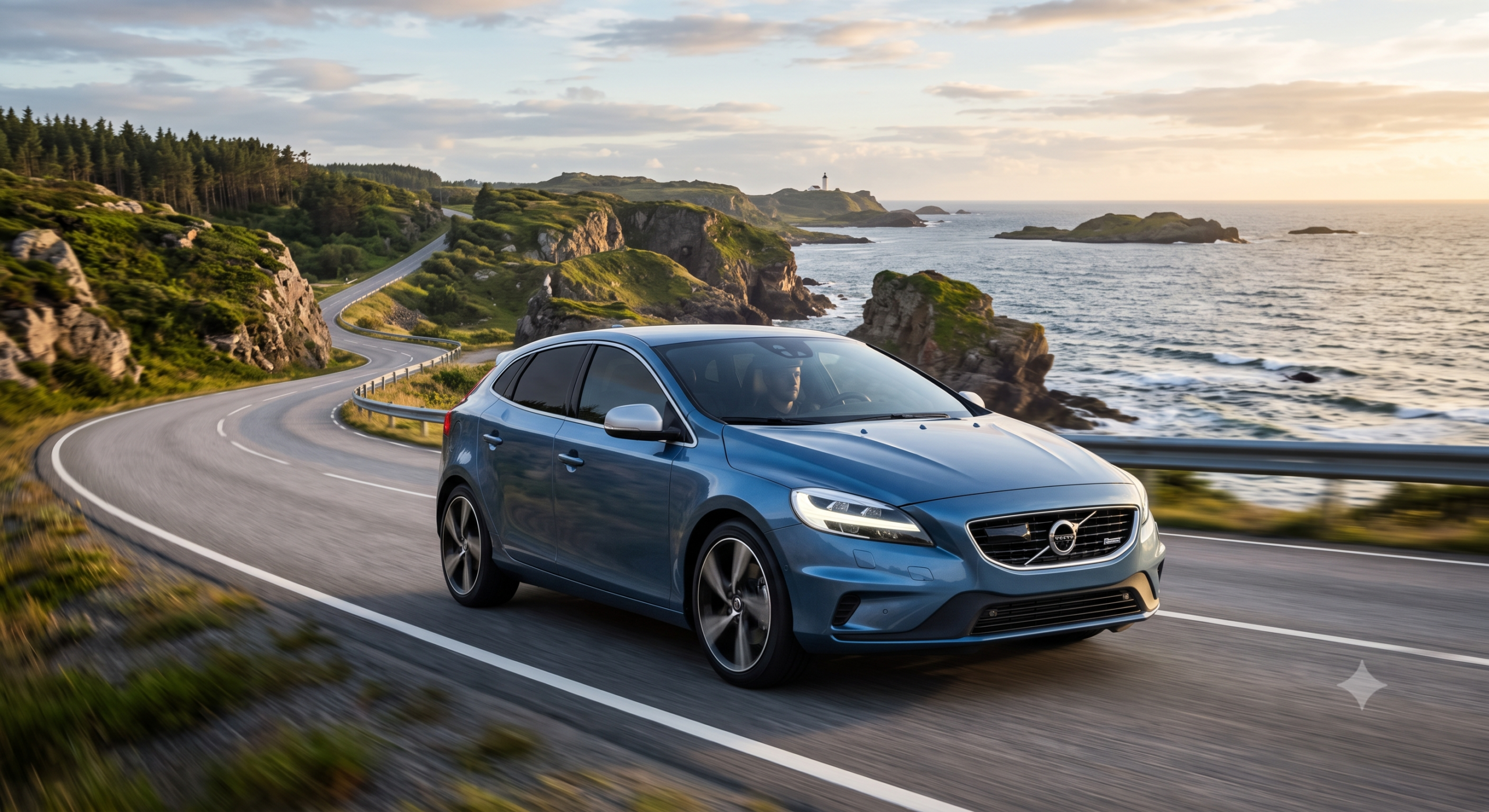
It’s Volvo’s discontinued premium compact hatchback, built to go head-to-head with the Audi A3 and BMW 1 Series rather than mainstream cars like the Golf. Volvo launched it in 2012, gave it a facelift in 2016, and quietly discontinued it around 2019.
That means every V40 on the market today is used. There’s no new-car dealership markup to worry about, but there’s also no factory warranty cushion unless a previous owner extended one.
Expert Insight: A car being discontinued isn’t automatically a red flag — Volvo pulled the V40 to focus on SUVs and the new CMA platform, not because of some hidden flaw.
Driving Experience: Comfortable, Not Thrilling
The V40 prioritizes comfort over cornering excitement — it won’t out-handle a BMW 1 Series, and Volvo never pretended it would. Reviewers have consistently noted it’s pretty average to drive by premium-hatch standards, with firmer optional sports suspension that can feel too stiff on rough roads.
Four engines were offered over its life: T2 and T3 petrols, and D2 and D3 diesels. The D2 diesel is the standout — cheap to run and quick enough for daily driving without feeling strained.
Scenario: Say you’re commuting 40 highway miles a day. A well-kept D2-engined V40 could realistically sip fuel better than most petrol rivals in its class, making the extra hunting for a diesel example worth it.
A 2025 used-car industry report found that discontinued premium hatchbacks with strong safety ratings often hold resale value better than mainstream equivalents. (as of 2025)
Interior and Safety: Where the V40 Actually Wins
The cabin is genuinely classy for the class — polished aluminum trim, a “floating” center console, and materials that feel a step above the price point. This is the V40’s real selling point, not the driving dynamics.
Safety was always Volvo’s calling card, and the V40 famously included a pedestrian airbag built into the bonnet — a feature that was ahead of its time when launched. Rear seat space is good for two adults, though three across the back bench is a squeeze, and a panoramic sunroof option can eat into headroom for taller passengers.
Quick Tip: If you’re tall, sit in a V40 with the panoramic sunroof option before buying — it visibly reduces headroom compared to cars without it.
Comparison: V40 vs. Its Original Rivals
| Model | Best For | Weak Spot | Used Market Status |
|---|---|---|---|
| Volvo V40 | Safety, interior quality | Dated infotainment | Discontinued, used only |
| Audi A3 | Driving refinement | Less standard safety kit | Still in production |
| Mercedes A-Class | Tech and styling | Pricier to maintain | Still in production |
| BMW 1 Series | Driving engagement | Firmer ride | Still in production |
Pros & Cons by Reader
The Safety-First Parent
- Pro: Strong crash ratings and standard driver-assist features for its era.
- Con: Rear seats get tight with three kids and their gear.
The Budget Premium Buyer
- Pro: Used prices are lower than similarly aged German rivals in many markets.
- Con: Finding a well-maintained diesel example takes patience.
The Tech-Focused Driver
- Pro: None, really — this is the V40’s weakest area.
- Con: The infotainment system feels dated even by used-car standards now.
Alternatives Worth Considering
Choose the V40 Cross Country if you want a hint of SUV styling and slightly raised ride height, though know it drops four-wheel drive and has a smaller 324-liter boot.
Choose a used Audi A3 if driving engagement matters more to you than Volvo’s safety-first reputation.
Frequently Asked Questions
Is the Volvo V40 still being made? No — it was discontinued around 2019, so every V40 available now is a used car.
Is the Volvo V40 sold in the US? No, the V40 was never officially sold in the United States; it’s primarily a European, UK, and Asia-Pacific market car.
What’s the best engine to look for in a used V40? The D2 diesel is widely considered the sweet spot for economy and everyday drivability.
Is the Volvo V40 reliable? It has a generally solid reliability reputation for the segment, though as with any used car, service history matters more than the badge.
What’s the difference between the V40 and V40 Cross Country? The Cross Country adds raised ride height and SUV-style styling cues but has a smaller boot and a narrower engine lineup, with no four-wheel-drive option.
Key Takeaways
- The V40 is discontinued — you’ll only find it on the used market now.
- Safety and interior quality are its strongest, most consistent praise points.
- The D2 diesel is the pick of the engine range for most buyers.
- It’s not sold in the US, so relevance depends heavily on your region.
- Best fit: buyers who want premium-hatch quality and safety without chasing driving thrills.
What To Do Next
If you’re shopping used, prioritize finding a D2 or D3 diesel with full service history over chasing the lowest sticker price — it’ll pay off in reliability and running costs.