Volvo 850 Review (1991–1997): Specs, T-5R, BTCC Estate & 2026 Buying Guide

Before the 850, Volvo built safe, rear-driven boxes for people who thought driving was a chore. Then it spent 15 billion kronor — described at the time as the largest Swedish industrial project ever — on a car with a transverse five-cylinder engine, front-wheel drive, and four genuine engineering firsts. Between 1991 and 1997, Volvo built 716,903 of them, and nothing about the company was ever quite the same again.
This is a retrospective — the S70 and V70 replaced the 850 for the 1997 model year. What follows is the car’s story: the gamble, the engines, the racing wagon, and what to check if you’re buying one in 2026.
Key Takeaways
- The Volvo 850 (1991–1997) was the brand’s first front-wheel-drive car, with a transverse five-cylinder, a Delta-link rear axle, SIPS side-impact protection, and self-adjusting front seatbelts — marketed as “four world-firsts.” 716,903 were built.
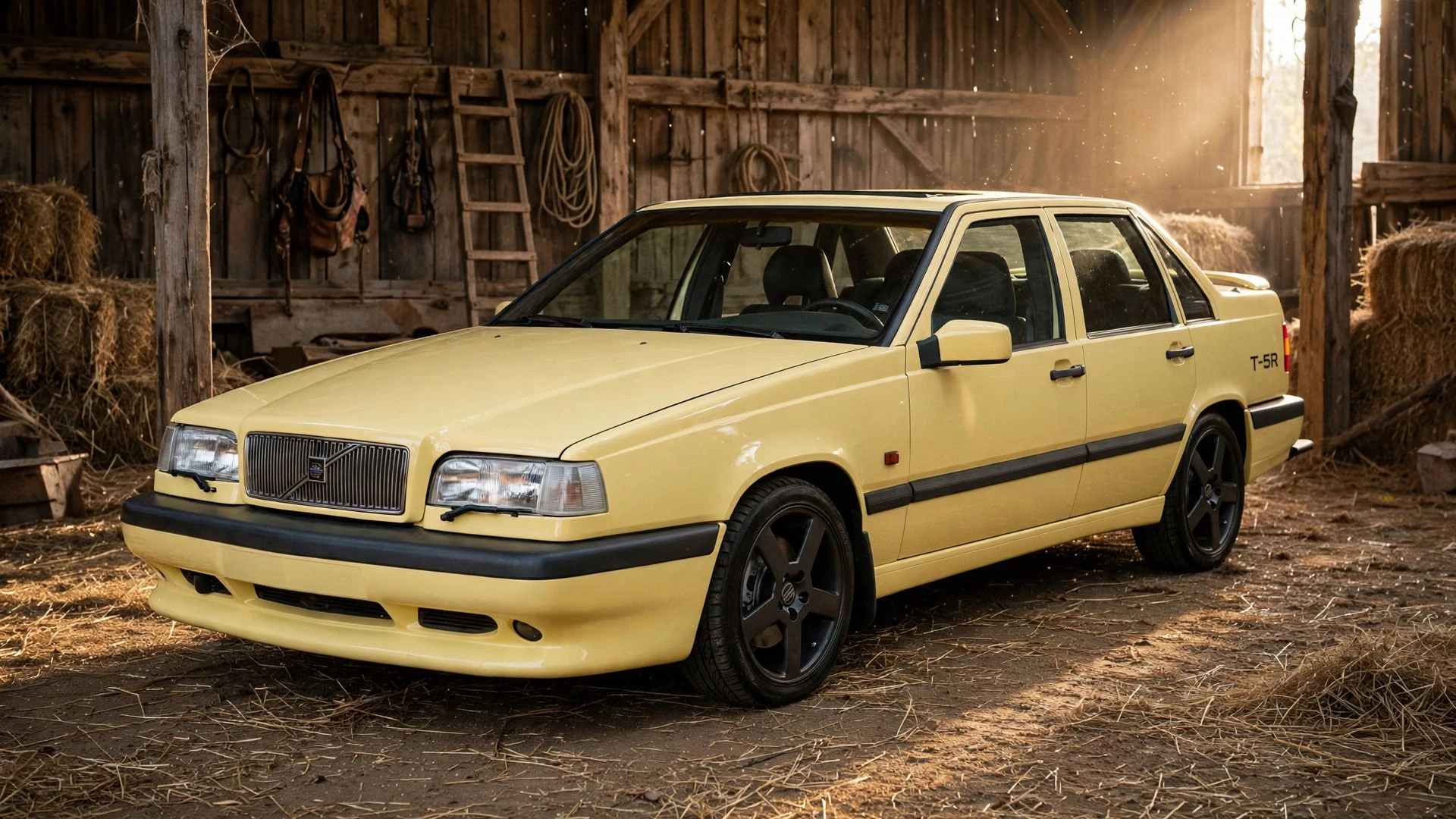
- The performance ladder runs from a 126 hp 2.0-litre five to the 250 hp 850 R. The limited-run T-5R (240 hp) is the collector icon: 7,500 built across three batches of 2,500.
- In April 1994, two TWR-built 850 estates rolled onto the Thruxton grid in the BTCC — the first wagon ever to race in the series — and created the “fast Volvo wagon” legend overnight.
- Buying in 2026? Check the PCV breather system, the ABS module (a known failure point on 1996-on cars), odometer gears, timing-belt history, and rust at the wheel arches and sills.
- The 850 R offers T-5R-level performance without the limited-edition premium, and parts support remains strong thanks to shared hardware with the S70 and V70.
The Gamble That Rebuilt Volvo
Volvo first showed the 850 in June 1991, and it was a genuine departure: transverse five-cylinder engine driving the front wheels, a Delta-link rear axle, the SIPS side-impact protection system, and a self-adjusting front seatbelt mechanism. The estate arrived in 1993, and the car reached the US as a 1993 model — Volvo’s first front-wheel-drive car sold in America.
Volvo Cars’ heritage account notes the 15 billion kronor wasn’t just the car’s price tag — it covered a new technical platform plus plants, including the all-new Skövde engine factory, and the 850’s modular five-cylinder family underpinned Volvo engines for years. When 850-badged production ended in 1996 and the range relaunched as the S70 and V70 that November, the platform lived on underneath — and later under the C70 into 2005.
850 Production Timeline
Variants and Engines: The Full Range
Every 850 engine was a transverse five-cylinder: petrols from 2.0 to 2.5 litres plus a 2.5-litre turbodiesel. The key variants you’ll actually find for sale:
| Variant | Years | Engine | Power | Why it matters |
|---|---|---|---|---|
| 2.0 / 2.4 10V | 1991–1997 | 2.0–2.4L NA five | 126–140 hp | The honest workhorse; cheap to run, cheap to buy |
| 2.5 20V | 1993–1997 | 2.5L NA five | 170 hp | Sweetest-sounding of the non-turbos |
| 850 Turbo / T5 | 1994–1997 | 2.3L turbo five | 222–225 hp | ~7 sec 0–60; the attainable performance buy |
| 2.5 TDI | 1996–1997 | 2.5L diesel five | 140 hp | Rare now; long-legged motorway cruiser |
| T-5R | 1995 (3 batches of 2,500) | 2.3L turbo five | 240 hp | Limited-run icon; yellow, black, dark green |
| 850 R | 1996–1997 | 2.3L turbo five | 250 hp | T-5R pace without the limited-edition premium |
| AWD | 1996–1997 | 2.5L light-pressure turbo | 193 hp | Four-wheel drive; the one for bad weather |
The correction that matters most to collectors: the T-5R made 240 hp, not the 250 hp you’ll see in sloppy listings — Volvo built it in three batches of 2,500 (yellow, black, dark green). The 250 hp figure belongs to the 850 R, the non-limited 1996–1997 successor. The performance gap is academic; the price gap is not.
How Power Climbed Across the Range
The curve tells the 850 story: a humble 126 hp starting point, doubled within five years. And these are front-wheel-drive cars (AWD aside) putting up to 250 hp through the front tyres — expect real torque steer in the T-5R and R. That’s character, not a fault.
The Estate That Went Racing
This is the part of the 850 legend that sounds made up but isn’t. When Volvo returned to the British Touring Car Championship, it didn’t bring the saloon — it brought the estate. At the 1994 season opener at Thruxton, two 850 estates built and run by Tom Walkinshaw Racing rolled onto the grid: the first wagon ever to race in the BTCC.
The race cars were serious machines — a 2.0-litre, naturally aspirated five-cylinder making around 290 hp — driven by Rickard Rydell and Jan Lammers. The 1994 season was openly a development year: best qualifying third, best race finish fifth. Then rule changes allowed aerodynamic aids and Volvo switched to the saloon for 1995: Rydell took a record 13 pole positions and finished third overall, with six wins in 1995 and five more in 1996. The programme was as much marketing as motorsport — Volvo was flipping its image from stodgy to sporty just as T-5R road cars landed in showrooms — and it worked. The “fast Volvo wagon” stopped being a joke and became a brand pillar that survives to this day.
Buying One in 2026: What to Inspect
The 850 is one of the more livable 1990s classics — strong build quality, and shared S70/V70 components keep parts and specialists easy to find. But it’s a 30-year-old car, and here’s where they go wrong.
The PCV breather system is the big one. The oil separator (“breather box”) sits under the intake manifold and clogs with age, pressurising the crankcase and blowing cam and rear main seals. Tell-tales: oil at the cam seals, a smoking dipstick, pressure when you pull the dipstick with the engine running. A full PCV refresh is a day-long DIY job; skip it and you’ll pay for seals instead.
The ABS module on 1996-on cars is a notorious weak point — specialists joke there are two kinds: those that have failed and those about to. The good news: rebuilds are cheap and swapping the module is a ten-minute job with an E-torx socket.
Odometer gears go brittle with age; the speedo keeps working while the odometer freezes. The fix is a pair of replacement gears (a 15-tooth and a 12-tooth pod on the 850) — well documented, and essential, because a frozen odometer makes mileage claims unverifiable.
Beyond that: timing-belt history is non-negotiable on these interference engines — a snapped belt wrecks the engine, so documented replacement is worth real money. Check rust at the arches, sills, and underside, especially on salted-road cars. On turbos, demand oil-change history. And on T-5Rs, verify colour and trim against production records — with three colours and 7,500 built, re-badged fakes are a real risk.
Which 850 Should You Actually Buy?
Buy the 850 R if you want the full T-5R experience without the limited-edition price tag — 250 hp, both body styles, and values that haven’t fully caught up with its rarer sibling.
Buy a T5 or late Turbo if you want the sensible performance buy: 222–225 hp, proper sleeper pace, and purchase prices that still leave budget for the PCV refresh and timing belt you’ll want anyway.
Buy a 2.5 20V or clean 2.4 if you want the 850 as a usable classic — the naturally aspirated fives are the sweetest engines in the range and the cheapest way in.
Buy the T-5R only if you’ve done the homework: verified colour, verified history, and a price that reflects a 30-year-old limited run of 7,500 rather than the myth.
Frequently Asked Questions
What’s the difference between the 850 Turbo, T5, T5-R, and R?
The 850 Turbo (later badged T5) was the standard performance model from 1994 with 222–225 hp from a 2.3-litre turbo five. The T-5R was a 1995 limited edition of 7,500 cars with 240 hp. The 850 R replaced it for 1996–1997 as a non-limited model with 250 hp — the most powerful 850 of all, and generally cheaper to buy than a T-5R today.
How much is a Volvo 850 T5-R worth today?
T-5R values have risen substantially over the past decade. Condition and originality dominate: verified, low-mileage examples in the correct colours command strong money, while tired cars with patchy history trade far lower. Verify colour and trim against known production records before paying a premium.
Is the Volvo 850 reliable?
Generally yes — tough five-cylinder engines and excellent build quality. The known weak points are the PCV breather system, the ABS module on 1996-on cars, brittle odometer gears, and timing-belt intervals that must be respected. None are deal-breakers if addressed, and parts support via the S70/V70 parts bin is strong.
Why is the Volvo 850 wagon so famous?
Because Volvo raced one. In April 1994, two Tom Walkinshaw Racing-built 850 estates lined up at Thruxton in the British Touring Car Championship — the first wagon ever to race in the series. Driven by Rickard Rydell and Jan Lammers, the estates were a development-year entry, but the sheer audacity of racing a wagon turned the “fast Volvo estate” into a legend that still defines the brand’s performance image.
What replaced the Volvo 850?
The S70 sedan and V70 estate, launched in November 1996 as the 1997 model range. They were effectively a heavy facelift of the 850 on the same P80 platform, with new model nomenclature — the first Volvos to use it. The platform lived on under the C70 coupe and convertible until 2005.