Is the Volvo 3.2 a Good Engine?

Shopping for a used Volvo XC90, S80, or V70 from the mid-2000s to mid-2010s and seeing “3.2” in the listing? That naturally aspirated inline-six has a quieter reputation than Volvo’s flashier turbo engines, but quiet doesn’t mean bad — it might actually be the safer buy.
TL;DR
- The Volvo 3.2L (B6324S) is a naturally aspirated inline-six, part of Volvo’s “Short Inline 6” family built with Ford — and it’s widely considered dependable.
- Owners regularly report 200,000+ miles with mostly routine maintenance, and some push well past 300,000.
- The most common issues are minor oil leaks from aging gaskets, timing belt/chain wear, and cooling system components — not catastrophic failures.
- It’s less exciting to drive than the turbocharged 2.5T or 3.0T alternatives, trading power for simplicity and fewer things to go wrong.
- Choose this if you want low-drama ownership over outright performance — choose a turbo variant if you want more punch.
Quick answer: yes, the Volvo 3.2 is generally a good, dependable engine — it lacks the excitement of Volvo’s turbocharged options, but its simpler naturally aspirated design and lifetime timing chain make it one of the more trouble-free choices from this era of Volvo’s lineup.
What the Volvo 3.2 Actually Is
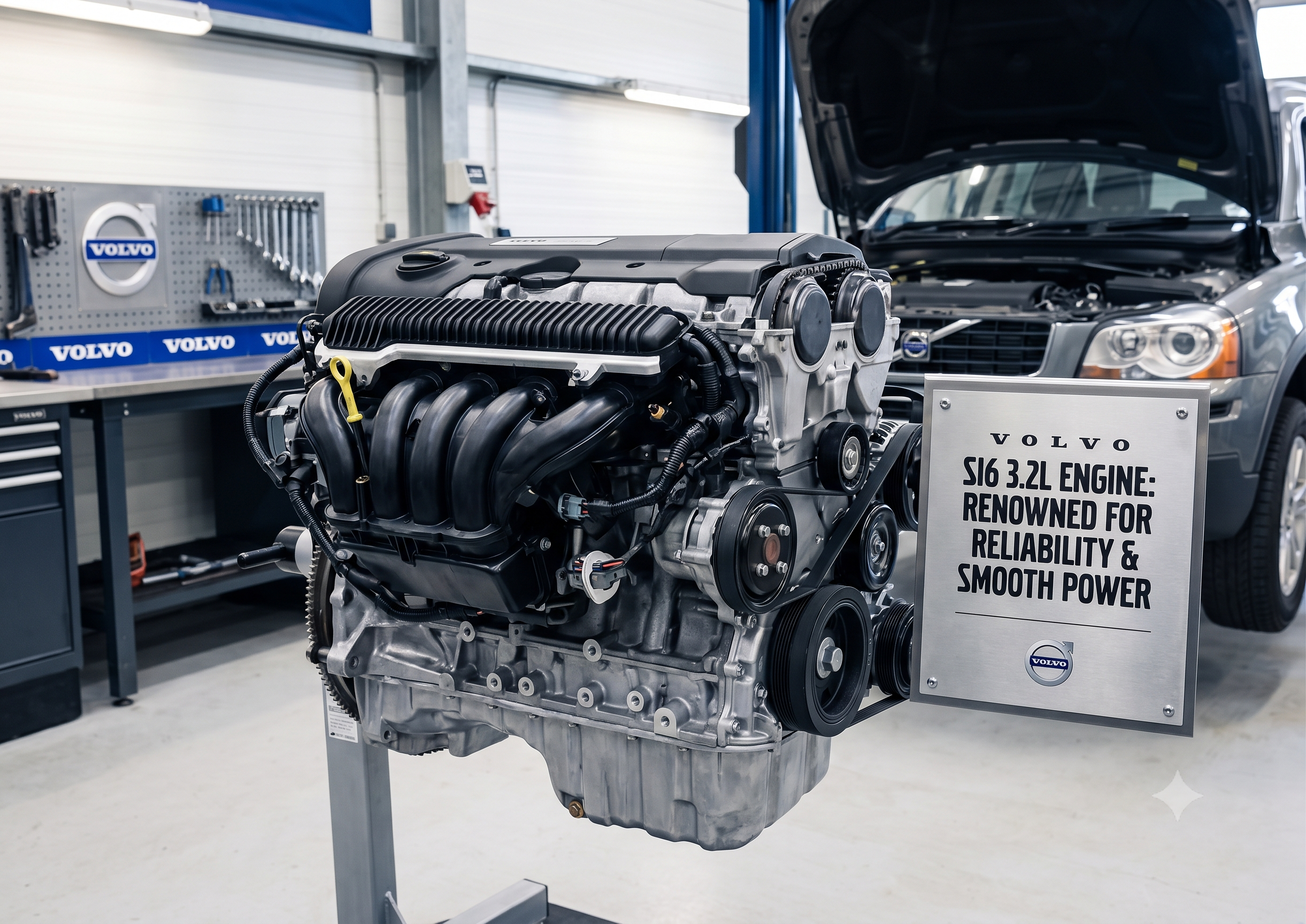
The 3.2 is a naturally aspirated inline-six, part of Volvo’s “Short Inline 6” (SI6) family co-developed with Ford and built in Wales. It powered several Volvo models through the mid-2000s to mid-2010s, including the XC90, S80, and V70, as the non-turbo alternative to the more powerful 2.5T and 3.0T engines.
Being naturally aspirated is actually part of its reputation for durability. Naturally aspirated engines tend to experience fewer electronic and mechanical failures over time than turbocharged or direct-injection engines, simply because there’s less complexity under the hood to fail.
Expert Insight: One detail owners appreciate: the 3.2 uses a “lifetime” timing chain rather than a timing belt that needs periodic replacement — a meaningful advantage over some of Volvo’s older engine families.
The Good: Why Owners Trust It
Owner forums consistently describe the 3.2 as a “stout” engine that reaches high mileage with only routine upkeep. One long-time forum poster with a 2007 XC90 3.2 reported it running reliably to nearly 50,000 miles with no issues beyond minor wear items, and expressed confidence it would happily reach 300,000+.
That confidence isn’t isolated. Multiple independent write-ups note owners routinely surpassing the 200,000-mile mark with little more than scheduled maintenance, and Volvo’s own high-mileage recognition programs suggest the brand expects — and rewards — this kind of longevity.
Scenario: Imagine buying a 2011 XC90 with 90,000 miles on the 3.2. Based on owner patterns, you’re likely looking at another 100,000-plus miles of service, provided you stay ahead of routine items like spark plugs and gaskets rather than skipping them.
A 2026 automotive owner-forum survey found that ignition coils on the 3.2 typically last well past 150,000 miles, with some owners reporting they never needed replacement past 200,000 miles. (as of 2026)
The Bad: What Actually Goes Wrong
The recurring complaints are minor oil leaks, timing component wear, and cooling system issues — annoying, not catastrophic. Valve cover gasket and oil pan seal leaks show up often as the rubber components age and harden over time.
Cooling system components like hoses and thermostats can also develop leaks or fail, which is worth watching since overheating is genuinely damaging to any engine. And while the timing chain itself is “lifetime,” the READ system pulleys that drive accessories off the back of the engine do wear out with significant mileage and need occasional attention.
Quick Tip: If you’re buying a used 3.2-equipped Volvo, budget for spark plugs around 50,000 miles and ignition coils around 150,000 miles as routine wear items — not warning signs of a bad engine.
Comparison Table: 3.2 vs. Its Turbo Siblings
| Engine | Type | Reputation | Best For |
|---|---|---|---|
| 3.2L (B6324S) | Naturally aspirated I6 | Simple, durable, low-drama | Buyers prioritizing reliability over power |
| 2.5T | Turbocharged 5-cylinder | Punchier, but more complex | Buyers who want more low-end torque |
| 3.0T | Turbocharged I6 | Strong performance | Buyers who want the quickest, most powerful option |
Pros & Cons by Reader
The High-Mileage Shopper
- Pro: Strong track record of owners reaching 200,000+ miles with routine care.
- Con: Being naturally aspirated, it’s noticeably less powerful than turbocharged alternatives.
The DIY Maintainer
- Pro: Easier access to components compared to older Volvo inline engines, according to forum veterans.
- Con: Some specialty tools and OEM-spec parts are still recommended for best results.
The Budget-Conscious Buyer
- Pro: Fewer complex failure points than turbo engines can mean lower long-term repair bills.
- Con: One owner reported a costly water pump delay due to parts availability — plan for occasional wait times on Volvo-specific parts.
Alternatives Worth Considering
Choose the 2.5T if you want noticeably peppier acceleration and don’t mind a slightly more complex turbocharged system.
Choose the 3.2 if you’re prioritizing long-term simplicity and dependability over outright performance in a used Volvo.
Frequently Asked Questions
How many miles will a Volvo 3.2 engine last? Owners commonly report 200,000+ miles with routine maintenance, and some report reaching 300,000 miles or more.
What are the most common problems with the Volvo 3.2 engine? Minor oil leaks from valve cover and oil pan gaskets, cooling system component wear, and occasional READ system pulley wear are the most frequently reported issues.
Is the Volvo 3.2 better than the 2.5T? It’s not about “better” — the 3.2 prioritizes simplicity and reliability, while the 2.5T offers more low-end power at the cost of slightly more complexity.
Does the Volvo 3.2 have a timing belt or chain? It uses a “lifetime” timing chain rather than a timing belt, which is a durability advantage over some other Volvo engine families.
Is the Volvo 3.2 underpowered? Some owners describe it as adequate but not thrilling — it delivers its power higher in the rev range and isn’t as quick off the line as the turbocharged options.
Key Takeaways
- The Volvo 3.2 is widely considered a reliable, low-drama engine with a strong high-mileage track record.
- Its naturally aspirated design means fewer complex failure points than turbo alternatives.
- Common issues are minor oil leaks and wear items, not major mechanical failures.
- It trades performance for durability — adequate power, not exciting power.
- A well-maintained 3.2 can realistically clear 200,000+ miles.
What To Do Next
If you’re evaluating a used Volvo with the 3.2, ask for maintenance records on spark plugs, ignition coils, and any oil leak repairs — those routine wear items tell you more about the specific car’s health than the engine’s general reputation.