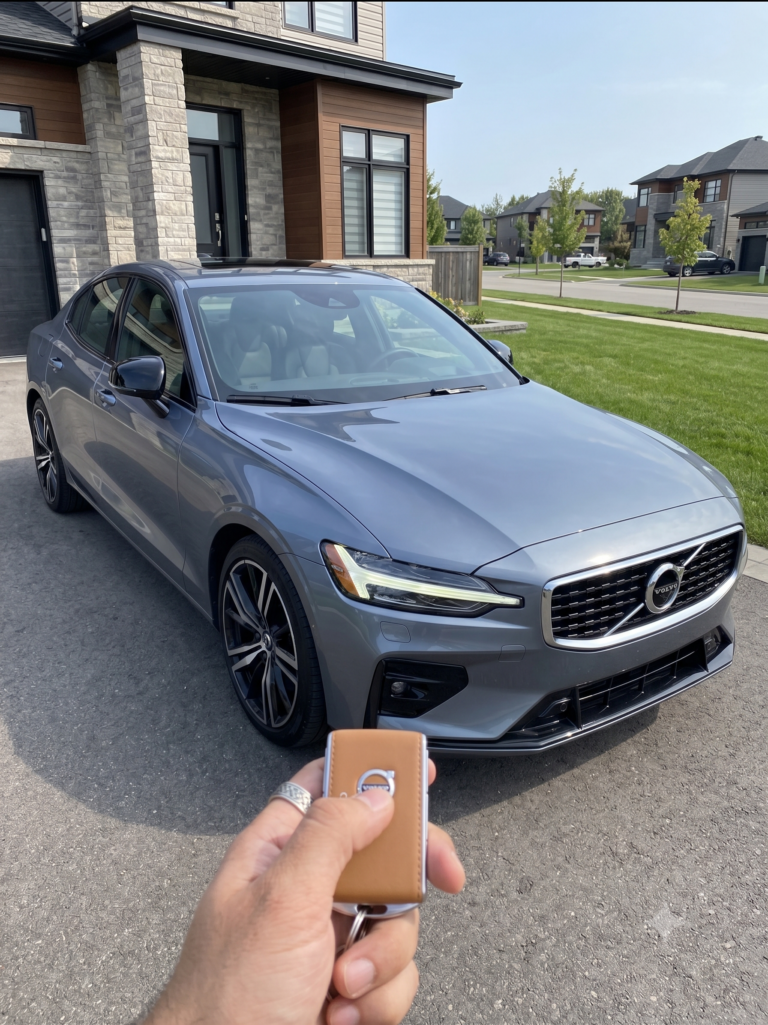
How to Change the Battery in a Volvo Key Fob?

Your remote’s range has gotten shorter, the lock button takes three presses instead of one, or the dashboard flashed a low battery warning. None of that means a trip to the dealership. This is a five-minute fix you can do at your kitchen table.
TL;DR
- Most Volvo key fobs use a CR2032 coin cell battery, though some slimmer fobs use a CR2025, and older remote styles may use a CR2430.
- You’ll need the fob, a small flathead screwdriver or coin, and the replacement battery. No dealership tools required.
- The general process: release the emergency key blade, pry open the shell, swap the battery with the correct polarity, snap it shut.
- Always match the exact battery code printed on the old cell rather than assuming CR2032 for every fob style.
- If the fob still won’t work after a fresh battery, it may need reprogramming at a service center rather than another battery swap.
Here’s the fast version: pop out the hidden key blade, use it or a small screwdriver to crack open the shell, swap in a battery matching the code on the old one with the correct side up, then snap it closed. The details below cover exact steps, tools, and what to do if a fresh battery doesn’t fix it.
What You’ll Need
- A replacement battery (CR2032 is most common; confirm the exact code on the old battery first)
- A small flathead screwdriver, a coin, or a plastic pry tool
- A clean, flat work surface
- Optional: a cotton swab and rubbing alcohol for cleaning contacts
Quick Tip: Don’t buy a battery before opening the fob if you’re not sure of the type. Popping the case open first and reading the code printed on the old battery takes thirty seconds and guarantees you buy the right one the first time.
Step-by-Step: Replacing the Battery
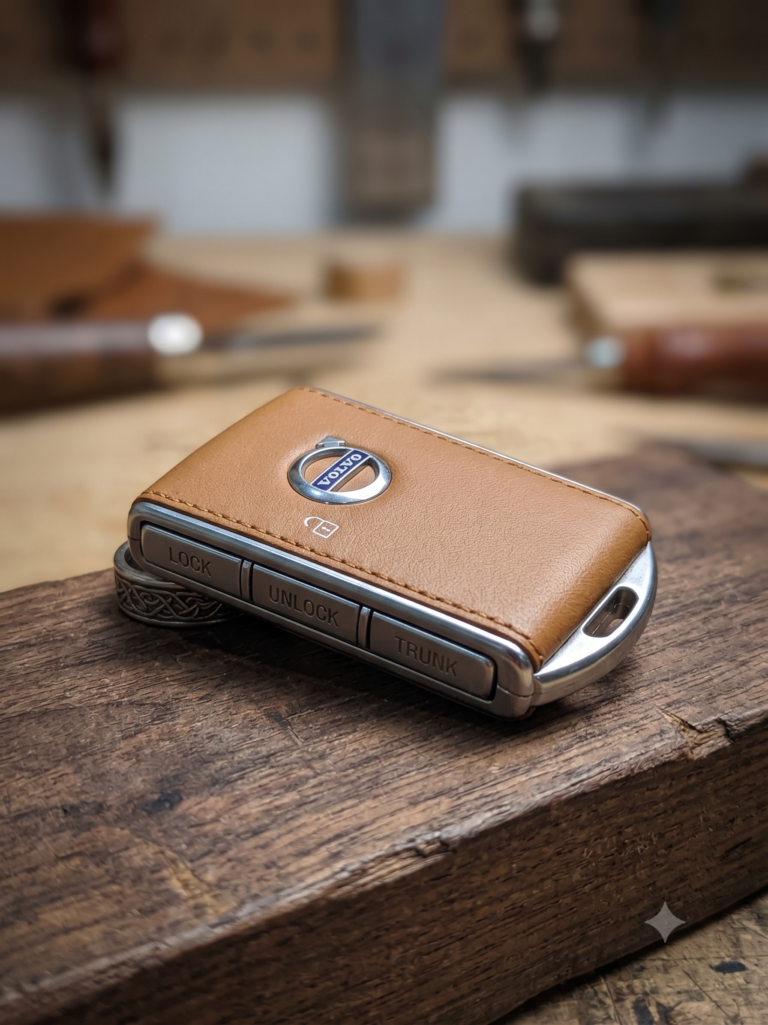
1. Release the emergency key blade. Hold the fob with the Volvo logo facing you and locate the small slider near the key-ring loop. Slide it to release the cover and remove the metal blade underneath.
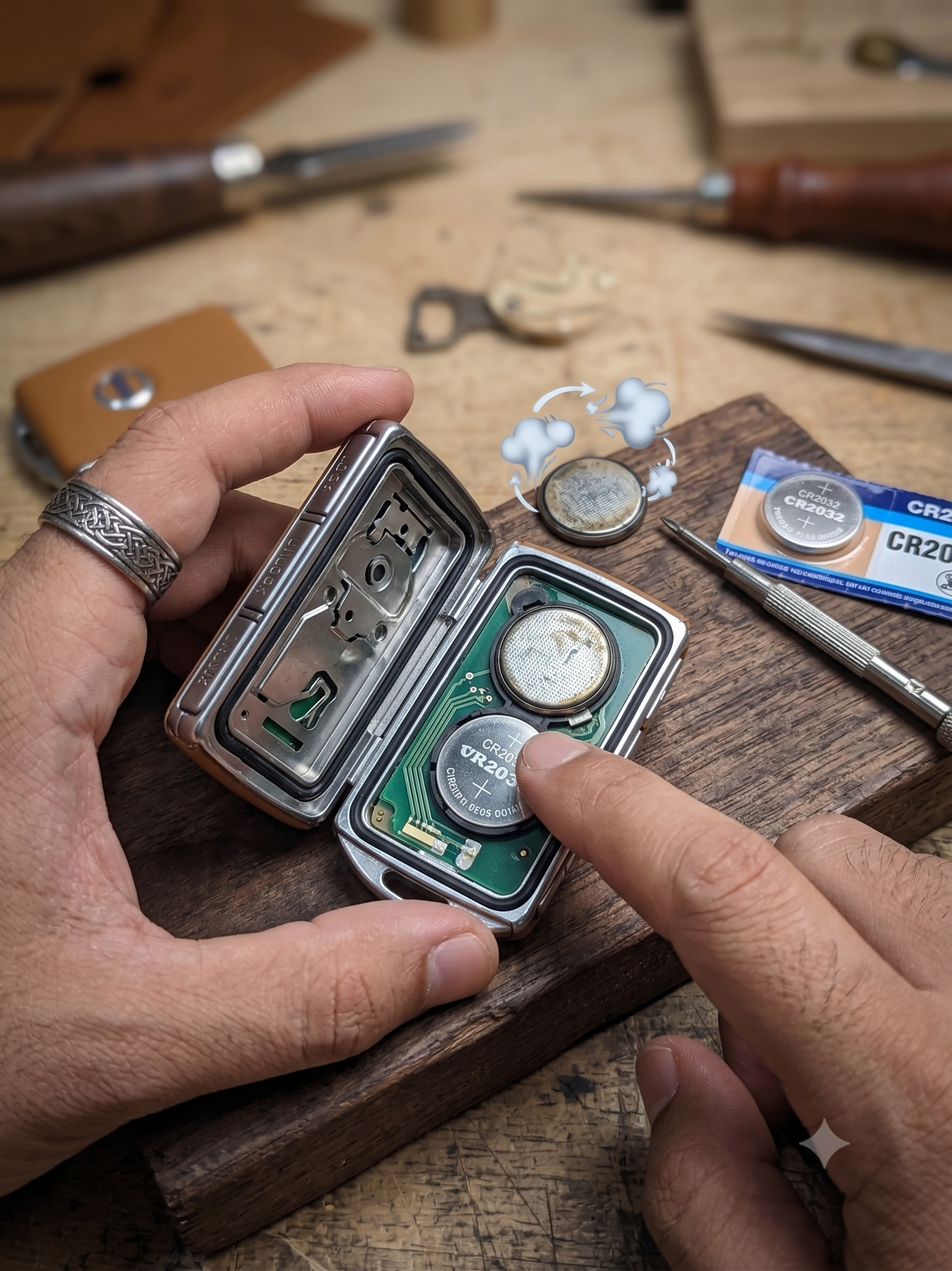
2. Open the case. With the blade removed, insert a small flathead screwdriver, coin, or the blade itself into the exposed seam. Twist gently to separate the two halves of the shell. Work slowly around the perimeter rather than forcing one spot.
3. Locate the battery. Once open, you’ll see the battery seated in a compartment, usually visible without any further disassembly.
4. Note the orientation before removing it. Most fobs seat the battery with the positive (+) side facing up, but check the markings inside the case to be sure, since orientation can vary by fob style.
5. Swap in the new battery. Match the exact code from the old battery (CR2032, CR2025, or CR2430) and press the new one into place until it seats fully against the contacts.
6. Snap the shell closed. Align the two halves and press firmly until you hear the clips click into place. Reinsert the emergency key blade last.
7. Test it. Try the lock and unlock buttons at both close and moderate range, then confirm the car recognizes the fob when you attempt to start it.
Real-world scenario: You notice your fob only works when you’re standing right next to the driver’s door instead of across the parking lot. That shrinking range is one of the clearest early signs of a dying battery, and catching it now means a five-minute fix instead of getting fully locked out later.
Expert Insight: Avoid touching the battery’s flat metal surfaces with your bare fingers during the swap. Skin oils can leave a residue that interferes with contact quality over time, subtly shortening the new battery’s effective life.
Which Battery Does Your Fob Actually Use?
| Fob Style | Common Battery | Notes |
|---|---|---|
| Rectangular “brick” style (XC90, XC60, XC40, S90, V90) | CR2032 | Most common across current and recent models |
| Slimmer or older remote styles | CR2025 | Confirm against the code on the old battery |
| Some older remote designs | CR2430 | Less common; check before assuming CR2032 |
| Buttonless key tags (sealed proximity units) | Not user-serviceable | Requires dealer or locksmith service |
A 2025 electronics retailer’s battery data found that CR2032-style lithium coin cells typically last between two and three years in automotive key fobs, with quality-brand cells generally outperforming budget alternatives in cold climates specifically.
Choose to open the fob first if: you’re not certain which battery type your specific fob uses, since guessing wrong means an extra trip to the store.
Choose a certified service center if: your fob is the sealed, buttonless proximity style, since those units aren’t designed for at-home battery swaps.
What If a New Battery Doesn’t Fix It?
Sometimes a fresh battery goes in and the fob still won’t respond. Here’s how to sort out what’s actually wrong.
| Symptom After New Battery | Likely Cause | What To Do |
|---|---|---|
| Still completely unresponsive | Battery inserted backward | Reopen and check polarity against the markings |
| Works only at very close range | Dirty or corroded contacts | Clean contacts with a cotton swab and rubbing alcohol, let dry, reassemble |
| Locks/unlocks but won’t start car | Fob out of sync with vehicle | Attempt a resync per your owner’s manual, or visit a service center |
| No response even after cleaning | Water damage or internal fault | Visit a certified Volvo service center for diagnosis |
Pros and Cons by Owner Type
The confident DIYer (comfortable with small electronics):
- Pros: A battery swap costs a few dollars and takes minutes compared to a dealership service fee.
- Cons: Forcing the shell open too aggressively can snap small plastic retention tabs that are annoying, though rarely expensive, to fix.
The cautious first-timer (never opened a key fob before):
- Pros: The process is genuinely simple once you’ve seen it done once, and most fobs use identical basic mechanics.
- Cons: It’s easy to buy the wrong battery code if you skip opening the fob to check first.
The owner with a sealed proximity key tag:
- Pros: These units are more water- and dust-resistant since they’re not designed to be opened.
- Cons: You can’t service them at home at all, meaning any battery issue requires a dealer visit.
FAQ
What battery does a Volvo key fob use? Most modern Volvo key fobs use a CR2032 coin cell, though some slimmer or older remote styles use a CR2025 or CR2430. Always confirm the exact code printed on your existing battery before buying a replacement.
How do I know when my Volvo key fob battery needs replacing? Common signs include reduced lock/unlock range, needing to press buttons multiple times, and a dashboard message warning of a low key battery.
Do I need to reprogram my Volvo key fob after changing the battery? Usually not. A simple battery swap typically doesn’t require reprogramming, though if the fob remains unresponsive afterward, a resync or dealer visit may be necessary.
Can I open my Volvo key fob without the emergency key blade in the way? The blade needs to come out first on most designs, since it sits in the same cover you’ll be prying open to reach the battery compartment.
How long does a Volvo key fob battery typically last? Most CR2032-style batteries in Volvo fobs last roughly two to three years, though usage habits and climate can shorten or extend that range.
Key Takeaways
- Most Volvo fobs use a CR2032 battery, but always confirm the code before buying.
- The process is five basic steps: release the blade, open the shell, swap the battery, close it, test it.
- Watch for shrinking range or multiple button presses as early warning signs before a full failure.
- Sealed, buttonless key tags aren’t user-serviceable and need a dealer or locksmith.
- If a fresh battery doesn’t fix it, the issue may be contacts, sync, or water damage, not the battery itself.
What’s Next
Check the battery code on your current fob today, even before it shows signs of dying, so you already have the right replacement on hand when it does.