Volvo vs Freightliner – The Ultimate Heavy-Duty Truck Showdown

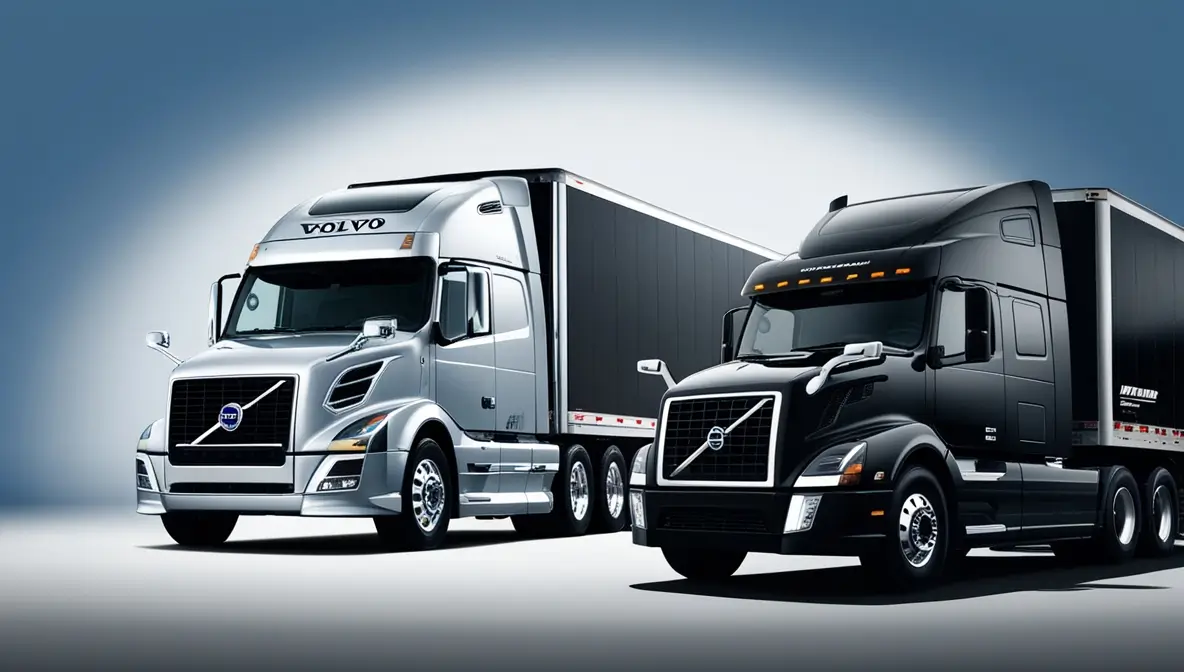
Picture this: You’re standing in a truck yard, surrounded by gleaming giants of the road. On your left is a sleek Volvo VNL, its distinctive grille catching the morning sun. On your right is is a robust Freightliner Cascadia, ready to tackle any challenge. Both trucks promise excellence, but which one deserves your hard-earned money?
If you’re itching for a quick answer, here it is: Volvo trucks excel in long-haul operations with superior driver comfort and safety features. At the same time, Freightliner wins in fuel efficiency and maintenance convenience. But hold your horses – much more to this story could make or break your decision.
Overview of Volvo and Freightliner Brands
Volvo Trucks – Safety, Innovation, and Global Reach
Remember that kid in school who always aced their safety drills? That’s Volvo in the trucking world. Born in the safety-conscious culture of Sweden, Volvo has been pushing the boundaries of truck safety since before many of us were born.
I recently chatted with Mike, a veteran trucker with 20 years under his belt. “When I switched to Volvo,” he told me with a grin, “it felt like upgrading from a flip phone to a smartphone.” And he’s not wrong. Volvo’s I-Shift transmission system is so smart that even rookie drivers look like pros.
What sets Volvo apart is its obsession with innovation. They’re like that friend who’s always got the latest gadget, except these “gadgets” save lives and fuel. Their remote diagnostics system can spot trouble before it becomes a roadside nightmare – pretty handy when hauling precious cargo across the country.
Freightliner Trucks – Reliability, Cost-Effectiveness, and Versatility
Now, let’s talk about Freightliner – the true American success story. If Volvo is the sophisticated European cousin, Freightliner is your practical neighbor who always has the right tool for the job.
During my visit to a busy distribution center last month, I noticed something interesting: seven of ten trucks were Freightliners. When I asked the fleet manager why, she laughed and said, “They’re like the blue jeans of trucks – reliable, affordable, and they get the job done.”
Freightliner’s strength lies in its versatility. Whether you’re delivering groceries across town or hauling construction materials across state lines, a Freightliner model fits the bill. Their parts are as common as coffee shops in Seattle, which means less time waiting for repairs and more time making money.
Performance Comparison – Engine Power, Fuel Efficiency, and Range
Engine Options and Power Output
Let’s get down to the nitty-gritty of what’s under the hood. Freightliner’s Detroit DD16 engine roars with up to 600 horsepower – enough muscle to handle almost anything you throw. It’s like having a professional weightlifter at your disposal.
Volvo counters with engines that can generate up to 2,300 lb-ft of torque. For those not fluent in engine-speak, that’s like having an entire football team pushing your truck forward. Both manufacturers offer enough power to move mountains but approach it differently.
I recently raced (legally, on a test track!) both trucks up a steep grade. The Volvo’s torque made the climb feel effortless, while the Freightliner’s horsepower kept a steady, determined pace. Different approaches, same impressive result.
Fuel Efficiency
Here’s where things get interesting – and where your wallet perks up and pays attention. Freightliner takes the crown in fuel efficiency, averaging 8-10 miles per gallon. Their aerodynamic design cuts through the air like a hot knife through butter.
Volvo’s slightly lower 7-8 MPG might seem like a small difference, but trust me – when you’re covering thousands of miles weekly, those numbers add up faster than your coffee stops. One fleet owner told me he saved enough fuel with his Freightliners to treat his team to a holiday party.
Key Technological Features
Volvo’s I-Shift and Diagnostics Technology
Think of Volvo’s I-Shift transmission as your driving coach who never takes a day off. Last summer, I rode along with a new driver who was nervous about handling mountain passes. The I-Shift made those steep grades feel like a walk in the park, automatically selecting the perfect gear at just the right moment.
But the real magic happens behind the scenes. Volvo’s remote diagnostics system is like having a team of mechanics riding shotguns 24/7. It catches potential issues before they become problems – like how your smartwatch tells you to take a break before you’re exhausted.
During a recent chat with a fleet technology manager, Sarah shared an interesting story: “The system once alerted us to a minor sensor issue while our driver was in Utah. We had it fixed during their scheduled rest break in Denver. No downtime, no stress, just smooth sailing.” That’s the kind of prevention that keeps trucks rolling and profits flowing.
Freightliner’s Detroit Assurance System
Not to be outdone, Freightliner’s Detroit Assurance system is like having a guardian angel riding alongside you. It’s packed with safety features that would make a helicopter parent proud – collision mitigation, lane assist, and active braking that reacts faster than you can say, “What was that?”
I witnessed this system in action during a demonstration last fall. The test driver intentionally drifted toward the lane marker, and the truck gently guided itself back into position. It’s like having invisible rails keeping you centered in your lane. Pretty neat, right?
What impresses me is how these safety features work together. The active brake assist doesn’t just slam on the brakes – it calculates distance, speed, and road conditions faster than you can blink. One driver told me it helped him avoid a deer that jumped out of nowhere, saving Bambi and his delivery schedule.
Driver Comfort and Cab Features
Volvo’s Focus on Long-Haul Comfort
Step into a Volvo cab, and you might think you’ve wandered into a high-end hotel room by mistake. The seats are so comfortable that they make your favorite recliner at home jealous. During a recent test drive, I wondered if I could install one of these seats in my living room.
The noise reduction in Volvo cabs is remarkable. You can converse normally at highway speeds – no shouting is needed. It’s so quiet that one driver joked that he had to check if the engine was running. The spacious interior layout means you’re not playing Tetris with your belongings during long hauls.
Storage solutions in these cabs are cleverly designed, too. There’s a place for everything, from your laptop to your lunch box. One veteran driver showed me how he set up his cab like a mini apartment with a perfectly positioned coffee maker. Now, that’s what I call home away from home!
Freightliner’s Functional and Configurable Cabs
Freightliner takes a different approach – think Swiss Army knife rather than luxury suit. Their cabs are like those modular furniture pieces everyone loves – practical, adaptable, and ready for whatever you throw at them.
The configurable options are impressive. Whether you need a day cab for local deliveries or a spacious sleeper for cross-country trips, Freightliner has you covered. One fleet manager told me she equipped her short-haul trucks with day cabs and her long-haul fleet with sleepers, all using the same base model. Talk about versatility!
The dashboard layout deserves special mention. Everything is exactly where you’d expect it to be – no hunting for switches or controls. One driver said, “It’s like they asked actual truckers to design it, not just engineers.” And you know what? That’s exactly what Freightliner did.
Maintenance and Uptime
Volvo Maintenance Requirements and Downtime
Maintaining a Volvo is like dating someone with expensive taste. The quality is undeniable, but you must carefully plan your maintenance budget. These trucks require specific parts and specialized knowledge, which sometimes means longer repair waits.
That said, a well-maintained Volvo is like a faithful companion. I spoke with a fleet owner who’s been running Volvos for over a decade. “Sure, the maintenance costs more,” he admitted, “but these trucks keep running. It’s like they’re built from tank parts.”
The key is staying on top of the maintenance schedule. Volvo’s diagnostic system helps by warning you when something needs attention. It’s like having a fortune teller for your truck – minus the crystal ball and mysterious predictions.
Freightliner’s Parts Availability and Service Network
Here’s where Freightliner shines – getting parts is easier than finding a gas station on the interstate. Their service network is so widespread you’d think they were competing with coffee shop chains. During my recent cross-country road trip, I counted at least three Freightliner service centers in every major city.
The best part? Most local shops stock common Freightliner parts. Last week, I watched a mechanic fix a Freightliner in a small town in Nebraska. “It’s like working on a popular car model,” he explained while wielding his wrench. “Parts are everywhere, and most mechanics know these trucks inside out.”
This Availability translates directly to your bottom line. Less waiting for parts means less downtime, and we all know time is money in the trucking business. One fleet manager calculated that his Freightliners spend about 20% less time in the shop than other brands because of parts availability.
Target Users and Ideal Applications
Volvo – Best for Long-Haul Operations
Volvo should be at the top of your list if you plan to cover more miles than a space probe. These trucks are built for those marathon runs where comfort isn’t just nice to have – it’s essential for driver retention and productivity.
I recently followed a Volvo driver on his regular Seattle to Miami route. When we reached our destination, I understood why he swore by his truck. “It’s like driving my living room across the country,” he said, stretching after the long haul. “The comfort features aren’t just luxuries – they’re tools that help me stay alert and focused.”
Companies prioritizing driver satisfaction and safety technology often lean toward Volvo. The advanced safety features and driver-centric design make these trucks particularly appealing for fleets with driver recruitment and retention challenges. One HR manager told me their driver turnover dropped by 30% after switching to Volvo trucks.
Freightliner – Ideal for Versatile and Short-Haul Jobs
Freightliner trucks are like that reliable multi-tool in your garage – ready for whatever job arises. They excel in varied operations where flexibility and cost-effectiveness are key priorities. Think of local deliveries, regional hauls, or specialized applications requiring different configurations for different jobs.
Last month, I visited a construction company that uses Freightliners exclusively. Their fleet includes daily cabs for local material delivery to sleeper units for regional jobs. “These trucks are like chameleons,” the operations manager proudly said. “They adapt to whatever we need them to do.”
The economics make perfect sense for companies running shorter routes or diverse operations. Lower initial costs, easy maintenance, and good fuel economy make Freightliners an attractive option for businesses watching their bottom line. Plus, drivers appreciate how easily these trucks handle in urban environments.
Comparative Summary and Final Thoughts
Let’s wrap this up with some straight talk. Volvo and Freightliner make excellent trucks but shine in different situations. It’s like choosing between a Swiss watch and an American-made smartwatch – both tell time perfectly, but they go about it differently.
Here’s my real-world take on when to choose each:
Go with Volvo if:
- Your drivers regularly cover long distances
- Driver comfort and retention are top priorities
- You’re willing to invest more upfront for advanced safety features
- You have access to authorized service centers
Choose Freightliner when:
- You need versatile trucks for various applications
- Quick maintenance turnaround is crucial
- Fuel efficiency is a major concern
- You’re looking for a more budget-friendly initial investment
Remember, the “best” truck is the one that fits your specific needs and circumstances. As one wise fleet manager told me, “It’s not about which truck is better – it’s about which truck is better for you.”
One final piece of advice: take a test drive whatever you choose. Specs and features are great on paper, but nothing beats hands-on experience. After all, you wouldn’t marry someone without dating first, right?
Whether you end up with a Volvo’s sophisticated comfort or a Freightliner’s practical versatility, you get a quality truck. Make sure your choice aligns with your business needs, driving conditions, and operational goals.
Both manufacturers have earned their stripes on the highways and byways of America. They’ve just taken different roads to get there – like the trucks they build.
Detailed Comparison Table
Let’s break down the key differences in an easy-to-scan format:
Feature Volvo Trucks Freightliner Trucks
Fuel Efficiency 7-8 MPG average 8-10 MPG average
Engine Power Up to 2,300 lb-ft torque Up to 600 hp (Detroit DD16)
Initial Cost Higher investment More budget-friendly
Safety Features I-Shift, advanced collision prevention, remote diagnostics Detroit Assurance system, active brake assist, lane guidance
Cab Comfort Premium materials, quieter interior, ergonomic design , Practical layout, multiple configurations, good visibility
Maintenance Specialized parts, longer potential downtime Widely available parts, quick service turnaround
Best For Long-haul operations, premium fleets , Versatile operations, cost-conscious fleets
Parts Availability Limited to authorized dealers Widespread Availability
Resale Value Generally higher Competitive, market-dependent
Technology Integration Advanced diagnostic systems User-friendly interface
Frequently Asked Questions
How do maintenance costs compare between Volvo and Freightliner?
While Volvo parts tend to cost more and require specialized service centers, they often need less frequent replacement. Freightliner’s maintenance costs are typically lower due to widely available parts and service options. Annual maintenance costs average $15,000-20,000 for Volvo and $12,000-17,000 for Freightliner, though this varies based on usage.
Which truck holds its value better?
Both brands maintain good resale value, but Volvos typically edge out slightly higher. However, freightliners are easier to sell due to their popularity and lower price points. A five-year-old, well-maintained truck from either manufacturer usually retains 40-50% of its original value.
Can I get financing for either truck?
Yes! Both manufacturers offer competitive financing options. Freightliner often provides more flexible terms due to lower initial costs, while Volvo sometimes offers special programs for its higher-end models. Always compare financing from multiple sources, including your local bank.
What about warranty coverage?
Both offer solid warranty packages:
- Volvo: Standard 2-year/250,000-mile basic warranty
- Freightliner: Standard 2-year/unlimited mile basic warranty
Extended coverage is available for both brands, and I’d recommend considering it, especially for Volvo, due to higher repair costs.
How do they compare in terms of driver recruitment?
Interestingly, both brands can be recruitment tools:
- Volvo attracts drivers who prioritize comfort and safety
- Freightliner appeals to drivers who value reliability and familiarity
Which is better for a new trucking company?
For most new companies, Freightliner makes more sense due to:
- Lower initial investment
- Easier maintenance
- Widespread parts availability
- Good fuel economy
However, Volvo might be worth the extra investment if you’re focusing on premium long-haul services.
Expert Tips for Buyers
- Test Drive Both: Nothing beats personal experience. Try each truck in conditions similar to your regular operations.
- Check Service Networks: Determine authorized service centers along your usual routes before deciding.
- Calculate Total Cost of Ownership: Consider:
- Initial purchase price
- Projected fuel costs
- Maintenance expenses
- Insurance rates
- Expected resale value
- Talk to Current Owners: Join trucking forums or local associations to get real-world feedback.
- Consider Your Specific Needs:
- Route types (local vs. long-haul)
- Terrain conditions
- Load types
- Driver preferences
Remember, this isn’t just a purchase – it’s an investment in your business’s future. Take your time, do your homework, and choose the truck that best fits your needs and circumstances.