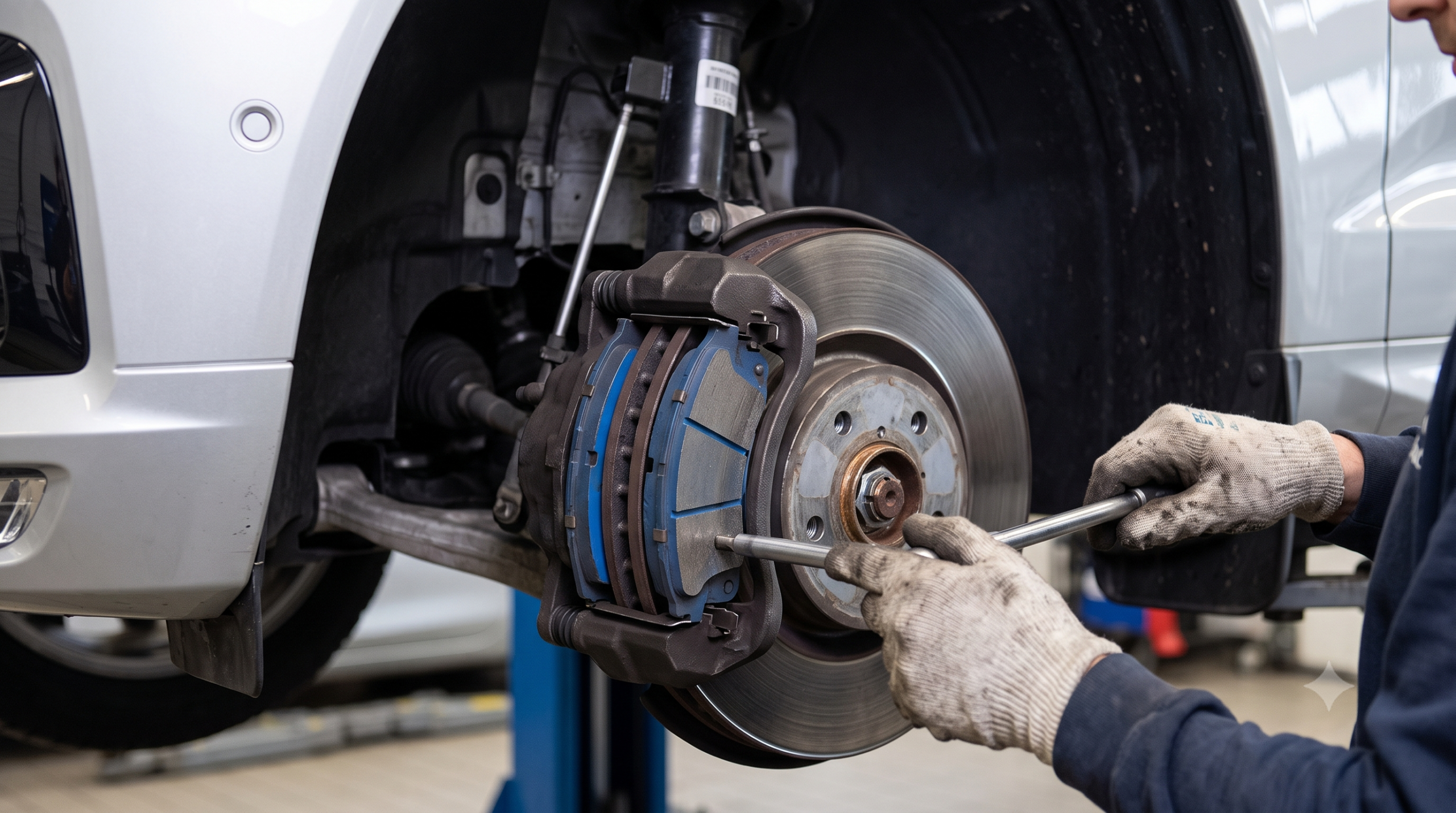
How to Change Brake Pads on a Volvo XC60?

Front brake pads on your XC60 are about as straightforward as car maintenance gets. Rear brake pads are a different story entirely — skip one specific step and you can burn out an expensive electronic caliper motor before you’ve even gotten the old pads out.
TL;DR
- Front brake pads are a standard DIY job: compress the piston with a tool, swap the pads, torque everything back down.
- Rear brake pads are different — the XC60 uses an Electronic Parking Brake (EPB), and the caliper piston must be put into service mode before you can retract it.
- Skipping service mode and simply forcing the rear piston back (with a C-clamp, the way you would on the front) risks damaging the EPB motor, which is a genuinely expensive part to replace.
- You can put the rear EPB into service mode with a compatible scan tool, or via a manual method some owners use by removing the EPB unit from the caliper — though this carries its own risks.
- Always torque guide pin bolts and lug bolts to spec, and give new pads roughly 200 miles of gentle braking to bed in properly.
The Quick Answer
Changing front brake pads on a Volvo XC60 is a conventional job: compress the caliper piston, swap the old pads for new, and torque everything to spec. Changing rear brake pads is not conventional — the XC60’s Electronic Parking Brake means the rear caliper pistons are motor-driven, not purely hydraulic, and they must be commanded into “service mode” with a scan tool before you can safely retract them. Attempting to force a rear piston back the way you would a front one is the single most common way DIYers damage the EPB system.
Front Brake Pads: The Straightforward Half
Step 1: Get the Wheel Off and Caliper Loose
Loosen the lug bolts slightly before jacking the car up, then raise the vehicle and support it securely on jack stands — never work under a vehicle held up only by a jack. Remove the wheel, then locate the caliper guide pin bolts.
Step 2: Remove the Caliper and Old Pads
Remove the guide pin bolts, lift the caliper off the bracket, and support it with a hook, bungee cord, or wire — never let it hang by the brake hose, since the weight can stress and damage the line. Pull the old pads and any retaining clips out, then clean the bracket contact points with a wire brush and brake cleaner.
Quick Tip: Take a photo of exactly how the pad clips and shims sit before you remove them. It’s a five-second step that saves real confusion during reassembly.
Step 3: Compress the Piston and Install New Pads
Use a caliper piston compression tool to slowly wind or push the piston back into the caliper, keeping the piston face square as it goes in. Slide the new pads into the bracket, then lower the caliper back over them.
Expert Insight: Some owners like to lightly grease the backs of the pads (never the friction surface) to reduce squeal and vibration. It’s a genuinely debated practice among DIYers, so treat it as optional rather than mandatory.
Step 4: Torque Everything and Bed In
Torque the caliper guide pin bolts to roughly 30–35 Nm (22–26 ft-lbs), reinstall the wheel, and torque the lug bolts in a star pattern to approximately 140 Nm (103 ft-lbs). Pump the brake pedal a few times before driving to reseat the pads against the rotor, then keep braking gentle for the first 200 miles.
Rear Brake Pads: Where the Electronic Parking Brake Changes Everything
Why You Can’t Just C-Clamp the Rear Caliper
This is the part that catches experienced DIYers off guard. The rear calipers on an XC60 house a small motor that drives the parking brake, and that same piston handles regular braking too. The motor threads the piston in and out — it isn’t a simple hydraulic piston you can push back with a clamp. Forcing it back mechanically, the way you would on a conventional caliper, risks damaging the internal motor and gearing, which is a far more expensive repair than the pads themselves.
Real-world scenario: A DIYer confident from years of doing their own brakes on other cars tackles the rear pads the same way they always have — clamp, compress, done. The clamp fights the motor’s resistance, something inside gives, and what should have been a $40 pad job turns into an EPB caliper replacement costing hundreds of dollars. This is a documented, recurring mistake specifically on Volvo’s EPB-equipped models.
Step 1: Put the EPB Into Service Mode First
Before touching the caliper, the rear parking brake needs to be commanded into service mode, which retracts the motor-driven piston to a safe, known position. This is typically done with a compatible scan tool (Volvo’s VIDA system, or specific aftermarket EPB wind-back tools), following a menu path roughly like Scan Tool > Chassis > Parking Brake > Service Mode.
Quick Tip: Confirm the scan tool reports service mode is actually active before proceeding — don’t assume it engaged just because you selected the option. Some owners have run into stalled or incomplete sequences that need to be retried.
Step 2: An Alternative Manual Method (With Real Caveats)
Some owners have documented a workaround: removing the EPB motor unit from the back of the caliper, using a wide screwdriver to manually turn the motor’s drive recess clockwise until it stops (fully retracting it), then swapping the pads before reattaching the unit. This genuinely works for some owners and avoids buying a scan tool — but it also means disturbing a seal that ideally should be replaced when disconnected, and it’s not the procedure Volvo recommends. Treat it as an informed trade-off, not a risk-free shortcut.
Step 3: Swap the Pads and Bracket Hardware
With the piston safely retracted, remove the caliper (typically two 13mm bolts, counter-holding the guide pins with a 16mm wrench), then the caliper bracket (usually two 15mm bolts). Knock out the old pads and clips, clean everything with brake cleaner and a wire brush, install new retaining clips, and regrease the guide pins before reinstalling them.
Step 4: Reassemble and Exit Service Mode
Torque the bracket bolts to roughly 110 Nm, and the caliper guide pin bolts to about 35 Nm. Reinstall the wheel and torque lug bolts to spec in a star pattern. Back in the cabin, use the scan tool to exit service mode, which recalibrates the parking brake as it re-engages. Pump the brake pedal several times to seat the pads, then apply and release the parking brake to confirm it’s functioning normally before driving.
Expert Insight: Don’t skip the pedal-pumping step. It’s what seats the new pads firmly against the rotor before you rely on them at speed — driving off immediately can mean a soft or delayed first brake application.
Comparison Table: Front vs. Rear Brake Pad Jobs
| Factor | Front Pads | Rear Pads |
|---|---|---|
| Mechanism | Standard hydraulic piston | Motor-driven piston (EPB) |
| Tool needed to retract piston | Standard caliper compression tool | Scan tool in service mode (or manual EPB workaround) |
| Risk if done wrong | Minimal — worst case, slow piston seating | Can damage the EPB motor, an expensive part |
| Difficulty | Beginner-to-intermediate DIY | Intermediate-to-advanced; scan tool strongly recommended |
| Typical DIY savings | $150–$250 vs. shop labor | $270–$470 vs. shop labor |
Pros and Cons by DIYer Type
The Experienced Home Mechanic
- ✅ Front pads are exactly as straightforward as they’d expect from prior brake jobs on other vehicles.
- ❌ Assuming the rear works the same way is the single most common — and most costly — mistake on this platform.
The Budget-Conscious Owner Without a Scan Tool
- ✅ The manual EPB retraction method is a genuine option if you’re comfortable with the added complexity and seal risk.
- ❌ Without either a scan tool or the manual method done carefully, rear pads aren’t a safe DIY job to improvise.
The Owner Who Just Wants It Done Right
- ✅ A cheap OBD2-based EPB wind-back tool (distinct from a full VIDA setup) is a worthwhile one-time purchase if you plan to do your own brakes long-term.
- ❌ If this is a one-time job, a shop visit for the rear pads specifically may cost less than buying single-use diagnostic equipment.
FAQ
Q: Can I use a regular C-clamp to push back the rear brake caliper piston? A: No. The rear calipers are motor-driven as part of the Electronic Parking Brake, and forcing the piston back mechanically risks damaging the motor — it needs to be electronically retracted via service mode first.
Q: Do I need a scan tool to change rear brake pads on an XC60? A: Ideally yes. A compatible scan tool (or a dedicated EPB wind-back tool) is the safest way to enter service mode. A manual method exists involving removing the EPB unit, but it comes with its own risks and isn’t Volvo’s recommended procedure.
Q: Are front brake pads a normal DIY job on the XC60? A: Yes — front pads use a conventional hydraulic caliper and follow the same general process as most vehicles: compress, swap, torque.
Q: What torque specs should I use for brake pad reinstallation? A: Caliper guide pin bolts are generally torqued around 30–35 Nm, caliper bracket bolts around 110 Nm on the rear, and lug bolts to roughly 140 Nm — always confirm exact specs for your specific model year.
Q: Why does my parking brake need to “recalibrate” after a rear pad job? A: Exiting service mode re-engages the EPB motor against the new pad thickness, and the system needs to relearn that position to apply the correct clamping force going forward.
Key Takeaways
- Front brake pads are a standard, beginner-friendly DIY job on the XC60.
- Rear brake pads require entering EPB service mode first — this is not optional, and skipping it risks real damage.
- A scan tool or dedicated EPB wind-back tool is the safest way to retract the rear piston; a manual workaround exists but carries added risk.
- Torque all fasteners to spec, and bed in new pads gently for the first 200 miles.
- DIY savings are real — roughly $150–$250 on the front, $270–$470 on the rear — but the rear job demands more preparation before you start.
Next Step
If you don’t already own a scan tool capable of EPB service mode, decide before you buy parts whether it’s worth investing in one or whether the rear job specifically is worth a shop visit — that single decision shapes the entire rest of the project.