What is the Range of Volvo XC40 Recharge?

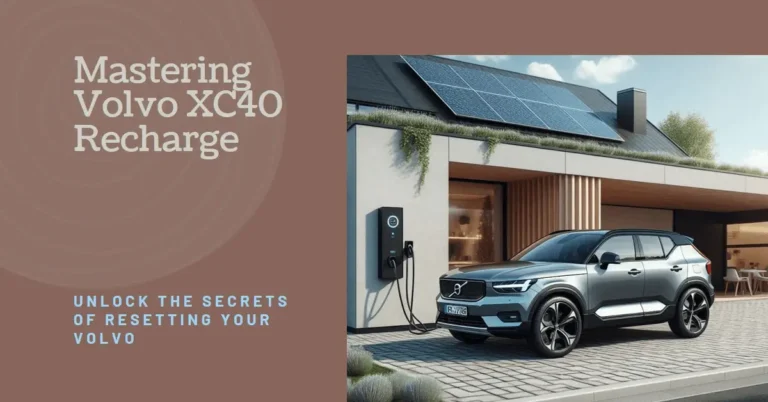
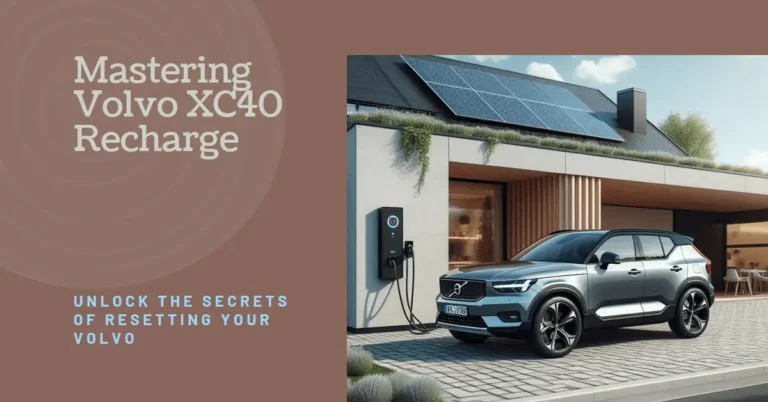
Remember that time you planned a road trip, only to realize halfway through that your gas tank was running on fumes? Well, buckle up, because we’re about to dive into the world of electric vehicles (EVs) where “range anxiety” is the new “low fuel” warning. Today, we’re zooming in on the Volvo XC40 Recharge, a snazzy little number that’s been turning heads in the EV market. So, what’s the range of the Volvo XC40 Recharge? Hold onto your charging cables, folks!
The 2024 single-motor rear-wheel drive (RWD) version can cruise for up to 293 miles on a single charge. That’s like driving from New York City to Washington D.C. and back, with enough juice left over for a quick trip to the grocery store. The dual-motor all-wheel drive (AWD) variant, while a bit thirstier, still manages a respectable 254 miles. Not too shabby for a luxury SUV that looks like it just stepped off a Swedish catwalk!
Overview of the Volvo XC40 Recharge
Let’s take a quick trip down memory lane, shall we? Volvo, once known for boxy-but-safe cars that your grandparents swore by, has been on quite the journey. They’ve gone from “safe and sensible” to “safe and stylish,” and now they’re adding “sustainable” to the mix. The XC40 Recharge is their way of saying, “Hey, we can do electric, and we can do it with style!”
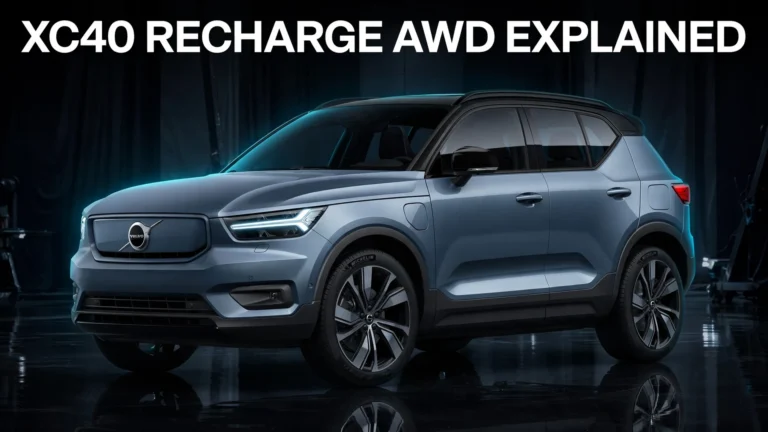
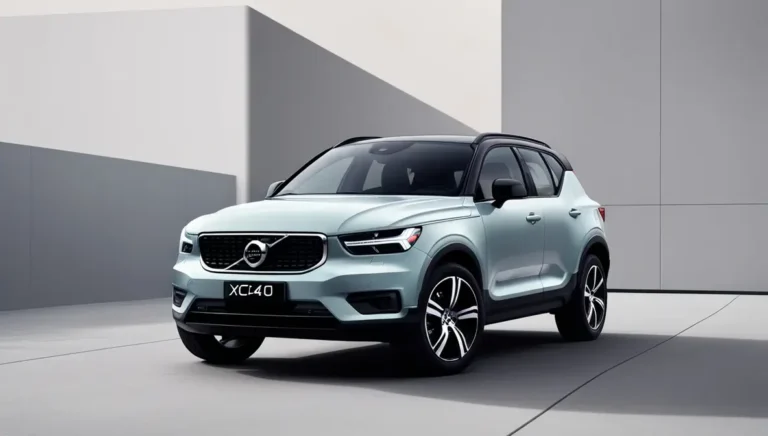
I remember the first time I saw an XC40 Recharge at a car show. It was like seeing a supermodel in hiking boots – sleek, stylish, but ready to tackle anything. This little powerhouse is Volvo’s answer to the growing demand for electric SUVs. It’s not just a car; it’s a statement on wheels, saying, “I care about the environment, but I also like to look good while I’m saving it.”
Key Specifications of the 2024 XC40 Recharge
Now, let’s pop the hood (figuratively speaking, of course – there’s no engine under there!) and take a look at what makes this Swedish beauty tick. The 2024 XC40 Recharge comes in two flavors: single-motor RWD and dual-motor AWD. It’s like choosing between vanilla and chocolate ice cream, except both options are delicious and eco-friendly.
The single-motor version is the new kid on the block, boasting an impressive 293-mile range. It’s perfect for those long drives where you want to feel like you’re gliding on a cloud of electricity. The dual-motor AWD version, while slightly less range-efficient at 254 miles, is like having a pair of electric mountain goats under the hood. It’ll tackle any terrain with ease, snow or shine.
Both versions come with a beefy 82-kWh battery pack. That’s like having a small power plant tucked away in your car. And when it comes to charging, this Volvo is no slouch. It can juice up from 10% to 80% in about 28 minutes using a fast charger. That’s quicker than I can decide what to order at a drive-thru!
Compared to previous models, the 2024 XC40 Recharge is like the star student who came back from summer break with a growth spurt and straight A’s. It’s improved in almost every way, from range to efficiency. And when you stack it up against competitors like the Tesla Model Y or the Audi Q4 e-Tron, it holds its own quite nicely, thank you very much.
Detailed Range of the 2024 Volvo XC40 Recharge
Alright, let’s dig deeper into the nitty-gritty of this electric Swedish meatball’s range. The single-motor RWD version is the marathon runner of the duo, boasting an EPA-estimated range of 293 miles. That’s like driving from Los Angeles to Las Vegas, with enough charge left to cruise the Strip a few times.
But here’s the kicker – your mileage may vary, quite literally. Just like how my attempts at baking never quite match the picture in the cookbook, real-world range can be affected by various factors. Temperature, terrain, and driving style all play a part. Cranking up the AC on a hot day or zooming up hills like you’re in “The Fast and the Furious: Electric Drift” will eat into your range faster than I demolish a plate of Swedish pancakes.
Now, let’s talk about the dual-motor AWD version. With a range of 254 miles, it’s like the slightly chubbier twin who can’t run quite as far but makes up for it with some serious muscle. The trade-off for that all-wheel-drive goodness is a bit of range, but hey, when you’re conquering snowy mountain roads, you won’t be complaining.
The dual-motor setup is like having two energetic puppies pulling your sled – it’s more powerful, but it also needs more treats (or in this case, electricity). It’s perfect for those who live in areas where Mother Nature likes to flex her muscles with challenging weather and terrain.
How Does XC40 Recharge Compare to Other Electric SUVs?
In the world of electric SUVs, the XC40 Recharge is like that cool exchange student who shows up and immediately becomes popular. It’s got style, substance, and a certain je ne sais quoi (or should I say “jag vet inte vad” in Swedish?).
When we put it side by side with the Tesla Model Y, it’s like comparing apples and… well, fancier apples. The Model Y might have a slight edge in range, but the XC40 Recharge counters with Swedish design flair and a more traditional SUV feel. It’s like choosing between a sleek iPhone and a feature-packed Android – both are great, but it comes down to personal preference.
Against the Audi Q4 e-Tron, the XC40 Recharge holds its ground firmly. It offers comparable range and performance, but with that distinctive Volvo charm. And when we look at the Genesis GV60, the XC40 Recharge is like the cool, understated Scandinavian cousin to the flashy Korean newcomer.
What sets the XC40 Recharge apart is its ability to balance range with luxury, style, and safety features. It’s like having your cake and eating it too – if your cake was electric, environmentally friendly, and could go from 0 to 60 in 4.7 seconds. Volvo has managed to create an EV that doesn’t feel like a compromise. You get the eco-friendly credentials without sacrificing the comfort and quality that Volvo is known for.
Key Factors That Influence Electric Range
Now, let’s talk about what really makes or breaks your electric road trip dreams. It’s not just about the number on the spec sheet; it’s about how that number holds up in the real world. And trust me, the real world can be as unpredictable as a cat on catnip.
First up, let’s chat about the heart of any EV – the battery. The XC40 Recharge comes with an 82-kWh battery pack, which is like having a small power station tucked under the floor. This beefy battery is a big reason why the XC40 can go the distance. But here’s the cool part – it’s not just about size. Volvo has some nifty thermal management tricks up its sleeve to keep that battery happy and efficient, whether you’re cruising through a desert heatwave or braving an Arctic chill.
Speaking of weather, let’s talk about how Mother Nature can be both your best friend and worst enemy when it comes to EV range. Extreme temperatures can affect battery performance faster than gossip spreads in a small town. Cold weather is particularly sneaky – it can reduce your range quicker than you can say “winter is coming.” On the flip side, a nice, mild day can have you cruising along with a smile, watching that range estimate barely budge.
But it’s not just about the weather. Your driving habits can make or break your range efficiency. Lead-footed drivers, beware! Stomping on the accelerator like you’re trying to squash a bug will drain your battery faster than a teenager drains their phone battery on TikTok. But here’s a neat trick – the XC40 Recharge comes with a one-pedal driving mode. It’s like having a secret weapon for efficiency. Once you get the hang of it, you’ll be gliding around town like an electric ninja, barely touching the brake pedal.
And let’s not forget about terrain. Flat roads are your friend, but hills? They’re the frenemy of EVs everywhere. Going uphill is like trying to run up a down escalator – it takes more energy. But here’s where EVs have a cool party trick: regenerative braking. When you’re cruising downhill or slowing down, the XC40 Recharge turns into a mini power plant, converting that kinetic energy back into electricity. It’s like getting a little bonus charge every time you brake or go downhill. Pretty neat, huh?
Charging the Volvo XC40 Recharge
Alright, let’s talk about juicing up this Swedish electric meatball. Charging an EV might seem daunting at first, but trust me, it’s easier than assembling IKEA furniture (and way less frustrating).
First things first – fast charging. The XC40 Recharge can go from 10% to 80% charge in about 28 minutes using a 200 kW DC fast charger. That’s quicker than I can decide what to watch on Netflix! It’s perfect for those long road trips where you need a quick top-up. Just enough time to grab a coffee, stretch your legs, and wonder why gas station hot dogs always look so tempting (pro tip: resist the urge).
But let’s be real, most of the time you’ll be charging at home. It’s like having your own personal gas station, minus the weird smells and questionable restrooms. With a Level 2 home charger, you can fully juice up overnight. Plug it in, go to bed, and wake up to a ‘full tank’ – it’s like the EV fairy visited while you were sleeping!
Now, here’s a pro tip from someone who learned the hard way: pre-conditioning is your friend. It’s like warming up before exercise, but for your car. If you tell your XC40 Recharge when you’re planning to leave, it’ll warm up the battery to the optimal temperature for charging. It’s like having a personal assistant for your car, making sure everything’s just right before you head out.
And speaking of optimal, let’s talk about preserving that battery life. Charging to 100% all the time is like eating a whole cake every day – tempting, but not great in the long run. For daily use, keeping your charge between 20% and 80% is the sweet spot. It’s like the Goldilocks zone for batteries – not too full, not too empty, just right.
How the XC40 Recharge Range Fits Daily Life
So, how does the XC40 Recharge’s range translate to real life? Well, let me tell you about my week with this electric Viking.
For city driving, the 293-mile range of the single-motor version is like having a magical never-ending fuel tank. I cruised around town for days, running errands, commuting to work, and even taking a spontaneous trip to that cute little café two towns over. By the end of the week, I still had enough charge left to make it to my parents’ house for Sunday dinner (and back!). It’s perfect for those of us who treat charging like we treat doing laundry – wait until you absolutely have to.
But what about long-distance travel, you ask? Well, I decided to put it to the test with a weekend getaway. The highway range holds up impressively well, especially if you’re not trying to break any land speed records. I made it to my destination, a quaint little B&B about 200 miles away, with plenty of charge to spare. The trip back involved a quick stop at a fast-charging station, which coincided perfectly with my craving for a mid-journey snack.
The key to stress-free long-distance EV travel? A little planning goes a long way. Thanks to the growing network of charging stations, range anxiety is becoming as outdated as flip phones. Apps and the car’s navigation system make finding charging spots easier than locating the nearest Starbucks (and trust me, there are a lot of those).
Real-World Range Tests and User Experiences
Now, let’s get down to the nitty-gritty – what are real people saying about the XC40 Recharge’s range? I scoured reviews, forums, and even chatted with a few XC40 Recharge owners at a local EV meetup (yes, that’s a thing, and yes, it’s as geeky and awesome as it sounds).
The consensus? The XC40 Recharge is pretty darn good at living up to its range promises. Many owners report getting close to, and sometimes even exceeding, the EPA estimates in ideal conditions. One owner, let’s call him “Electric Eric,” swears he once squeezed 310 miles out of a single charge on a summer road trip. Of course, he was driving like there was an egg under the accelerator, but still, impressive!
However, it’s not all sunshine and rainbows. “Winter Wanda” from Minnesota noted a significant drop in range during the coldest months. She saw her range dip to around 200 miles when the temperature dropped below freezing. But she was quick to add that the car’s cozy heated seats and steering wheel made up for the range loss.
Automotive reviewers seem to be equally impressed. Top Gear called it “a properly resolved electric car,” which I think is British for “pretty darn good.” They noted that while it might not have the longest range in its class, it makes up for it with comfort, style, and that indefinable Volvo-ness that makes you feel like you’re driving around in a chic Scandinavian living room.
Future of the Volvo XC40 Recharge Range
Looking ahead, the future for the XC40 Recharge seems brighter than a Swedish summer day. Volvo isn’t resting on its laurels – they’re constantly tinkering and improving.
Word on the street (or should I say, in the EV charging lounges) is that Volvo is working on some pretty exciting battery tech. We’re talking improvements that could potentially push the range well over the 300-mile mark for all versions. It’s like they’re in a never-ending game of “how far can we go?” and we, the consumers, are the real winners.
But it’s not just about the hardware. Volvo is also focusing on software optimizations. Imagine waking up one day to find your car has magically become more efficient, thanks to an over-the-air update. It’s like your car is going to the gym while you sleep!
Volvo’s vision for the EV market is as clear as a fjord on a calm day – they’re all in on electrification. The XC40 Recharge is just the beginning. They’ve pledged to be a fully electric car company by 2030, which is a pretty bold move. It’s like they’re saying, “Fossil fuels? We don’t know her.”
This commitment to sustainability isn’t just good for the planet; it’s pushing the boundaries of what we expect from our cars. The XC40 Recharge is a testament to Volvo’s ability to blend luxury, performance, and eco-friendliness into one stylish package. It’s not just a car; it’s a glimpse into a future where we don’t have to choose between driving pleasure and environmental responsibility.
Conclusion: Is the Volvo XC40 Recharge’s Range Enough for You?
So, after this deep dive into the world of the Volvo XC40 Recharge, the million-dollar (or should I say, million-kilowatt-hour) question remains: Is its range enough for you?
Let’s recap: We’re looking at 293 miles for the single-motor RWD version and 254 miles for the dual-motor AWD variant. That’s enough to cover most daily driving scenarios with room to spare. For the average Joe (or Joanna), who drives about 30-40 miles a day, you could go a week without charging. It’s like having a car that magically refuels itself while you sleep!
But here’s the thing – whether this range is enough depends on you. It’s like choosing the right size coffee – what’s perfect for one person might leave another jittery or unsatisfied. Consider your driving habits, your local charging infrastructure, and your lifestyle needs.
If you’re a city dweller who occasionally ventures out for weekend trips, the XC40 Recharge could be your perfect electric companion. It’s got enough range to handle your daily commute and those spontaneous road trips without breaking a sweat (or needing a charge).
For the long-distance road warriors out there, a little more planning might be needed for those cross-country adventures. But with fast-charging capabilities and an ever-growing charging network, even lengthy journeys are well within reach.
And let’s not forget about the perks that come with EV ownership. No more oil changes, no more gas station pit stops, and a smug sense of satisfaction every time you silently glide past a gas station. Plus, you get to be part of the cool EV club – trust me, it’s a thing, and the secret handshake involves plugging in your car.
But here’s the real kicker – the XC40 Recharge isn’t just about the numbers. It’s about the experience. It’s about driving a car that feels like it’s from the future, but with all the comfort and reliability we’ve come to expect from Volvo. It’s like having your cake and eating it too – if your cake was electric, environmentally friendly, and could park itself.
So, is the Volvo XC40 Recharge’s range enough for you? Only you can answer that. But if you’re looking for a stylish, comfortable, and capable electric SUV that can handle most of what life throws at you without breaking a sweat (or needing a charge), then the XC40 Recharge might just be your perfect electric match.
Remember, choosing an EV is like choosing a dance partner – it’s not just about how far they can go, but how much fun you have along the way. And with the XC40 Recharge, you’re in for one heck of an electric boogie.
So, there you have it, folks – the ins and outs, ups and downs, and all-arounds of the Volvo XC40 Recharge’s range. Whether you’re an EV enthusiast, a curious newcomer, or just someone who likes the idea of never having to smell gasoline on your hands again, the XC40 Recharge offers a compelling package.
As we wrap up this electric journey, remember that the world of EVs is evolving faster than a TikTok dance trend. What seems impressive today might be standard tomorrow. But one thing’s for sure – with cars like the XC40 Recharge leading the charge (pun absolutely intended), the future of driving is looking cleaner, quieter, and dare I say, a whole lot cooler.
So, the next time you see a Volvo XC40 Recharge silently cruising down the street, give a nod to the driver. They’re not just driving a car; they’re driving a piece of the future. And who knows? Maybe next time, that driver could be you, smugly sailing past gas stations, one electric mile at a time.
Now, if you’ll excuse me, I’m off to find the nearest charging station. Not because I need to charge – I just like hanging out with other EV owners and swapping stories about our electric adventures. It’s like a support group, but with better cars and fewer tears. Until next time, keep it electric, folks!