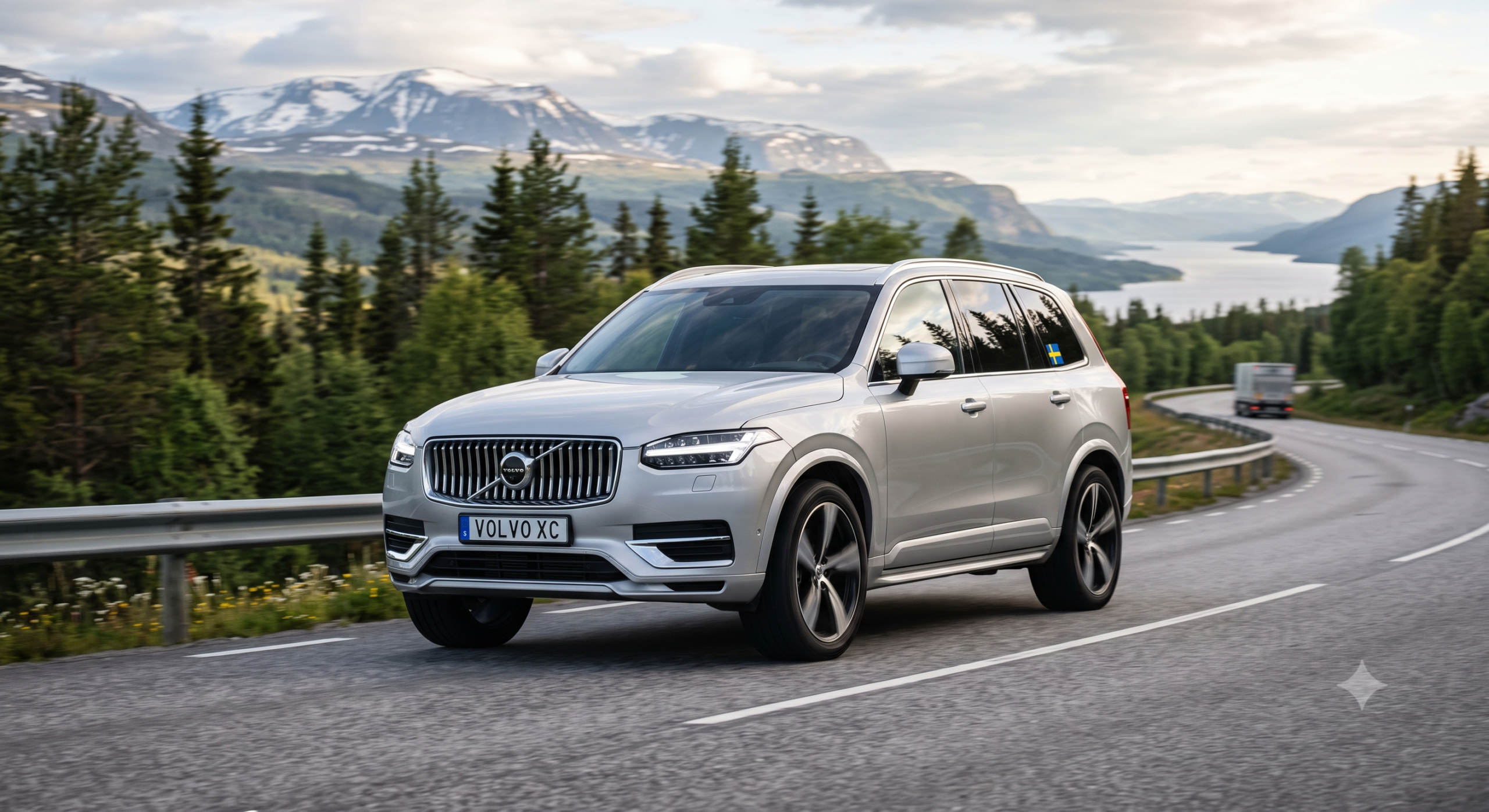
Does Volvo XC90 Recharge Qualify for Tax Credit ?

If you’ve been holding onto hope that your XC90 Recharge purchase might come with a $7,500 federal tax credit, there’s a good chance that ship has sailed — but there’s also a lesser-known deduction that might still put money back in your pocket. The rules changed dramatically in the last year, and a lot of older articles online are now flat-out wrong. I track federal EV and vehicle tax policy closely because it shifts fast, and the XC90 Recharge is a perfect example of how quickly “yes” can turn into “no.”
TL;DR
- No — as of today, the Volvo XC90 Recharge (plug-in hybrid) does not qualify for the federal EV/PHEV tax credit; that program ended for new purchases after September 30, 2025.
- A different federal tax break — the new car loan interest deduction — may still apply if you financed your XC90 Recharge and it was assembled in the U.S.
- The XC90 Recharge T8 is assembled in Ridgeville, South Carolina, which helps it qualify for that newer deduction.
- Leased XC90 Recharges don’t qualify for either the old credit or the new deduction — the benefit generally goes to the leasing company.
- Some states still offer their own EV or PHEV rebates independent of federal rules — worth checking regardless.
The Core Answer
As of today, the Volvo XC90 Recharge does not qualify for the federal EV/PHEV tax credit. That credit, formally the Section 30D Clean Vehicle Credit, officially ended for new vehicle purchases delivered after September 30, 2025, under the One Big Beautiful Bill Act. If you bought and took delivery of your XC90 Recharge before that date, you may have locked in the credit — but new purchases going forward are not eligible.
That doesn’t mean there’s nothing left on the table, though. A new federal deduction lets buyers who financed a new, U.S.-assembled vehicle deduct up to $10,000 a year in loan interest — and the XC90 Recharge T8 happens to qualify on the assembly-location front, since it’s built in South Carolina.
Pull-quote: “The $7,500 EV credit is gone for new purchases, but a new $10,000 interest deduction quietly took its place for some buyers.”
Why the Old EV Tax Credit No Longer Applies
The federal EV/PHEV tax credit wasn’t killed by accident — it was deliberately phased out by recent legislation. For years, plug-in hybrids like the XC90 T8 Recharge were eligible for up to the full $7,500 federal incentive under IRS Section 30D, provided they met battery-sourcing and income requirements.
That changed with the One Big Beautiful Bill Act, which set a hard cutoff: vehicles delivered after September 30, 2025 are no longer eligible, regardless of make, model, or how “green” the vehicle is. This applies to all EVs and PHEVs, not just Volvo — it’s a blanket policy change, not something specific to the XC90.
Quick Tip: If you signed a binding purchase agreement and made a payment (even a deposit) before September 30, 2025, you may still have qualified even if delivery came later — check your paperwork if you’re unsure.
The New Deduction That Replaced It (Sort Of)
A completely different tax benefit now exists, and it’s tied to financing, not powertrain. The “No Tax on Car Loan Interest” provision, part of the same 2025 legislation, allows taxpayers to deduct up to $10,000 per year in interest paid on loans for new, U.S.-assembled personal vehicles.
This isn’t an EV-specific perk — it applies to any qualifying new vehicle, gas or electric, as long as it was financed (not leased) and assembled in the United States. The XC90 Recharge T8 is assembled in Ridgeville, South Carolina, so it can qualify on that front, provided your loan and income also meet the requirements.
Here’s how the two benefits compare:
| Old EV/PHEV Credit (Section 30D) | New Car Loan Interest Deduction | |
|---|---|---|
| Still available for new purchases? | No — ended Sept. 30, 2025 | Yes — available through 2028 |
| Applies to XC90 Recharge? | No, for new deliveries after the cutoff | Potentially yes, if financed and U.S.-assembled |
| Maximum benefit | Up to $7,500 (credit) | Up to $10,000/year (deduction) |
| Income limit | $150,000 single / $300,000 joint | $100,000 single / $200,000 joint (phases out to $150k/$250k) |
| Applies to leases? | Benefit went to leasing company | No — leases don’t qualify |
Expert Insight: A 2026 CNBC analysis found that most borrowers will see savings closer to a few hundred dollars a year from the new interest deduction, not the full $10,000, simply because most auto loans don’t generate that much interest annually.
Pros & Cons by Reader Type
Recent XC90 Recharge buyer who financed after 2025
- ✅ May qualify for the new $10,000 car loan interest deduction if income and assembly requirements are met
- ✅ Deduction applies whether you itemize or take the standard deduction
- ❌ No longer eligible for the old $7,500 EV/PHEV credit
Buyer who’s leasing an XC90 Recharge
- ✅ May still benefit indirectly if the leasing company passes along savings in the lease terms
- ❌ Not eligible for either the old credit or the new interest deduction directly
High-income buyer considering the XC90 Recharge
- ✅ Vehicle itself remains a strong PHEV option regardless of tax incentives
- ❌ The new interest deduction phases out completely above $150,000 (single) or $250,000 (joint) MAGI
Real-World Scenario
Imagine a family financed a new XC90 Recharge T8 in March 2026 with a $55,000 auto loan at a 6% interest rate. Based on typical amortization schedules, they might pay around $3,000 to $4,000 in interest during their first year — meaning they could deduct that full amount under the new car loan interest deduction, assuming their income falls under the phaseout threshold.
That’s a real, if more modest, tax benefit compared to the old flat $7,500 credit — and it requires them to have financed (not leased) the vehicle.
Alternatives Worth Considering
- Choose the XC40 Recharge or EX90 if you specifically want a vehicle purchased before September 30, 2025 that locked in the old EV credit — but that window has already closed for new deliveries.
- Choose a fully electric Volvo if your state offers its own EV rebate program — many, including California and New York, still run independent incentive programs regardless of federal changes.
FAQ
Does the Volvo XC90 Recharge still qualify for the $7,500 federal tax credit? No — that credit ended for new vehicle deliveries after September 30, 2025, and applies regardless of make or model.
Is there any federal tax benefit left for buying an XC90 Recharge? Possibly — the new car loan interest deduction lets you deduct up to $10,000 a year in interest if you financed a new, U.S.-assembled vehicle.
Does leasing an XC90 Recharge qualify for any tax break? No — the interest deduction only applies to financed purchases, not leases.
Is the XC90 Recharge assembled in the United States? Yes — the XC90 Recharge T8 is assembled in Ridgeville, South Carolina, which helps it meet the new deduction’s assembly requirement.
Are state EV rebates still available even though the federal credit ended? Yes — several states run their own rebate programs independent of federal rules, so it’s worth checking your state’s energy office.
Key Takeaways
- The federal EV/PHEV tax credit no longer applies to new XC90 Recharge purchases delivered after September 30, 2025.
- A separate new deduction allows up to $10,000/year in car loan interest for financed, U.S.-assembled vehicles — and the XC90 Recharge qualifies on assembly location.
- Leases don’t qualify for either the old credit or the new deduction.
- Income phaseouts apply to the new deduction, starting at $100,000 (single) or $200,000 (joint) MAGI.
- State-level EV incentives may still be available even though the federal credit has ended.
Next Step
Check with a tax professional or your state’s energy office to see whether your financed XC90 Recharge purchase qualifies for the new car loan interest deduction or any remaining state rebates.