Do You Have to Use Premium Gas in a Volvo XC90?

Seven seats, three rows, and a turbocharged engine under the hood — the XC90 asks a lot of its fuel, and Volvo isn’t shy about what it expects back.
I’ve tracked Volvo’s official fuel specifications across the SUV lineup for this series, and the XC90 sits at the top of the “yes, it matters” list. Here’s exactly what Volvo requires, and what happens if you don’t follow it. (as of July 2026)
TL;DR
- Yes — Volvo officially requires premium gas with a minimum 91 AKI octane rating for every XC90 engine: B5, B6, and T8 plug-in hybrid.
- Volvo recommends 93 AKI when available for peak power and efficiency.
- The XC90 won’t be damaged by an occasional tank of regular 87 — the engine computer adjusts timing automatically.
- Premium matters most under load: towing, hot weather, high altitude, or a full seven-passenger cabin.
- The XC90’s 18.8-gallon tank means the premium-vs-regular price gap adds up to roughly $9-10 more per fill-up.
So, Do You Have to Use Premium Gas in a Volvo XC90?
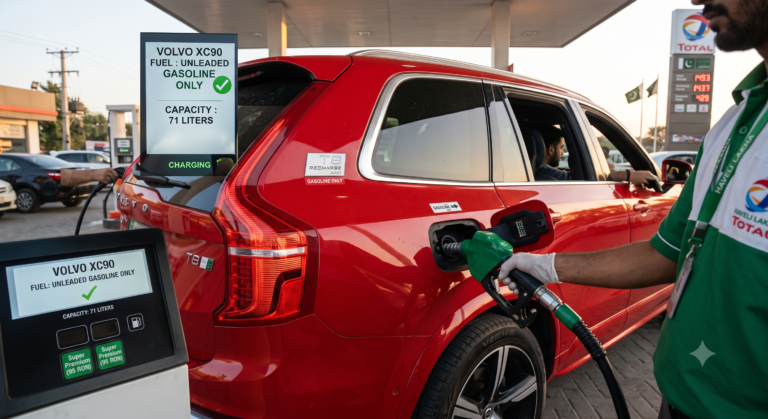
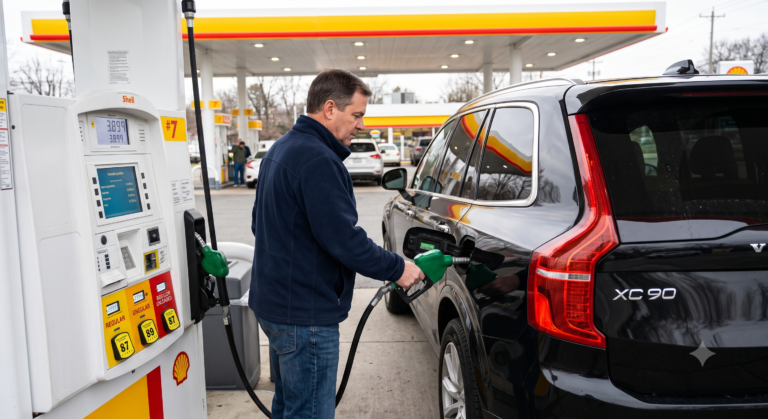
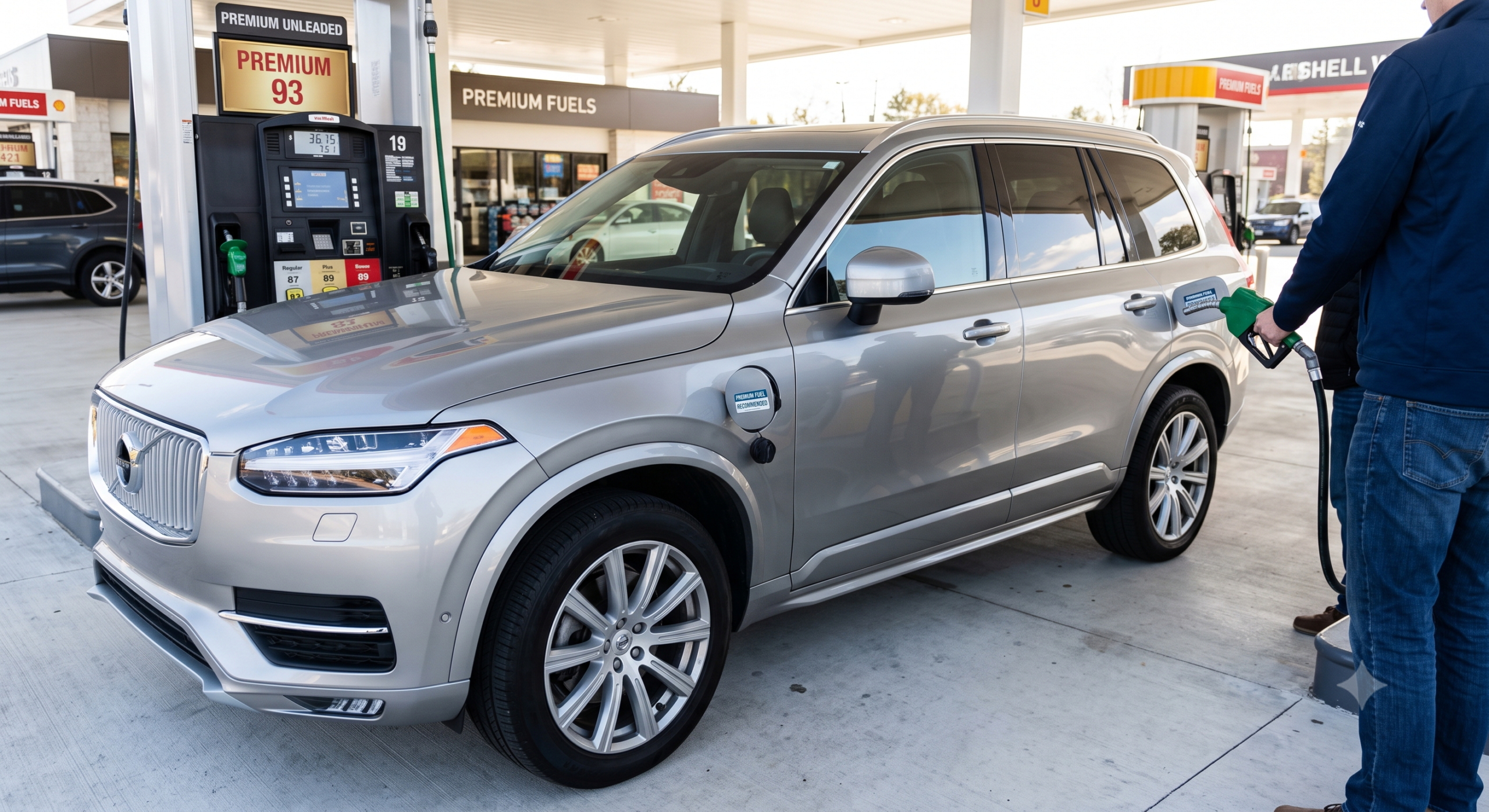
Yes. <cite index=”16-1″>The 2024 Volvo XC90 requires the use of premium 91-octane gasoline, a requirement that applies to both the B5 and B6 powertrains.</cite> This isn’t dealer marketing — it’s Volvo’s documented fuel specification, and it’s carried straight through to the current model year.
The plug-in hybrid variant doesn’t get a pass either. <cite index=”22-1″>T8 plug-in hybrid models require premium gasoline for their combustion engines, even though the vehicle can run purely on electric power for shorter distances.</cite> Whenever the gas engine kicks in — highway passing, a depleted battery, aggressive acceleration — it’s drawing on whatever octane is in the tank.
“Plug-in hybrid” doesn’t mean “gas rules don’t apply.” The engine still expects premium the moment it wakes up.
Why the XC90’s Turbo Engine Needs Higher Octane
Every XC90 built today runs a turbocharged 2.0L architecture, and that’s the entire reason premium fuel isn’t optional in Volvo’s eyes.
Turbochargers compress intake air before combustion, which raises cylinder pressure and heat — conditions that make lower-octane fuel prone to igniting too early, a phenomenon engineers call knock. Higher-octane fuel resists that premature ignition, which lets <cite index=”22-1″>Volvo’s engineers calibrate ignition timing more aggressively for maximum efficiency and power.</cite>
That calibration matters even more on the XC90 specifically, because it’s rarely driven light. <cite index=”22-1″>Premium fuel becomes especially critical when the XC90 operates under higher loads — carrying seven passengers, towing a trailer, or climbing elevation changes — since the higher octane rating provides a safety margin that helps the engine perform consistently under demanding conditions.</cite>
Quick Tip: Check the inside of your fuel filler flap — Volvo prints a decal there confirming the exact octane requirement for your specific XC90 trim and model year.
What Happens If You Fill Up With Regular Anyway
Here’s the honest, unglamorous answer: your XC90 won’t break down in the parking lot because you grabbed 87-octane in a pinch.
Modern engine control units detect lower-octane fuel through knock sensors and automatically retard ignition timing to protect the engine — that’s the safety net built into every modern turbo engine, XC90 included. What you will notice, especially over repeated fill-ups, is a small dip in throttle responsiveness and fuel economy compared to Volvo’s rated figures.
Real-world scenario: a family loading up the XC90 for a mountain road trip with all seven seats full and a rooftop cargo box is exactly the situation where that safety margin gets tested hardest — steep grades, high cabin weight, and sustained highway RPM all stress the engine simultaneously. That’s not the trip to experiment with regular gas.
Expert Insight: Owners who consistently run regular fuel in turbocharged Volvo engines report occasional light knock, sometimes described as the engine “clearing its throat” under hard acceleration — a signal the computer is compensating, not damage occurring.
XC90 Fuel Requirements by Engine
| Engine | Octane Requirement | Notes |
|---|---|---|
| B5 mild hybrid | 91 AKI minimum, 93 recommended | Base engine across most trims |
| B6 mild hybrid | 91 AKI minimum, 93 recommended | Higher output than B5 |
| T8 plug-in hybrid | 91 AKI minimum, 93 recommended | Applies whenever combustion engine engages |
Premium vs. Regular: What It Costs You
<cite index=”16-1″>The XC90 carries an 18.8-gallon fuel tank regardless of powertrain configuration.</cite> With a typical premium-to-regular price gap of roughly 50 cents per gallon, a full tank of premium costs about $9-10 more than regular — a manageable ongoing cost for most owners, especially against the backdrop of a six-figure-adjacent luxury SUV purchase.
Fuel economy tells the other half of the story. <cite index=”16-1″>The XC90 B5 AWD is EPA-estimated at 22/27 mpg city/highway, while the B6 AWD comes in at 20/26 mpg city/highway</cite> — figures that assume the vehicle is running on its specified premium fuel. Regular gas will typically shave a small amount off those numbers, partially offsetting the money you saved at the pump.
Pros & Cons by Owner Type
The Road-Trip Family (frequent long hauls, full 7-seat loads)
- Pros: Premium fuel keeps power delivery consistent exactly when towing, climbing, or full-cabin weight tests the engine hardest.
- Cons: Fueling costs add up on long trips, though the performance consistency is worth it for heavy-load driving.
The Suburban Daily Driver (short, flat commutes)
- Pros: Occasional regular-gas fill-ups in a pinch won’t cause damage; day-to-day driving conditions are gentler on the engine.
- Cons: Sustained regular-gas use still means giving up some of the responsiveness Volvo engineered the XC90 to deliver.
The T8 Plug-In Hybrid Owner
- Pros: Most daily driving may happen on electric power alone, minimizing how often the premium-fuel requirement actually comes into play.
- Cons: Longer trips still rely on the gas engine, and premium is required the moment it’s running — there’s no hybrid exception.
Frequently Asked Questions
Will regular gas damage my Volvo XC90’s engine? No, not from occasional use. The engine control computer detects lower octane and adjusts ignition timing automatically, though you’ll notice a modest drop in performance and fuel economy over time.
Does the XC90 Plug-In Hybrid need premium gas even when running on electric power? The electric motor itself doesn’t need gasoline, but the T8’s combustion engine requires premium fuel the moment it engages — there’s no separate, lower standard for hybrid models.
What octane rating does the Volvo XC90 need? Volvo specifies a minimum of 91 AKI octane, with 93 AKI recommended for best performance and efficiency.
How much more does premium gas cost for an XC90 owner? With an 18.8-gallon tank and a typical 50-cent-per-gallon premium price gap, expect to pay roughly $9-10 more per fill-up compared to regular.
Is premium fuel more important when towing with the XC90? Yes. <cite index=”22-1″>Volvo specifically notes that premium fuel becomes especially critical under higher loads like towing a trailer or climbing elevation changes</cite>, since the extra octane margin helps the engine perform consistently under stress.
Key Takeaways
- Volvo’s official spec requires 91 AKI premium fuel minimum for every XC90 engine, with 93 AKI recommended.
- The T8 plug-in hybrid’s combustion engine still requires premium, even though it runs on electric power part-time.
- Regular gas won’t damage the engine, but expect reduced performance and fuel economy with sustained use.
- Premium matters most for towing, full-passenger loads, hot weather, and high-altitude driving.
- The 18.8-gallon tank means a roughly $9-10 premium-vs-regular cost gap per fill-up.
- Choose to always use premium if you regularly tow, load up all seven seats, or drive in demanding conditions. Choose to tolerate occasional regular gas if your driving is mostly short, flat, and light-load.
What To Do Next
Check the decal inside your XC90’s fuel filler flap to confirm the exact octane rating for your trim, then make premium your default at the pump — especially before any trip involving towing or a full cabin.