
Does the Volvo XC90 Qualify for Section 179?

A five-figure tax deduction shouldn’t hinge on a number most buyers never think to check — but for the XC90, it does.
I’ve tracked how Volvo’s SUV lineup lines up against IRS vehicle-weight categories for this series, and the XC90’s Section 179 eligibility comes down to one specific spec sheet number. Here’s what actually qualifies, and where to double-check before you buy. (as of July 2026)
TL;DR
- Most XC90 trims qualify for Section 179 because their GVWR (gross vehicle weight rating) exceeds 6,000 pounds, placing them in the IRS’s “Heavy” vehicle category.
- For 2026, qualifying SUVs can deduct up to $31,300 in the first year, often combined with 100% bonus depreciation.
- GVWR varies by trim and model year — some early XC90s came in under 6,000 lbs, so verify the exact number on your specific vehicle.
- The vehicle must be used more than 50% for business and placed in service within the same tax year you claim the deduction.
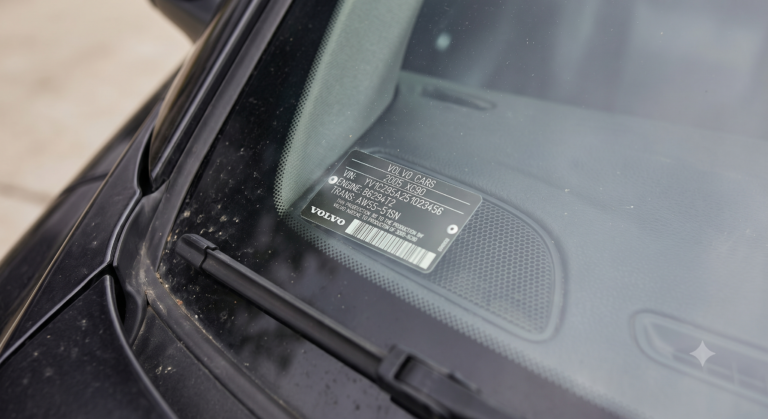
- Check the driver’s-side door jamb sticker or your VIN for the confirmed GVWR before assuming eligibility.
So, Does the Volvo XC90 Qualify for Section 179?
Generally, yes. <cite index=”37-1″>The IRS divides Section 179-eligible vehicles into Light, Heavy, and Other categories, and the Volvo XC90 falls into the Heavy category — vehicles with a GVWR over 6,000 pounds but not more than 14,000 pounds.</cite> That classification is what unlocks the larger SUV deduction limit instead of the much smaller passenger-car cap.
But “generally” is doing real work in that sentence. <cite index=”43-1″>One Volvo owner forum thread found GVWR figures ranging from 5,798 pounds on some spec sheets to 6,060 or 6,635 pounds on the actual door-jamb sticker, depending on trim and model year.</cite> That’s the gap between qualifying for a $31,300 deduction and getting bumped down to a $20,400 (or lower) passenger-vehicle limit.
The XC90 doesn’t automatically qualify — the door sticker does the qualifying. Read it before you assume.
Why GVWR Is the Only Number That Matters Here
Section 179 doesn’t care what the vehicle weighs sitting empty in a parking lot. It cares about the manufacturer’s rated maximum weight fully loaded.
<cite index=”41-1″>GVWR is listed on a label inside the driver’s side door jamb of every vehicle, and it can also be found on the manufacturer’s website under vehicle specifications</cite> — but the specific trim and options package matters, since <cite index=”41-1″>different configurations of the same model can have different GVWRs.</cite> A base XC90 and a loaded XC90 T8 Recharge aren’t guaranteed to carry the same number.
<cite index=”41-1″>The Volvo XC90 is generally listed around 6,008-plus pounds GVWR on certain trims</cite>, which puts it just over the line rather than comfortably above it. That’s a meaningfully different situation than a full-size pickup with a GVWR thousands of pounds over the threshold.
Quick Tip: Don’t trust a GVWR number pulled from a review site or forum post. Confirm it on the actual door-jamb sticker of the specific vehicle you’re buying, since trim and options can shift the number.
How Much You Can Actually Deduct
The dollar figures here change nearly every tax year, so the current numbers matter more than the general concept.
<cite index=”45-1″>For 2026, heavy vehicles (6,000-14,000 lbs GVWR) have a Section 179 deduction limit of $31,300, and due to the One Big Beautiful Bill Act, these vehicles are eligible for 100% bonus depreciation starting January 19, 2025 — replacing the previous phaseout that would have limited 2025 bonus depreciation to 40%.</cite> That combination is significant: it means a qualifying XC90 purchase can potentially be depreciated in full during its first year of business use, not spread across five or six years.
Compare that to what happens if the GVWR check comes back under 6,000 pounds. <cite index=”45-1″>Light vehicles under 6,000 lbs GVWR are capped at a $12,200 Section 179 limit for 2026, with an additional $8,000 of bonus depreciation bringing the combined first-year maximum to $20,200.</cite> That’s roughly $11,000 less than the heavy-vehicle limit — real money riding on a single spec-sheet line.
Expert Insight: A 2026 tax-guidance summary noted that heavy SUVs and light-duty trucks now qualify for both the higher $31,300 cap and full bonus depreciation simultaneously — a combination that wasn’t guaranteed under prior-year phaseout rules.
Business-Use Requirements You Can’t Skip
Even a qualifying GVWR doesn’t automatically hand you the full deduction — the IRS attaches usage conditions that matter just as much as the weight rating.
<cite index=”39-1″>The vehicle must be used more than 50% for business in the year it’s placed into service, and if usage is partly personal, the deduction is reduced proportionally.</cite> <cite index=”39-1″>The vehicle must also be installed and ready for active business use within the same tax year you plan to claim the deduction.</cite>
Real-world scenario: a small business owner buying an XC90 T8 in November and immediately putting it into daily client-visit rotation can likely claim the deduction for that tax year — but the same owner buying in December and not using it for business until January would need to wait until the following year’s filing.
Section 179 Eligibility By XC90 Configuration
| XC90 Configuration | Typical GVWR | Section 179 Category | Deduction Ceiling (2026) |
|---|---|---|---|
| Base B5/B6 trims (varies) | ~5,800-6,000+ lbs | Verify individually — borderline | $12,200-$31,300 depending on actual GVWR |
| Higher trims / T6 with options | 6,000-6,635 lbs (reported) | Heavy | Up to $31,300 |
| T8 Recharge plug-in hybrid | 6,000+ lbs (reported) | Heavy | Up to $31,300 |
Pros & Cons by Business Owner Type
The Solo Consultant or Realtor
- Pros: A qualifying XC90 used primarily for client visits and travel can front-load a large deduction in year one.
- Cons: Personal-use mixing reduces the deduction proportionally, so mileage logs matter more than most owners expect.
The Small Business With a Company Fleet
- Pros: Combining Section 179 with bonus depreciation on a heavy-rated XC90 can meaningfully lower taxable income in a strong revenue year.
- Cons: The overall $2,500,000 Section 179 spending cap for 2025-2026 applies across all qualifying purchases, not per vehicle — large fleets need to track the aggregate.
The Buyer Comparing Trims Purely for the Tax Angle
- Pros: Confirming GVWR before purchase avoids an unpleasant surprise at tax time.
- Cons: Chasing the heaviest available trim purely for tax reasons can mean paying more upfront than the deduction difference justifies — run the math both ways.
Frequently Asked Questions
What GVWR does the Volvo XC90 need to qualify for Section 179? The vehicle needs a GVWR over 6,000 pounds to fall into the IRS’s “Heavy” vehicle category; some XC90 trims and model years meet this comfortably, while others sit close to the line, so verifying the specific VIN’s GVWR is essential.
Can I find my XC90’s exact GVWR before buying? Yes — check the sticker inside the driver’s side door jamb, which lists the manufacturer’s rated GVWR for that specific vehicle and configuration.
Does a used XC90 qualify for Section 179? Generally yes. <cite index=”41-1″>Both new and used vehicles are eligible for Section 179, meaning a certified pre-owned XC90 over the GVWR threshold can qualify the same way a new one would.</cite>
How much can I deduct if my XC90 qualifies as a heavy vehicle? For 2026, qualifying heavy vehicles can deduct up to $31,300 under Section 179, often combined with 100% bonus depreciation on the remaining cost.
Does the XC90 T8 plug-in hybrid have any Section 179 advantage over the gas versions? Not specifically for Section 179 — the deduction is based on GVWR, not powertrain — though a T8 buyer should separately check whether the vehicle also qualifies for any federal or state EV tax credits, which are evaluated under different rules entirely.
Key Takeaways
- The XC90’s Section 179 eligibility hinges on GVWR exceeding 6,000 pounds, not the model name alone.
- GVWR varies by trim, options, and model year — some early or base configurations fall just under the threshold.
- Qualifying heavy vehicles can deduct up to $31,300 for 2026, often paired with 100% bonus depreciation.
- The vehicle must see more than 50% business use and be placed in service within the claiming tax year.
- Choose to verify GVWR on the door-jamb sticker if you’re planning this purchase specifically for the tax benefit. Choose to consult a tax advisor first if your business use will be mixed with meaningful personal use.
What To Do Next
Check the GVWR sticker on the driver’s-side door jamb of the exact XC90 you’re considering, then bring that number to a licensed tax advisor before finalizing the purchase — the deduction math changes meaningfully depending on which side of 6,000 pounds your specific vehicle lands on.