Where is the Volvo EX90 Made?

Where Is the Volvo EX90 Made? (The Full Answer May Surprise You)
You’re about to spend north of $76,000 on a luxury electric SUV. A totally reasonable question pops into your head: where is this thing actually built? For many buyers — especially in the US — the answer matters for tax credit eligibility, supply chain transparency, and simple peace of mind.
Here’s the direct answer: the Volvo EX90 sold in the United States is made in Ridgeville, South Carolina. But there’s more to the picture, including a second factory on the other side of the planet.
TL;DR
- The primary EX90 production site is Ridgeville, South Carolina, USA — opened in 2018.
- A second production site in Daqing, China serves Asian markets.
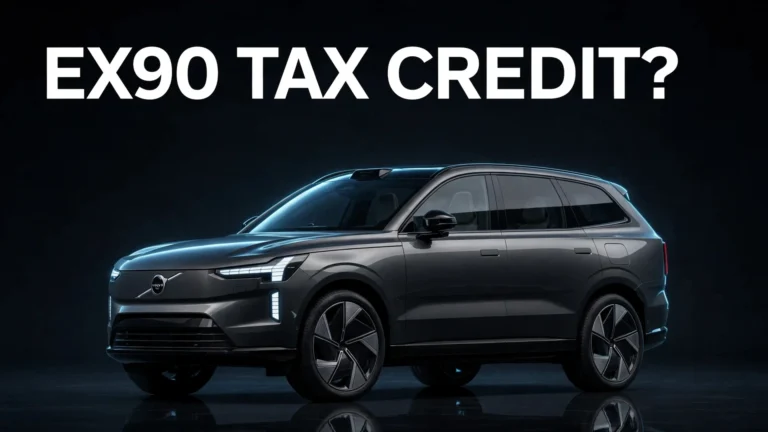
- US-built EX90s qualify for the federal EV tax credit.
- The South Carolina plant has capacity for up to 150,000 vehicles per year.
- Volvo is a Swedish brand owned by Chinese conglomerate Geely — but the EX90 destined for US buyers is genuinely American-made.
The Main Factory: Ridgeville, South Carolina
The Volvo EX90 sold in the US is built at a plant just outside Charleston, South Carolina — and Volvo is quite proud of it.
Volvo Cars’ first US manufacturing plant opened in the summer of 2018, just outside Charleston. Today, the Charleston plant produces the EX90 and previously the S60 sedan, and has the capacity to build up to 150,000 cars per year. In recent years, Volvo has made extensive investments in the facility — the body shop and paint shop have been renewed and expanded significantly, and the plant now has a state-of-the-art battery pack production line.
The Ridgeville plant is a 2.3-million-square-foot facility spanning 1,600 acres. Its grounds include a body shop, a paint shop, battery and final assembly plants, an automobile processing center, and an office building. The site is also home to Volvo Car University and the Volvo Car South Carolina Technical Center.
That’s not a screwdriver-and-sticker operation. This is a full, purpose-built manufacturing campus.
The EX90 is proudly manufactured in the USA and reflects Volvo’s long-term commitment to South Carolina and the broader US market — Jim Rowan, Volvo Cars CEO
When Did EX90 Production Start?
Volvo’s first all-electric EX90 SUV rolled off the production line in South Carolina in June 2024. Although production was initially scheduled to begin before the end of 2023, it was pushed back to ensure the model was up to standard.
The 2025 EX90 production commenced at Volvo’s upgraded plant near Charleston, which following extensive investments in body, paint, and battery production can produce up to 150,000 units annually.
The first customer-bound EX90 off the line was painted Denim Blue, destined for a buyer in the United States.
Quick Tip: Because the EX90 is assembled in the US using a domestic battery pack production line, it qualifies for the federal EV tax credit — worth up to $7,500 depending on buyer income limits. That’s a meaningful saving on a $76,000+ vehicle.
The Second Factory: Daqing, China
The South Carolina plant handles North American and European supply — but there’s a second location.
The EX90 has two production sites: the main hub in Ridgeville, South Carolina, and a second site in Daqing, China, which caters to the Asian market.
Daqing is a city in Heilongjiang province in northeast China. Volvo has operated manufacturing facilities in China for years as part of its relationship with parent company Geely, and having a local production site in Asia keeps logistics costs down and delivery times faster for Chinese and regional buyers.
The core car is the same between both plants — same specs, same engineering, same Volvo standards — though minor regional variations in range ratings or power output can exist depending on which certification standards apply in each market.
Could a Third Location Come Online? (Europe)
Volvo Cars has plans to manufacture the EX90 at its European factory in Ghent, Belgium — a move driven in part by potential EU tariffs on electric vehicles imported from China. The Belgian factory would be the third production site for the EX90 if confirmed.
Volvo has been publicly cautious about confirming the Belgium timeline, but the strategic logic is clear: building closer to where you sell is smarter in a world of shifting trade policy. A 2024 industry report found that tariff uncertainty was the number-one production location factor cited by European EV manufacturers.
Expert Insight: For European buyers wondering whether their EX90 was built in China or elsewhere — Volvo has been deliberately vague. The safest approach is to ask your dealer for the vehicle’s country of manufacture on the documentation, which will be listed on the certificate of conformity.
Who Actually Owns Volvo — and Does It Matter?
This question comes up a lot, so let’s settle it.
Volvo Cars is owned by the Chinese conglomerate Zhejiang Geely Holding Group, commonly known as Geely, which took over the Volvo Cars brand in 2010. However, Volvo Cars’ headquarters — including product development, marketing, and administration — remains in Gothenburg, Sweden, the birthplace of Volvo Cars.
So: Swedish heritage. Chinese ownership. American assembly (for US models). It’s a genuinely international car. Whether that bothers you or impresses you probably says something about your feelings on globalization — but it has zero bearing on the quality of the vehicle itself.
What Else Is Made at the South Carolina Plant?
The Ridgeville plant isn’t a one-trick pony.
The plant initially focused on manufacturing the Volvo S60 sedan from 2018, but in 2024 it stopped producing that model to focus on the new EX90. It has also been announced that the plant will soon start producing the best-selling Volvo XC60 alongside the EX90 in the latter half of 2026.
That’s a significant vote of confidence in the South Carolina facility. The XC60 is Volvo’s best-selling model globally — moving its production stateside is a major commitment.
Quick Tip: If you’re considering an XC60 and care about US production, it’s worth knowing that American-made versions are expected from late 2026 onward, which may also affect future tax credit eligibility for that model.
Real-World Scenario: Does “Made in USA” Affect Your Purchase?
Imagine you’re a buyer in Atlanta comparing the EX90 to a BMW iX, which is assembled in Spartanburg, South Carolina (funny how that works). Both are US-assembled luxury EVs. Both may qualify for tax credits. The “Made in USA” label on your EX90 isn’t just marketing — it has real financial implications.
US-built EX90s qualify for federal EV tax credits when purchased from the Ridgeville, South Carolina plant. On a vehicle starting at $76,695, that credit can meaningfully reduce the effective purchase price. Always verify your eligibility with a tax professional, since income caps apply (as of 2025).
Comparison: EX90 Production Locations at a Glance
| Market | Production Location | Plant Opened |
|---|---|---|
| USA / Canada / Europe | Ridgeville, South Carolina, USA | 2018 |
| Asia (China, etc.) | Daqing, Heilongjiang, China | ~2024 |
| Europe (potential) | Ghent, Belgium | TBC |
Pros & Cons by Buyer Type
For US Buyers Focused on Tax Credits
US Production ✅
- Qualifies for federal EV tax credit (up to $7,500).
- Domestic assembly means faster parts availability and warranty service logistics.
- Supports American manufacturing jobs.
Consideration ❌
- Components still sourced globally — the car is “assembled” in the US, not entirely manufactured there.
For European Buyers
Current Situation ✅
- Some EX90s are already reaching Europe from South Carolina.
- Belgian production would eliminate any EU tariff exposure if it comes online.
Consideration ❌
- The production location for European models has not been fully confirmed by Volvo as of mid-2025. Ask your dealer directly.
For Buyers Who Prioritize Supply Chain Transparency
EX90 Advantage ✅
- The EX90 launched with the world’s first EV battery passport, using blockchain technology so buyers can view key information about the battery’s composition, origin of materials, and carbon footprint.
- This is genuinely unusual in the industry and gives conscientious buyers more visibility than most EVs allow.
FAQ
Is the Volvo EX90 made in the USA? Yes, for US buyers. The EX90 is assembled at Volvo’s plant in Ridgeville, South Carolina, near Charleston. Production began in June 2024.
Is the Volvo EX90 made in China? A version is. Volvo operates a second EX90 production site in Daqing, China, primarily to serve the Asian market. US buyers receive South Carolina-built vehicles.
Does the Volvo EX90 qualify for the federal EV tax credit? US-assembled EX90s are eligible based on assembly location. Income and price caps apply under current legislation. Consult a tax professional or check the IRS clean vehicle credit tool for your specific situation (as of 2025).
Who owns Volvo Cars? Volvo Cars is owned by Geely Holding, a Chinese conglomerate, which acquired the brand from Ford in 2010. Volvo’s headquarters and engineering base remain in Gothenburg, Sweden.
Will the Volvo EX90 be made in Europe? Volvo has indicated interest in European production — likely at its Ghent, Belgium plant — but has not fully confirmed timelines as of mid-2025. The motivation is partly to avoid EU import tariffs on Chinese-made EVs.
Key Takeaways
- The Volvo EX90 for US buyers is manufactured in Ridgeville, South Carolina — a 2.3-million-square-foot campus near Charleston.
- Production officially began in June 2024 after a brief delay to meet quality standards.
- A second factory in Daqing, China serves the Asian market.
- US-built EX90s qualify for the federal EV tax credit — a significant financial benefit.
- Volvo is Swedish by heritage, Chinese-owned by Geely, and American-assembled for the US market.
- The XC60 is expected to join EX90 production in South Carolina from late 2026.
What to Do Next
If you’re actively shopping for an EX90, confirm with your dealer that the specific vehicle has a US-origin VIN (it will start with “YV1” for Volvo, with production country coded in the sequence). Then check your eligibility for the federal EV tax credit at fueleconomy.gov before signing anything. A $7,500 discount is worth five minutes of homework.