Does the Volvo S60 Require Premium Gas?

Volvo stopped building new S60s for the US in 2025, but the used ones aren’t going anywhere — and neither is the fuel question every owner eventually asks at the pump.
I’ve tracked Volvo’s official fuel specifications across its sedan and SUV lineup for this series, and the S60’s answer depends on which engine is under the hood. If you’re shopping used, that distinction matters more than usual. (as of July 2026)
TL;DR
- Yes — Volvo’s official documentation requires premium fuel, minimum 91 AKI octane, for the S60’s T5, T6, and T8 engines.
- Volvo recommends 93 AKI when available for best performance and efficiency.
- Some dealer sources note the base T5/B5 engine tolerates regular 87 octane without damage, though Volvo’s formal spec doesn’t carve out an exception.
- The S60 was discontinued for the US market after the 2025 model year, so nearly every S60 on the road today is a used-buying decision.
- If you’re considering an S60 Recharge (T8 plug-in hybrid) from 2020-2022, check the VIN against NHTSA recall R10312 for the PHEV battery-module recall before buying.
So, Does the Volvo S60 Require Premium Gas?
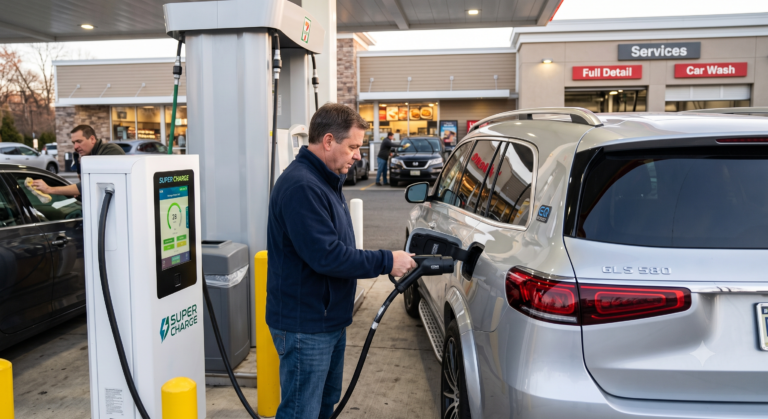
Yes, according to Volvo’s own support documentation. <cite index=”25-1″>Volvo requires premium fuel, 91 octane or higher, for all S60 T5, T6, and T8 engines, and recommends AKI 93 for optimal performance and fuel economy.</cite> That’s the manufacturer’s formal position, not a dealership suggestion.
Some dealer FAQ pages tell a slightly softer story. <cite index=”23-1″>One dealer notes the S60 T5 engine is recommended to run on premium but can operate on regular 87 octane without issue, while T6 and T8 engines require premium fuel.</cite> Whichever version applies to your exact model year, the safe assumption for any S60 is: fuel it like premium is required, because that’s what Volvo’s own manual says for the majority of the engine lineup.
“Recommended” and “required” get used interchangeably by dealers — Volvo’s own manual doesn’t leave that room.
Why This Matters More For a Discontinued Model
The S60 stopped being sold new in the US after the 2025 model year, which changes the entire conversation around fuel and maintenance.
<cite index=”30-1″>Volvo ended US production of the S60 at its Ridgeville, South Carolina plant, choosing to use that capacity for the electric EX90 instead.</cite> That means anyone asking about S60 fuel requirements today is almost certainly researching a used purchase, not configuring a new build — and that shifts the stakes toward due diligence over spec-sheet trivia.
Real-world scenario: a shopper cross-referencing a 2021 S60 T8 listing against Volvo’s octane requirement is one search away from also needing to check that same VIN against an open recall. Skipping that second step is the more expensive mistake.
Quick Tip: Before buying any used S60, check the fuel filler flap for Volvo’s printed octane decal — it tells you exactly what your specific engine and model year requires, no guessing needed.
The PHEV Recall Every Used S60 Recharge Buyer Should Know
If you’re shopping a used S60 Recharge or T8 plug-in hybrid from the 2020-2022 model years, fuel octane isn’t the only spec to verify.
Volvo’s plug-in hybrids from that window are covered under NHTSA recall R10312, addressing a battery-module issue in 2020-2022 model-year plug-in hybrids. Before finalizing any used S60 T8 purchase, run the VIN through NHTSA’s recall lookup tool to confirm whether the repair has been completed — this applies regardless of what the seller tells you about the car’s history.
Expert Insight: A completed recall repair should show up in the vehicle’s service history or a Volvo dealer’s system check — ask for documentation, not just a verbal assurance, before you sign anything.
Premium vs. Regular Gas: What Changes If You Skip It
Here’s the practical difference between following the spec and cutting corners at the pump.
Turbocharged engines like the S60’s B5, T5, T6, and T8 compress intake air more aggressively than naturally aspirated engines, which raises the risk of premature ignition — engine “knock” — on lower-octane fuel. Modern engine computers compensate automatically by retarding ignition timing, so a tank of regular won’t destroy the engine, but you’ll likely notice slightly duller throttle response and a small dip in fuel economy over time.
<cite index=”24-1″>The 2024 Volvo S60 required premium 91-octane fuel across its lineup, with a 15.9-gallon fuel tank capacity and EPA-estimated ratings of 26/35 mpg city/highway for the B5 front-wheel-drive configuration.</cite> Filling that tank with premium instead of regular runs roughly $7-9 more per fill-up at current national price gaps — a manageable cost for most owners chasing the S60’s rated efficiency.
Fuel Requirement by S60 Engine Type
| Engine | Volvo’s Official Requirement | Real-World Tolerance | Model Years |
|---|---|---|---|
| T5 (older generations) | 91 AKI premium | Can run 87 per some dealer sources | Pre-2019 gen |
| B5 mild hybrid | 91 AKI premium | Limited flexibility; not officially exempted | 2019-2025 |
| T6 | 91 AKI premium required | Not recommended to substitute | 2019-2023 |
| T8 / S60 Recharge (PHEV) | 91 AKI premium required for gas engine | Same as T6; also check recall R10312 | 2020-2025 |
Pros & Cons by Buyer Type
The Used-Car Bargain Hunter
- Pros: Discontinued status means depreciation has already hit; solid used values on B5 and T6 trims.
- Cons: Premium-only fuel requirement adds a small but real recurring cost most shoppers underestimate.
The PHEV-Curious Used Buyer
- Pros: S60 Recharge/T8 offers strong combined output and an EPA-rated electric-only range for short trips.
- Cons: 2020-2022 units require a mandatory recall VIN check before purchase — skipping this step risks buying an unrepaired battery-module issue.
The Daily Commuter on a Budget
- Pros: B5 trims deliver strong city/highway mpg even with premium fuel factored into the cost.
- Cons: No official low-octane exception exists in Volvo’s documentation, so budgeting for premium is the safer assumption long-term.
Frequently Asked Questions
Is the Volvo S60 still sold new in the US? No. <cite index=”32-1″>Volvo discontinued the S60 after the 2025 model year, meaning there is no 2026 version sold in America.</cite>
Will regular gas damage a used S60’s engine? Not immediately — engine computers adjust timing to prevent knock — but sustained regular-gas use can reduce performance and fuel economy below Volvo’s rated figures.
How do I check if a used S60 Recharge has an open recall? Enter the vehicle’s VIN into NHTSA’s recall lookup tool and check specifically for recall R10312, which covers the 2020-2022 plug-in hybrid battery-module issue.
Does the S60 T8 require premium gas even in electric mode? The electric motor doesn’t need gasoline at all, but <cite index=”25-1″>Volvo requires premium fuel for the T8’s combustion engine whenever it’s running</cite>, so the requirement still applies once the gas engine engages.
What’s the fuel tank capacity on a Volvo S60? <cite index=”24-1″>The S60 has a 15.9-gallon fuel tank capacity across its model years.</cite>
Key Takeaways
- Volvo’s official spec requires 91 AKI premium fuel for S60 T5, T6, and T8 engines, with 93 AKI recommended.
- Regular gas won’t destroy the engine, but it will cost you some performance and mpg over time.
- The S60 is discontinued in the US after 2025, so most buyers today are shopping used.
- 2020-2022 S60 Recharge/T8 buyers must check VIN against recall R10312 before purchase.
- Choose a B5 or T6 used S60 if you want a straightforward gas sedan without recall complications. Choose a T8 Recharge if electric-assist range matters — but only after confirming the recall is cleared.
What To Do Next
Before you buy any used S60, run the VIN through NHTSA’s recall database and check the fuel filler flap for the octane decal — two five-minute steps that prevent the two most common regrets in a used S60 purchase.