Are Mazda and Volvo the Same Company? Ownership, History & Reliability Compared

- No — Mazda and Volvo are not the same company and have no ownership ties whatsoever.
- Volvo Cars is owned by China’s Geely Holding (since 2010, ~78.7% stake); Mazda is an independent Japanese automaker headquartered in Hiroshima.
- The only real link is historical: Ford once owned stakes in both, and 2000s models like the Volvo S40 and Mazda3 shared Ford’s C1 platform.
- Mazda is the more reliable brand — 161 vs 242 problems per 100 vehicles in the J.D. Power 2025 dependability study — and the cheaper one to buy and run.
Short answer: no, Mazda and Volvo are not the same company, and they never have been. Mazda is an independent Japanese carmaker; Volvo Cars is a Swedish brand owned by China’s Geely Holding. The confusion is understandable — Ford once owned large pieces of both companies at the same time, and some of their cars from the 2000s genuinely shared engineering. Here’s the full picture.
Who owns Mazda and who owns Volvo?
| Mazda | Volvo Cars | |
|---|---|---|
| Founded | 1920, Hiroshima, Japan | 1927, Gothenburg, Sweden |
| Headquarters | Hiroshima, Japan | Gothenburg, Sweden |
| Current owner | Independent (publicly traded) | Zhejiang Geely Holding Group (China) |
| Owned since | — | 2010 (bought from Ford for ~$1.8B) |
| Market segment | Mainstream (near-premium) | Premium / luxury |
| Known for | Driving dynamics, SkyActiv engines, value | Safety innovation, Scandinavian design |
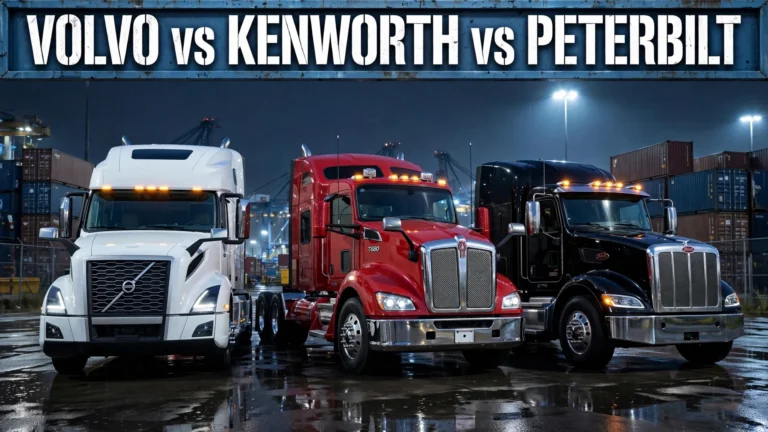
Two details trip people up. First, AB Volvo — the company that makes Volvo trucks, buses, and construction equipment — is a separate, publicly traded Swedish company with no ties to Geely or Volvo Cars. Second, Ford’s name appears in both histories, which is where the “are they related?” question comes from.
Why do people think Mazda and Volvo are related?
Between 1999 and 2010, Ford owned Volvo Cars outright while simultaneously holding a 33.4% controlling stake in Mazda. For a decade, both brands were effectively under Ford’s umbrella — and Ford put that shared ownership to work.
Thirty engineers from each of Ford, Mazda, and Volvo spent two years in Cologne, Germany developing the Ford C1 compact-car platform. The result: the Volvo S40, V50, C30, and C70 shared roughly 60% of their parts with the first-generation Mazda3 and Mazda5. If you’ve ever noticed a 2006 Volvo S40 and a 2006 Mazda3 feeling oddly similar underneath, that’s why.
| Volvo models | Mazda models | Shared platform era |
|---|---|---|
| S40 II, V50, C30, C70 II | Mazda3 (BK/BL), Mazda5 | 2003–2013 |
That cooperation is long over. Ford sold Volvo to Geely in 2010 and fully exited Mazda by the end of 2015. Current Mazda and Volvo models share no platforms, engines, or parts.
Mazda vs Volvo reliability
This is where the two brands diverge most clearly. Mazda is one of the most dependable brands you can buy; Volvo sits near the bottom of the rankings:
| Brand | J.D. Power 2025 VDS (problems / 100 vehicles) |
|---|---|
| Mazda | 161 |
| Industry average | 202 |
| Volvo | 242 |
Lower is better. Mazda ranked second among mainstream brands; Volvo finished in the bottom tier alongside Land Rover and Audi. The gap is mostly electronics and infotainment issues on Volvo’s side — not engines. As a mainstream brand, Mazda is also cheaper to service: parts cost less and any independent shop can work on one, while Volvo’s premium positioning means premium-priced dealer servicing.
Which should you buy: Mazda or Volvo?
They barely compete head-to-head — a Mazda3 shops against a Honda Civic, while a Volvo S60 shops against a BMW 3 Series. Tap what matters most to you:
The verdict
Mazda and Volvo are not the same company, are not related, and today share nothing but a chapter of Ford history. Buy Mazda for reliability, driving enjoyment, and value. Buy Volvo for safety tech, Scandinavian design, and a genuine premium experience — and budget for higher running costs.
Frequently asked questions
Are Mazda and Volvo the same company?
No. Mazda and Volvo are entirely separate companies with no ownership ties. Mazda is an independent Japanese automaker headquartered in Hiroshima; Volvo Cars is owned by China’s Zhejiang Geely Holding Group and headquartered in Gothenburg, Sweden.
Are Mazda and Volvo related in any way?
Only historically. Ford owned Volvo Cars from 1999 to 2010 while also holding a large stake in Mazda (1979–2015), and during that era the Volvo S40/V50 and Mazda3 shared Ford’s C1 platform. Today the two companies share no platforms, parts, or corporate links.
Is Mazda owned by Ford?
No — not anymore. Ford gradually sold its 33.4% Mazda stake starting in 2008 and fully divested by the end of 2015. Mazda is now independent; Toyota holds a small (~5%) cross-shareholding, and Mazda develops its own platforms and engines.
Who owns Volvo?
Volvo Cars has been owned by Zhejiang Geely Holding Group of China since 2010, when Geely bought it from Ford for about $1.8 billion. Geely holds roughly 78.7% of the company; Volvo remains headquartered in Gothenburg, Sweden.
Why do some Mazda and Volvo cars share parts?
Cars like the 2004–2012 Volvo S40 and the first-generation Mazda3 were developed together on Ford’s C1 compact-car platform, sharing about 60% of components. That cooperation ended when Ford sold Volvo in 2010 — current models share nothing.
Which is more reliable, Mazda or Volvo?
Mazda, by a clear margin. In the J.D. Power 2025 U.S. Vehicle Dependability Study, Mazda recorded 161 problems per 100 vehicles versus 242 for Volvo (industry average: 202). Mazda also typically costs less to maintain as a mainstream brand.
Is Volvo still a Swedish company?
Volvo Cars is Swedish in heritage, design, and headquarters (Gothenburg), but Chinese in ownership — Geely Holding has controlled it since 2010. Don’t confuse it with AB Volvo, the truck and construction-equipment maker, which is a separate publicly traded Swedish company.