How to Charge a Volvo C40?

Plugging in an EV for the first time can feel more complicated than it needs to be, and the Volvo C40 Recharge is actually one of the more straightforward electric SUVs to live with once you know your options. Whether you’re charging overnight at home or topping up on a road trip, the process boils down to picking the right method for your situation. I’ve researched Volvo’s official charging documentation alongside independent charging speed tests, and the C40’s real-world numbers are fairly predictable once you know what to expect.
TL;DR
- Home charging (Level 2, 240V): A full 0-100% charge takes about 7-8 hours using the onboard 11 kW charger.
- Standard household outlet (120V): Expect roughly 31-40 hours for a full charge — only realistic as a backup, not daily use.
- DC fast charging: A 10-80% charge takes about 28-37 minutes, depending on your battery pack and charger power.
- The C40 uses a CCS connector — Type 2 for AC charging, combined with the lower DC section for fast charging.
- Setting a daily charge limit around 70-80% and avoiding constant fast charging helps protect long-term battery health.
The Core Answer
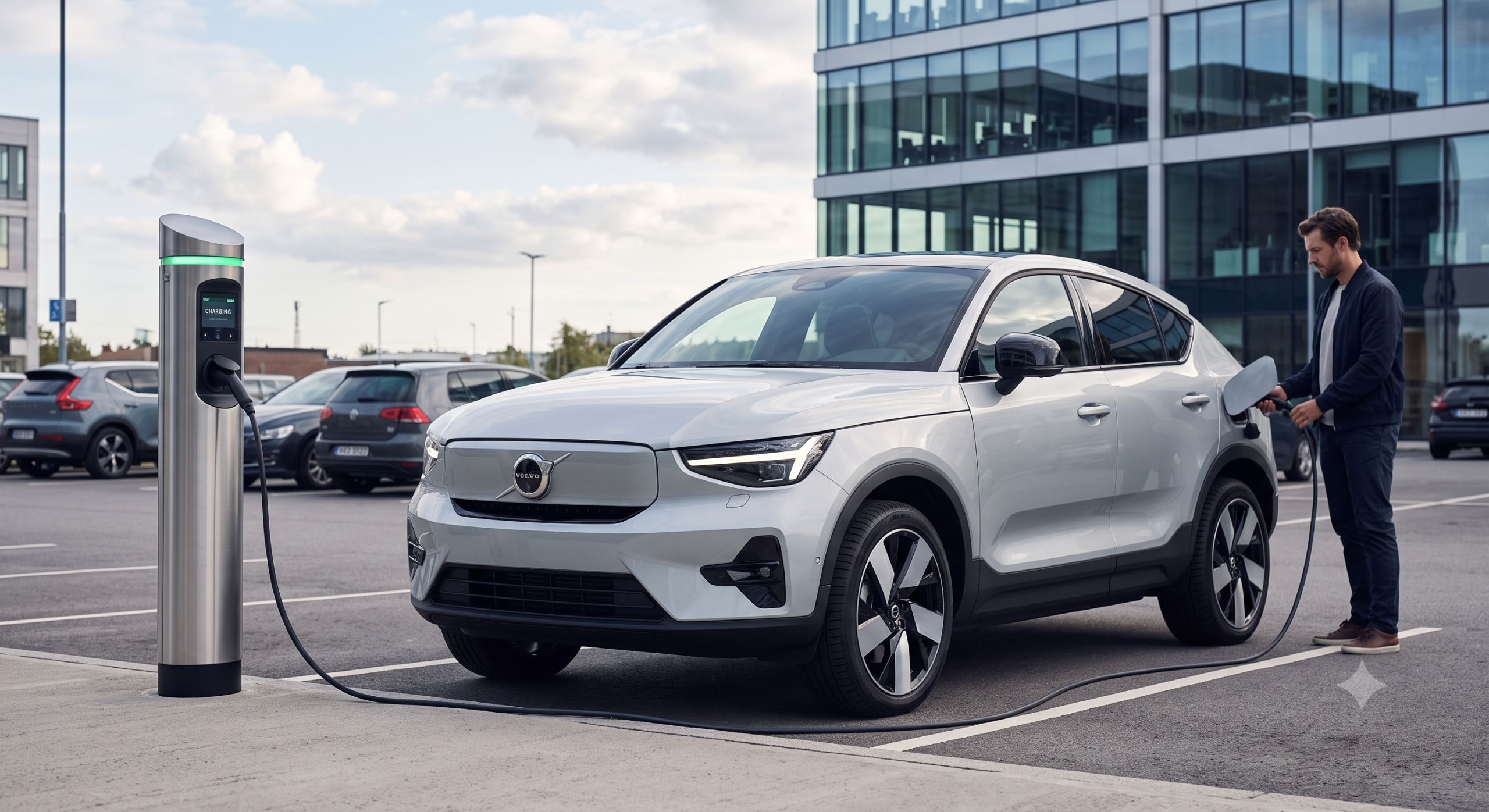
Charging a Volvo C40 comes down to three realistic methods. At home with a Level 2 (240V) charger, the onboard 11 kW charger takes the battery from 0-100% in about 7-8 hours — ideal for overnight charging. Using a standard 120V household outlet works in a pinch, but expect a much longer 31-40 hours for a full charge, making it more of an emergency backup than a daily routine.
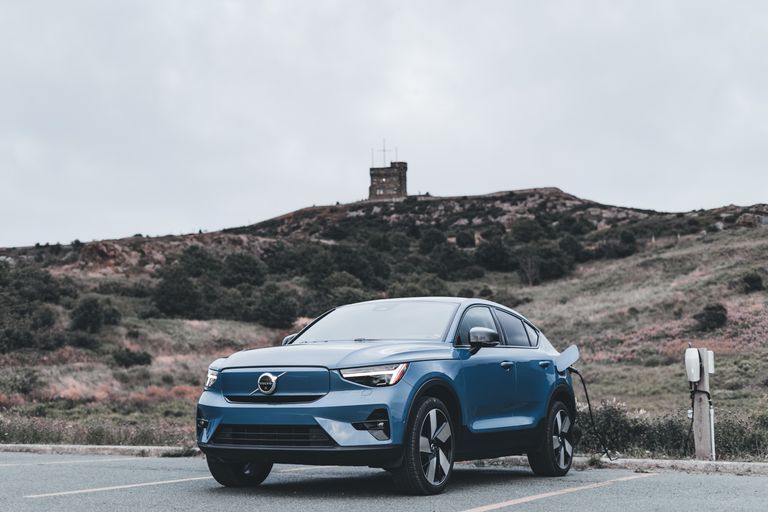
For road trips, DC fast charging gets you from 10-80% in roughly 28-37 minutes, depending on your specific battery pack — newer 2024+ models with larger 82 kWh packs charge a bit faster than earlier 67-75 kWh versions. The C40 uses a CCS charging port, located on the left rear of the vehicle, which combines a Type 2 AC inlet with a DC fast-charging section.
Pull-quote: “Most C40 owners will never need fast charging for daily life — it’s a road-trip tool, not a nightly habit.”
Why Home Charging Should Be Your Default
The C40 is genuinely optimized around overnight Level 2 charging, with fast charging meant as an occasional supplement rather than a daily necessity. For drivers covering 60-80 miles a day or less, a standard 32-amp Level 2 home charger will comfortably replenish the battery overnight, often needing just 2-4 hours to cover typical daily driving rather than a full charge every night.
This matters because DC fast charging, while convenient, generates more heat in the battery than slower AC charging. Volvo’s own documentation notes that some of the fast-charging current gets diverted to heating or cooling the battery pack in extreme temperatures, and independent testing suggests frequent fast charging can accelerate long-term battery degradation compared to relying primarily on home charging.
Quick Tip: If your daily driving is under 60-80 miles, you likely don’t need to charge to 100% every night — topping up to 70-80% during the week and reserving a full charge for longer trips is easier on the battery long-term.
What Actually Affects Your Fast-Charging Speed
Real-world DC fast-charging times depend on more than just the charger’s advertised power rating. Battery temperature is one of the biggest factors — a cold-soaked battery after sitting outside in winter will accept power far more slowly at first, which is why Volvo’s system automatically preconditions the battery when you navigate to a fast charger through Google Maps built into the car.
Charger-side limitations matter just as much. Many public stations advertise “up to 150 kW” but actually share that power across multiple stalls or step down output due to site electrical constraints — so if you’re seeing slower speeds than expected, the bottleneck may be the charging station rather than your C40.
Here’s how the different charging methods compare:
| Method | Charge Range | Typical Time | Best For |
|---|---|---|---|
| 120V household outlet | 0-100% | 31-40 hours | Emergency backup only |
| Level 2 home charger (240V, 11 kW) | 0-100% | 7-8 hours | Daily overnight charging |
| DC fast charging (150 kW) | 10-80% | 34-37 minutes | Road trips, occasional top-ups |
| DC fast charging (200+ kW, newer packs) | 10-80% | ~28 minutes | Road trips on newer model years |
(Times vary by model year, battery pack size, and charging conditions)
Expert Insight: Independent charging speed testing found that under ideal conditions with a warm battery and a healthy 150-200 kW charger, planning for about 30 minutes for a 10-80% charge is realistic for most C40 Recharge variants — but a cold battery or a throttled charger can meaningfully extend that.
Pros & Cons by Reader Type
Daily commuter with home charging access
- ✅ Overnight Level 2 charging comfortably covers typical daily driving
- ✅ Slower AC charging is gentler on long-term battery health than frequent fast charging
- ❌ Requires either a dedicated home charger installation or patience with a standard outlet as backup
Road-trip driver relying on public fast charging
- ✅ 28-37 minute top-ups make longer trips manageable with normal rest stops
- ❌ Charging speed can vary significantly based on charger quality and battery temperature
- ❌ Some public stations underperform their advertised power rating
Apartment dweller without home charging installed
- ✅ A standard 120V outlet works as a slow but functional backup
- ❌ 31-40 hours for a full charge makes daily reliance on a household outlet impractical
- ❌ May need to rely more heavily on public charging infrastructure
Real-World Scenario
Picture a commuter driving 40 miles a day with a Level 2 charger installed in their garage. Plugging in most nights for just 2-4 hours easily covers that daily driving, meaning they rarely need to think about charging at all beyond an occasional habit before bed.
Now picture that same driver heading out on a 300-mile road trip. Stopping at a well-reviewed 150 kW+ fast charger during a lunch break, they can realistically go from a low battery to 80% in the time it takes to eat — assuming the charger isn’t sharing power with another vehicle or throttled by the site’s electrical setup.
Alternatives Worth Considering
- Install a home Level 2 charger if you drive regularly and want to avoid ever relying on slow 120V charging as anything more than a rare backup.
- Use the car’s built-in navigation to a fast charger if you’re road-tripping — it automatically preconditions the battery for faster charging speeds on arrival.
FAQ
How long does it take to fully charge a Volvo C40 at home? About 7-8 hours using a Level 2 (240V) home charger, or 31-40 hours on a standard 120V household outlet.
How fast can the Volvo C40 fast charge? A 10-80% charge typically takes 28-37 minutes on a DC fast charger, depending on your specific battery pack and the charger’s actual output.
What type of charging port does the C40 use? A CCS connector, combining a Type 2 AC inlet with a DC fast-charging section, located on the left rear of the vehicle.
Does frequent fast charging damage the battery? It can accelerate degradation somewhat compared to relying primarily on slower home charging, according to independent testing — occasional fast charging for road trips is generally fine.
Should I charge my C40 to 100% every night? Not necessarily — setting a daily limit around 70-80% and reserving full charges for longer trips is generally better for long-term battery health.
Key Takeaways
- Level 2 home charging takes about 7-8 hours for a full charge and should be your daily default.
- A standard 120V outlet works as backup only, taking 31-40 hours for a full charge.
- DC fast charging delivers a 10-80% charge in roughly 28-37 minutes, depending on your battery pack.
- Battery temperature and charger-side limitations both significantly affect real-world fast-charging speed.
- Setting a daily 70-80% charge limit helps protect long-term battery health.
Next Step
If you drive regularly, look into installing a Level 2 home charger to make overnight charging the default, reserving fast charging for road trips only.