How to Charge a Volvo XC40?

If you just bought an electric XC40 and you’re staring at the charging port wondering what happens next, you’re in good company — and the good news is the process is genuinely simple once you know your three main options. It’s worth clarifying upfront, though: only the electric version of the XC40 (called the XC40 Recharge, now sold in the U.S. as the EX40) needs charging at all — the standard gas mild-hybrid XC40 doesn’t plug in anywhere. I’ve researched Volvo’s official charging documentation alongside independent speed testing on the electric XC40/EX40, and the numbers are fairly consistent once you separate older and newer battery packs.
TL;DR
- Home charging (Level 2, 240V): A full charge takes roughly 8-10 hours, ideal for overnight charging.
- Standard household outlet (120V): Expect 31-45 hours for a full charge — backup use only.
- DC fast charging: A 10-80% charge takes about 28-37 minutes, depending on your battery pack and charger power.
- The XC40 Recharge/EX40 uses a CCS connector — Type 2 for AC, combined with the lower DC section for fast charging.
- If you have the standard gas XC40, none of this applies — that version runs on gasoline only and doesn’t charge.
The Core Answer (in Under 200 Words)
If you’re driving the electric XC40 Recharge (rebranded EX40 in the U.S.), charging comes down to three realistic methods. At home with a Level 2 (240V) charger, a full charge takes roughly 8-10 hours, making overnight charging the practical default for most owners. A standard 120V household outlet works as backup, but expect 31-45 hours for a full charge depending on your specific model year and battery size.
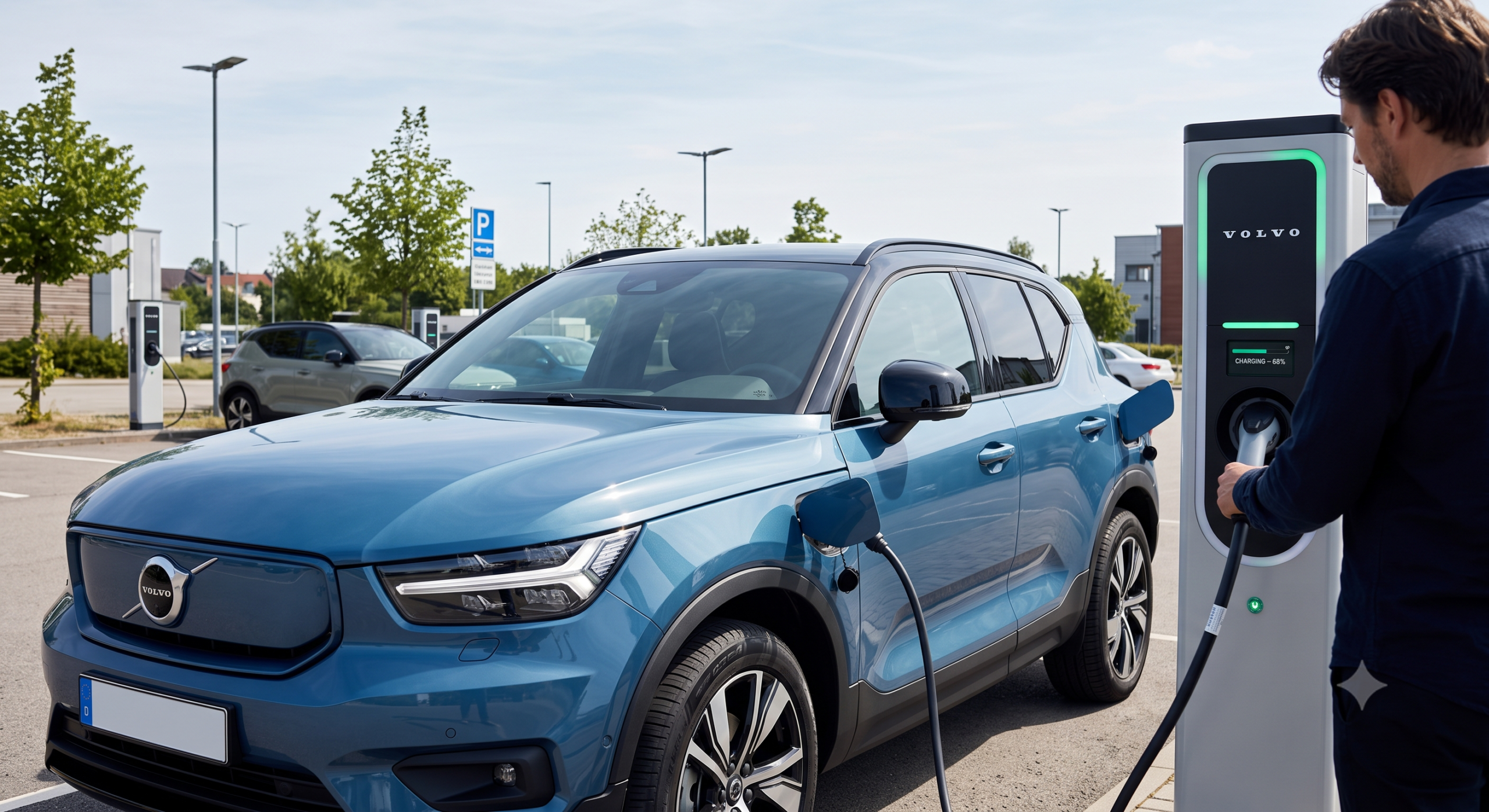
For road trips, DC fast charging gets you from 10-80% in about 28-37 minutes, with newer model years using larger battery packs charging somewhat faster than earlier versions. The charging port uses a CCS connector, located on the left rear of the vehicle, combining a Type 2 AC inlet with a DC fast-charging section.
Pull-quote: “The electric XC40’s charging port sits right where a gas cap would be — everything else about the process is genuinely simple once you plug in.”
Why the Charging Numbers Vary So Much by Model Year
Volvo made significant changes to the electric XC40’s charging hardware over the years, which explains why you’ll see a range of numbers online rather than one fixed figure. Earlier single-motor AWD-only models used a smaller ~69-75 kWh battery pack with peak DC charging around 130-150 kW. The 2024+ update introduced new rear-drive powertrains, larger battery options up to roughly 82 kWh on some trims, and higher peak DC charging rates near 205 kW.
That’s a meaningful difference if you’re comparing a used earlier model against a current EX40 — the fundamental charging experience is similar, but the newer cars genuinely charge somewhat faster in real-world conditions.
Quick Tip: If you’re shopping used, ask specifically which model year and battery size you’re looking at — “XC40 Recharge” covers several different battery and charging hardware combinations across its production run.
What Actually Determines Your Fast-Charging Speed
The peak number quoted in marketing material isn’t the number that determines your actual charging session length — average power across the session matters more. Independent testing found that while the XC40 Recharge/EX40 can briefly hit its peak rating, most of a 10-80% session actually sits meaningfully lower than that peak, since charging speed naturally ramps up and then tapers as the battery fills.
Battery temperature plays a big role too. A cold-soaked battery, especially after sitting outside in winter, will accept power more slowly at first — which is why using the car’s built-in navigation to route to a fast charger typically triggers automatic battery preconditioning, improving your charging speed on arrival.
Here’s how the different charging methods compare:
| Method | Charge Range | Typical Time | Best For |
|---|---|---|---|
| 120V household outlet | 0-100% | 31-45 hours | Emergency backup only |
| Level 2 home charger (240V) | 0-100% | 8-10 hours | Daily overnight charging |
| DC fast charging (150 kW) | 10-80% | 32-37 minutes | Road trips, top-ups |
| DC fast charging (200+ kW, newer packs) | 10-80% | ~28 minutes | Road trips on newer model years |
(Times vary by model year, battery pack size, and charging conditions)
Expert Insight: A 2026 independent charging speed test found that most of a 10-80% DC fast-charging session on the XC40 Recharge actually runs closer to 110-130 kW on a strong charger, even though the car can briefly touch 200 kW — a reminder that peak numbers overstate real-world session length.
Pros & Cons by Reader Type
Daily commuter with home charging access
- ✅ Overnight Level 2 charging comfortably covers typical daily driving without a second thought
- ✅ Scheduling charging through the app or infotainment system can take advantage of off-peak electricity rates
- ❌ Requires either a dedicated home charger installation or patience with a slower outlet as backup
Road-trip driver relying on public fast charging
- ✅ 28-37 minute top-ups fit naturally into a normal rest stop
- ❌ Real-world speeds often run below the advertised peak rating
- ❌ Charging speed varies by model year, so older and newer XC40 Recharge/EX40 versions perform differently
Owner of the standard gas XC40
- ✅ Nothing to worry about here — the mild-hybrid gas version doesn’t charge at all
- ❌ If you’re specifically shopping for a charging-capable XC40, make sure you’re looking at the Recharge or EX40 variant
Real-World Scenario
Picture a commuter with a Level 2 charger installed in their garage, plugging in each night after a 30-mile round-trip commute. A few hours of overnight charging easily covers that daily distance, and scheduling the session for off-peak hours through the Volvo app can shave a bit off the electricity cost too.
Now picture that same driver heading out on a 250-mile weekend trip. A stop at a well-reviewed 150 kW+ fast charger during a meal break realistically takes the battery from a low state of charge to 80% in about the time it takes to eat — assuming the charger isn’t sharing power with a neighboring stall or throttled by the site’s setup.
Alternatives Worth Considering
- Install a home Level 2 charger if you drive an electric XC40 Recharge/EX40 regularly and want to avoid relying on a slow 120V outlet as anything more than rare backup.
- Confirm your specific model year’s battery size if you’re shopping used — it directly affects both range and how fast you can realistically charge on a road trip.
FAQ
Does the gas Volvo XC40 need to be charged? No — the standard mild-hybrid gas XC40 runs on gasoline only and has no charging port or battery to plug in.
How long does it take to fully charge an electric XC40 at home? Roughly 8-10 hours using a Level 2 (240V) home charger, or 31-45 hours on a standard 120V household outlet.
How fast can the XC40 Recharge/EX40 fast charge? A 10-80% charge typically takes 28-37 minutes on a DC fast charger, depending on your specific battery pack and model year.
What type of charging port does the electric XC40 use? A CCS connector, combining a Type 2 AC inlet with a DC fast-charging section, located on the left rear of the vehicle.
Do older and newer XC40 Recharge model years charge at the same speed? No — 2024+ models with larger battery packs generally support higher peak DC charging rates than earlier single-motor and AWD-only versions.
Key Takeaways
- Only the electric XC40 Recharge/EX40 charges — the standard gas mild-hybrid version doesn’t have a charging port.
- Level 2 home charging takes 8-10 hours for a full charge and should be your daily default.
- A standard 120V outlet works as backup only, taking 31-45 hours for a full charge.
- DC fast charging delivers a 10-80% charge in roughly 28-37 minutes, varying by model year and battery pack.
- Real-world fast-charging speed typically runs below the advertised peak rating due to how charging curves taper.
Next Step
If you’re shopping for an electric XC40, confirm whether you’re looking at an earlier or 2024+ model year, since battery size and charging speed differ meaningfully between them.