
Does Volvo EX30 Qualify for Tax Credit?

You’re eyeing that sleek new Volvo EX30, dreaming of zipping around town in style while doing your bit for the planet. But wait! Before you start counting those potential tax credit dollars, let’s get the lowdown on whether this Swedish beauty actually qualifies. Spoiler alert: It’s not all sunshine and rainbows, but don’t worry – we’ll explore every nook and cranny of this situation.
The short answer? Nope, the Volvo EX30 doesn’t qualify for the federal tax credit. But hold your horses! There’s more to this story than meets the eye. Let’s break it down piece by piece, shall we?
Overview of the Volvo EX30
Introduction to the Volvo EX30
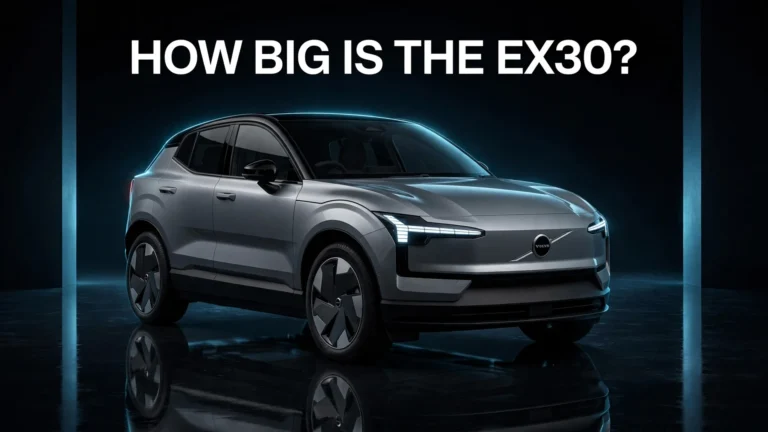
Imagine a car that’s as cute as a button but packs a punch like your grandma’s secret recipe. That’s the Volvo EX30 for you! This compact electric SUV is Volvo’s latest baby, and boy, does it have some tricks up its sleeve.
First off, let’s talk numbers. The EX30 starts at a wallet-friendly $34,950. Not too shabby for a luxury brand, right? But here’s where it gets really exciting – the twin motor version can zoom from 0 to 60 mph in just 3.4 seconds. That’s faster than you can say “Swedish meatballs”!
But it’s not all about speed. The EX30 is like that cool, eco-conscious friend who always brings reusable bags to the grocery store. It’s designed with sustainability in mind, from its compact size to its electric heart. And let’s be honest, it looks pretty darn good too. It’s like Volvo took all the Scandinavian design goodness and packed it into this adorable little package.
Production and Market Availability
Now, here’s where things get a bit… complicated. You see, the EX30 is a bit of a globetrotter. It’s produced in China and Belgium, which is great for Volvo’s global strategy but not so great for U.S. tax credits. More on that later!
The good news? If you’re in the U.S. and you’re itching to get your hands on one, you can place your order. But remember, where these cars are born plays a big role in whether Uncle Sam will give you a tax break for buying one.
Federal E.V. Tax Credit Eligibility Criteria
Understanding the Clean Vehicle Tax Credit (Inflation Reduction Act 2022)
Okay, let’s talk turkey. Or, in this case, let’s talk tax credits. The U.S. government, in its infinite wisdom, decided to shake things up with the Inflation Reduction Act of 2022. This act introduced new rules for E.V. tax credits, and boy, are they picky!
Here’s the deal: To qualify for the full $7,500 tax credit, an E.V. needs to tick a lot of boxes. It’s like trying to win a game of automotive bingo. The car needs to be produced in North America, the battery materials need to come from specific places, and even your income plays a role. It’s enough to make your head spin!
U.S. Production and Battery Requirements for E.V. Tax Credits
Let’s break it down further. The government wants E.V.s to be made in North America. It’s like they’re saying, “If you want our money, you better make it in our backyard!” They’re also super picky about where the battery materials come from. It’s all part of a plan to boost domestic production and reduce reliance on certain foreign suppliers.
These rules are stricter than your high school principal on prom night. And unfortunately, our Swedish friend, the EX30, is having trouble fitting in.
Does the Volvo EX30 Qualify for Federal Tax Credit?
Why Volvo EX30 Doesn’t Qualify
Here’s the kicker – the Volvo EX30 doesn’t make the cut for the federal tax credit. Why? Well, remember how I said it was made in China and Belgium? That’s the main issue. The U.S. government wants these cars made closer to home to qualify for the credit.
It’s like throwing a party and only inviting your neighbours – sorry, China and Belgium, you’re too far away to join in on this tax credit fun. There’s talk about Volvo maybe shifting production in the future, but for now, if you buy an EX30 in the U.S., you won’t be getting that sweet $7,500 credit.
Alternative Financing Options for EX30 Buyers
But wait! All is not lost. If you’re dead set on an EX30 and still want to save some cash, there might be a workaround. Leasing could be your golden ticket. Some leased E.V.s might qualify for partial tax incentives, which could trickle down to you in the form of lower monthly payments.
It’s like finding a secret passage in a video game – you might not get the full reward, but you still come out ahead. Just keep in mind that these rules can vary depending on which state you’re in. It’s always a good idea to check with your local Volvo dealer or a tax professional to get the full scoop.
State-Level Incentives for the Volvo EX30
State Tax Credits and Rebates
Here’s where things get interesting. While the feds might not be showing the EX30 any love, individual states could be more welcoming. Many states offer their own rebates or credits for E.V. buyers, and they don’t always care where the car was made.
It’s like each state is hosting its own E.V. party, and some are more than happy to let the EX30 join in. These incentives can vary widely, from a few hundred bucks to several thousand. So, depending on where you live, you might still be able to save some serious cash on your EX30 purchase.
Leasing vs. Buying and its Impact on Incentives
Now, let’s circle back to leasing for a moment. In some states, leasing an E.V. can open doors to incentives that might not be available if you buy outright. It’s a bit like choosing between buying a house or renting an apartment – each option has its perks.
If you’re considering an EX30, it might be worth looking into both buying and leasing options in your state. You might find that one path leads to more savings than the other. It’s all about playing the game smart!
Tax Credit Eligibility Calculator
Volvo EX30 vs. Competitors in Terms of Tax Credit Eligibility
How Other Volvo Models Compare
Here’s a fun fact: While the EX30 is left out in the cold, some of its Volvo siblings are basking in the warm glow of tax credit eligibility. Models like the XC60 Recharge and S60 Recharge actually qualify for the federal tax credit. Why? They’re assembled right here in the USA.
It’s like Volvo has a foot in both worlds – some models are part of the tax credit club, while others (like our EX30) are stuck outside looking in. If you’re set on a Volvo and want that tax credit, you might need to look at these other models.
Comparing with Other Eligible E.V.s
Let’s put the EX30 side by side with some of its competitors. Take the Tesla Model 3, for instance. It qualifies for the full federal tax credit, which makes its higher base price easier to swallow. It’s like comparing apples and… slightly more expensive apples that come with a rebate.
This doesn’t mean the EX30 is out of the game, though. Its lower starting price might still make it an attractive option, even without the tax credit. It’s all about crunching the numbers and seeing what works best for your wallet.
Future Outlook for Volvo EX30 and E.V. Tax Credits
Volvo’s Strategy for U.S. Compliance
Volvo isn’t just sitting back and accepting defeat. They’re like a chess player, always thinking several moves ahead. There’s talk of potentially shifting some production to the U.S. or Europe in the future. This could be Volvo’s way of saying, “We want in on this tax credit action!”
If Volvo does make these changes, it could mean future versions of the EX30 might qualify for the credit. But for now, it’s all speculation. We’ll have to wait and see what moves Volvo makes next in this high-stakes game of automotive chess.
Conclusion: Is the Volvo EX30 Still a Good Investment Without the Tax Credit?
Total Cost of Ownership Considerations
So, here we are at the finish line. The big question: Is the EX30 still worth it without that juicy tax credit? Well, that depends on what you’re looking for.
Sure, you might not get that $7,500 discount, but the EX30 still has a lot going for it. It’s priced competitively, it’s got that snazzy Scandinavian design, and it’s eco-friendly to boot. Plus, let’s not forget about those state incentives we talked about earlier.
When you look at the total cost of ownership – factoring in things like fuel savings and maintenance costs – the EX30 might still come out as a winner in your book. It’s like choosing between a fancy restaurant with a coupon or a slightly less fancy one without – sometimes, the experience itself is worth the extra cost.
In the end, whether the EX30 is right for you depends on your priorities. If you’re dead set on getting that federal tax credit, you might need to look elsewhere. But if you’re in love with the EX30’s style, performance, and eco-credentials, don’t let the lack of a tax credit stop you. After all, sometimes the heart wants what it wants – tax credit or not!