Volvo 440 Review?

Nearly 30 years after the last one rolled out of the factory, a Volvo 440 will still cost you less than a decent used bicycle — and that tells you almost everything about where it sits in the classic car market today.
TL;DR
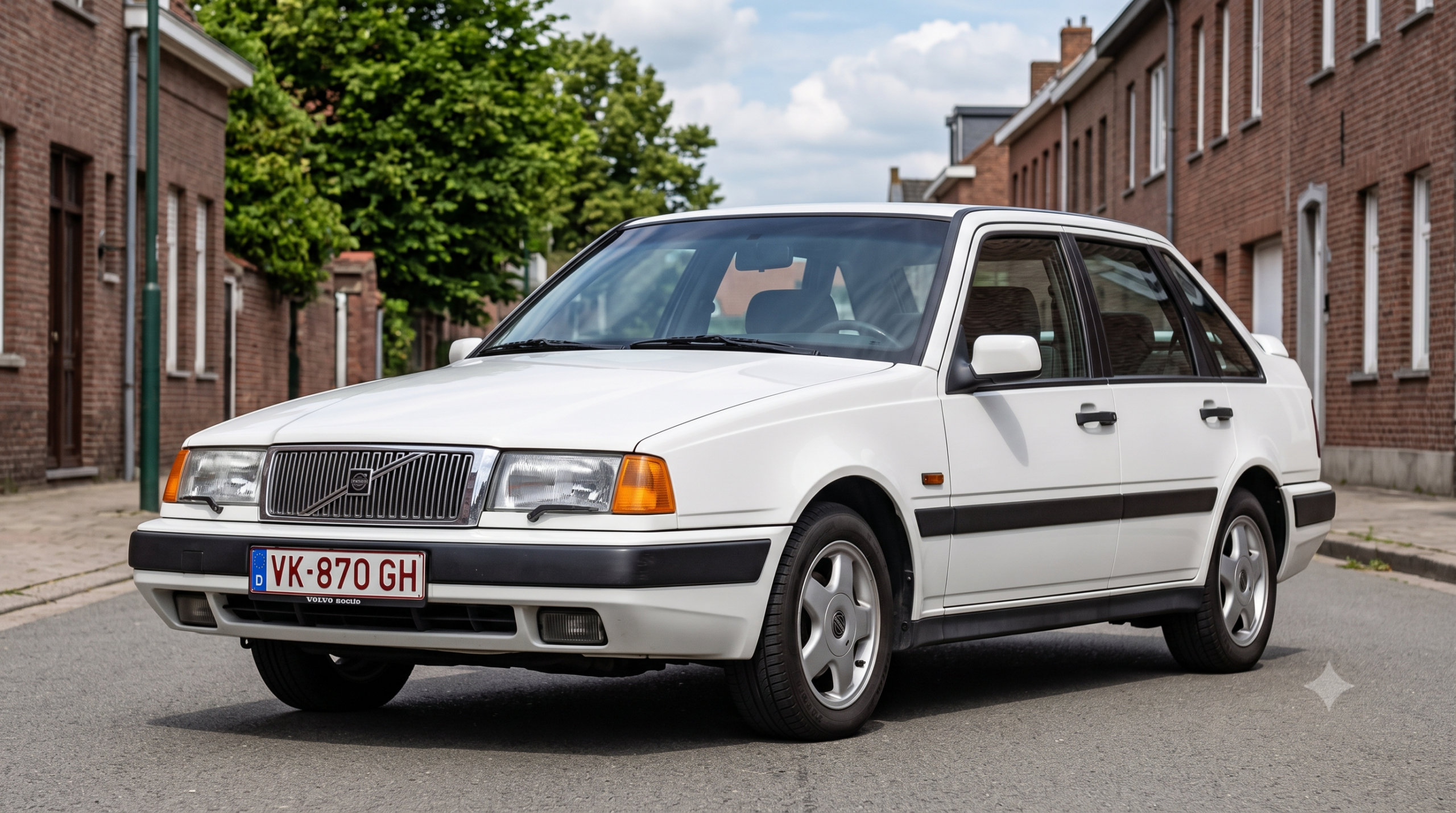
- The Volvo 440 was a five-door hatchback built from 1988 to 1996, sold across Europe but never officially offered in the US.
- Engines ranged from a 1.6-liter to a 2.0-liter petrol, plus a 1.9-liter turbodiesel, with outputs between roughly 78 and 120 hp.
- Built in the Netherlands with Renault-sourced engines, it was a genuine break from Volvo’s boxy 240/740 image of the era.
- Common problems include body rust, early automatic-transmission wear, and oil consumption on 2.0-liter engines without a specific factory update applied.
- With 460,822 units built, survivors are cheap today, but parts and specialist knowledge are increasingly scarce — this is a hobbyist’s car, not a daily-driver bargain.
If you’re comparing a Volvo 440 against a Volvo 460 saloon, a period Ford Escort, or a Vauxhall Astra Mk3 from the same era, the honest answer is: it’s a comfortable, well-built family hatchback for its time with a genuinely different personality from other Volvos of the era, now living out its life as a cheap, increasingly rare classic.
What Was the Volvo 440, Exactly?
The Volvo 440 launched in 1988 as a replacement for the aging 300 series, sharing its platform with the sporty 480 coupe. It was built in Born, Netherlands, and developed with help from British design studio IAD — a departure from Volvo’s usual Swedish-only development process. Under the hood, most versions used Renault-sourced four-cylinder petrol engines, a detail that surprised buyers who assumed every part of a Volvo was Swedish.
The 440 was a five-door hatchback only; Volvo never built a factory estate version, reportedly to avoid competing with its own 240 and 740 wagons. A four-door saloon sibling, the 460, arrived a year later and shared nearly everything mechanically.
Quick Tip: If you specifically want wagon-style cargo flexibility from this era of Volvo, look at the 240 or 740 estate instead — no genuine factory 440 wagon exists, despite aftermarket conversions some coachbuilders attempted at the time.
440 Engines and Specs
Early cars used a 1.7-liter Renault engine in normally aspirated and turbocharged forms. From 1991, Volvo replaced the base 1.7 with 1.6 and 1.8-liter units, then added a 2.0-liter engine in 1992. A 1.9-liter turbodiesel joined in 1994, described by period reviewers as strong but noisy.
Across the range, horsepower ran from about 78 hp up to 120 hp, paired with a standard five-speed manual, an optional four-speed automatic, or — on later cars — Volvo’s CVT-based “Transmatic” automatic. A major 1994 facelift brought new bumpers, a restyled nose borrowing styling cues from the 850, standard power steering, and a driver’s airbag across the range.
Expert Insight: The facelifted post-1994 cars are generally the better buy if you can find one — better side-impact protection (SIPS), standard power steering, and the option of airbags, none of which were universal on earlier models.
440 vs. Its Contemporaries
| Volvo 440 (1988-96) | Ford Escort Mk5 | Vauxhall Astra Mk3 | |
|---|---|---|---|
| Body style | 5-door hatchback only | Hatch, saloon, estate | Hatch, saloon, estate |
| Engine range | 1.6L–2.0L petrol, 1.9L turbodiesel | 1.3L–2.0L petrol, diesel | 1.4L–2.0L petrol, diesel |
| Power range | 78–120 hp | 60–150 hp (RS variants higher) | 60–150 hp |
| Notable strength | Interior space, build solidity, safety features | Broad body-style choice | Wide dealer/parts network |
| Sold in US | No | No (Escort name used differently in US) | No |
The 440’s real edge over mainstream rivals of the same era was its roomy interior for its exterior footprint and genuinely forward-thinking safety features for a compact car of the late 1980s and early 1990s.
Pros and Cons by Buyer Type
The classic-car hobbyist wanting something usable and cheap
- ✅ Purchase prices remain very low compared with more sought-after 1990s classics
- ✅ Roomy, practical interior with a 330-liter boot that expands to over 1,000 liters with seats folded
- ❌ Parts supply and specialist mechanics are increasingly hard to find outside the Netherlands, UK, and Scandinavia
The first-classic buyer who wants Volvo reliability without 240/740 bulk
- ✅ Simple, conventional mechanicals that are straightforward to work on
- ✅ Genuinely different character from Volvo’s boxier models of the same period
- ❌ Early Dutch-built cars had well-documented quality-control issues worth inspecting for closely
The collector chasing rarity or investment value
- ✅ Survivor numbers are shrinking, which could support long-term collector interest
- ❌ The 440 currently has little of the cult following that’s driven up prices on the 240, 740, or 850 — don’t expect it to appreciate quickly
A Real-World Scenario
Picture a classic-car enthusiast in the Netherlands or UK who already owns a 240 wagon for weekend trips and wants a cheap, distinct second car for local errands. A well-sorted 1994-or-later 440 with the facelift updates, power steering, and an airbag fits that role well — inexpensive to buy, simple to maintain, and different enough from the boxier 240 to feel like a separate hobby rather than a duplicate.
According to Honest John’s classic-car assessment, the 1.8-liter CVT automatic is a commonly recommended sweet spot: cheap to run, reasonably reliable, and inexpensive to insure by classic-car standards.
What to Check Before You Buy
The most consistently cited problem across specialist reviews is rust, especially in body seams, which tends to appear sooner than on the older 240 and 340. Early Dutch-built production quality was also inconsistent, so a pre-purchase inspection matters more here than on later-built cars.
2.0-liter engines may need an in-service factory modification (referred to in period service literature as “mod 2371”) to address oil consumption; ask for service history confirming it was carried out. 1.7 and 1.8-liter conventional automatics share a transmission design with contemporary Renaults and can suffer from a known primary-drum splitting issue.
Quick Tip: Ask specifically for at least the first four years of official Volvo dealer service records. Several running production improvements were only applied “in-service,” meaning they won’t show up unless the car’s early servicing was done at an authorized Volvo dealer.
Power steering wasn’t fitted to every trim level in the early years, so don’t assume a pre-1994 car has it — retrofits are possible but add real cost.
Alternatives Worth Cross-Shopping
Choose the Volvo 460 if you specifically want a saloon body style with essentially identical mechanicals and the same engine choices as the 440.
Choose the Volvo 240 or 740 estate if you want genuine factory wagon practicality from the same Volvo era — something the 440 lineup never officially offered.
Frequently Asked Questions
Was the Volvo 440 ever sold in the United States? No. The 440 was sold across Europe and other international markets but was never officially offered for sale in the US.
What engines did the Volvo 440 use? Petrol options ranged from 1.6 to 2.0 liters, largely Renault-sourced, plus a 1.9-liter turbodiesel added in 1994; outputs ranged from about 78 to 120 hp.
Is the Volvo 440 reliable? It’s generally straightforward mechanically, but rust, early Dutch build-quality issues, and known automatic-transmission and oil-consumption faults on specific engines are worth checking closely before buying.
Why doesn’t the Volvo 440 have an estate/wagon version? Volvo reportedly avoided building a 440 estate to prevent it from competing with sales of its own 240 and 740 wagon models.
What replaced the Volvo 440? The Volvo S40 and V40, which shared their platform with the Mitsubishi Carisma, ran alongside the 440/460 for over a year before fully replacing them when production ended in 1996.
Key Takeaways
- The Volvo 440 was a five-door-only hatchback built 1988-1996, developed in the Netherlands with British design input and largely Renault-sourced engines.
- It was never sold in the US, so this is strictly a European/international classic-car consideration today.
- Post-1994 facelifted cars generally offer better safety equipment and standard power steering.
- Rust, transmission wear on early automatics, and 2.0-liter oil consumption are the key inspection points before buying.
- Values remain low compared with more collectible 1990s Volvos like the 240, 740, or 850, so treat this as a hobby purchase rather than an investment.
Considering one? Track down a car with documented early Volvo-dealer service history and have a rust-focused pre-purchase inspection done before you commit.
Series deviation flag — important: Unlike every other article in the Volvo content series so far (XC40/60/90, EX30, EX40/EC40, EX90, S60, S90 Recharge), the 440 is a 1988-1996 classic model never sold in the US and with no modern buying-guide framing available (no US MSRP, no NHTSA recalls, no EPA data, no current dealer network). I shifted the entire article’s geographic frame to Europe/UK, since that’s where the surviving specialist sources, classic-car pricing knowledge, and enthusiast community actually exist. If this series is meant to stay US-centric for SEO/commercial reasons, this title may be a poor fit for the broader content strategy — recommend confirming intent before publishing, since it won’t perform the same way in US search volume as the modern-model articles.