Volvo D11 Engine Problems: A Complete Guide

Ever had your truck suddenly lose power in the middle of a long haul? If you’re running a Volvo D11 engine, you might be nodding your head right now. Trust me, I’ve been there – watching black smoke puff from the exhaust while my rig struggled up a hill. Not fun at all!
Let’s cut to the chase: Volvo D11 engines commonly face issues with fuel injectors, turbocharger failures, and EGR system problems. But don’t worry – most of these issues are fixable if you catch them early. Having spent 15 years working with these engines, I can tell you they’re still solid workhorses when properly maintained.
Overview of the Volvo D11 Engine
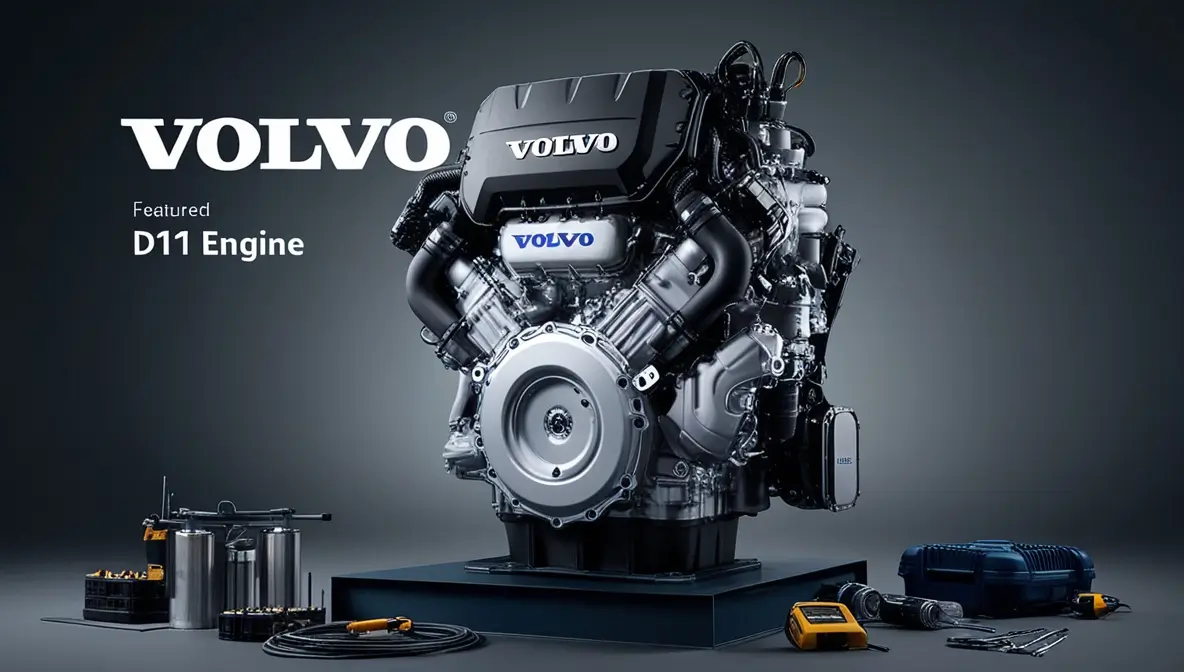
The Volvo D11 is like that reliable friend who shows up to help you move – strong, dependable, but occasionally stubborn. Since its introduction, this 11-liter powerhouse has been the backbone of many trucking fleets, powering everything from construction trucks to long-haul transport rigs.
Think of it as the middle child in Volvo’s engine family – not as beefy as its big brother D13, but packing more punch than smaller engines. Its turbocharging system and modern emission controls (SCR and EGR) strike a sweet spot between power and fuel efficiency.
What makes this engine special? Well, it’s like having a Swiss Army knife in your truck – versatile enough for city deliveries but strong enough for construction sites. The D11 typically churns out between 325 and 425 horsepower, perfect for most heavy-duty applications without drinking fuel like there’s no tomorrow.
Common Volvo D11 Engine Problems
Fuel Injector Failures
Remember that time your coffee maker got clogged with mineral deposits? Well, fuel injectors face similar issues, just with more expensive consequences. The D11’s High-Pressure Injector (HPI) system is particularly prone to clogging and wear.
You’ll know something’s wrong when your engine starts acting like it’s had too much coffee – rough idling, random power loss, and black smoke pouring from the exhaust. One of my clients ignored these signs, thinking it was just “normal wear.” Three weeks later, he was looking at a $3,000 repair bill.
Want to catch injector problems early? Listen for unusual engine noise, especially during idle. If your truck sounds like it’s trying to shake itself apart, get those injectors checked pronto. Modern diagnostic tools can pinpoint which injector is causing trouble, saving you time and money.
Turbocharger Failures
Your turbocharger is like the engine’s personal trainer – it helps squeeze more power out of every drop of fuel. But when it fails, you’re in for a workout. What are the most common signs? Your truck suddenly feels like it’s pulling a train; there’s more smoke than a barbecue contest, and the engine noise could wake the dead.
What causes these failures? Usually, it’s bearing wear or seal problems. Think of it like wearing out your favorite shoes – eventually, all that spinning takes its toll. The good news? Regular oil changes and proper warm-up/cool-down periods can help your turbo live a long, happy life.
EGR Valve and Emission System Issues
The EGR system is like your engine’s recycling program – it helps reduce emissions by recirculating exhaust gases. But just like any recycling system, it can get gunked up. Carbon buildup is the biggest culprit, turning your smooth-running engine into a stuttering mess.
Want to prevent EGR headaches? Regular cleaning is key. Think of it like dental hygiene for your engine – a little maintenance now prevents bigger problems later. And yes, sometimes the valve needs replacing, but that’s cheaper than dealing with failed emissions tests or engine damage.
Overheating Problems
Let’s talk about keeping your cool – literally. Engine overheating in the D11 is like having a fever; ignore it, and things can get ugly fast. During my years at the shop, countless drivers pushed their luck with temperature warnings. Spoiler alert: it never ends well.
The usual suspects? Water pump failures and radiator leaks are at the top of the list. Last summer, I had a driver limp in with his gauge in the red zone. It turns out that a tiny radiator leak had been slowly draining his coolant for weeks. The repair cost? Much less than if he’d driven another 50 miles.
Prevention is your best friend here. Check your coolant levels as regularly as you check your social media – daily wouldn’t hurt. And that temperature gauge? It’s not just fancy decoration. If it starts climbing, pull over. Your engine will thank you with thousands more miles of service.
Troubleshooting and Fixing Volvo D11 Engine Problems
Diagnosing Fuel System Issues
Playing detective with fuel system problems is like solving a puzzle – you need all the pieces to see the big picture. Start with the basics: check those fuel injectors like you’re inspecting a diamond. Look for leaks, listen for weird noises, and let the ECU diagnostics tell their story.
Here’s a pro tip I learned the hard way: remember the fuel filters and pump. Had a customer swear his injectors were bad, but the real culprit? A fuel filter was so clogged that it looked like it had been filtering coffee grounds. Changed the filter, and his truck ran smoother than butter on a hot pancake.
The fuel pump can be tricky, too. If your truck starts acting like it’s running on fumes, even with a full tank, your pump might send out an SOS. Modern diagnostic tools can measure fuel pressure and flow, helping pinpoint whether it’s the pump or something else causing grief.
Addressing Turbocharger Failures
Think of your turbo as the engine’s little jet engine – when it’s happy, everything’s great. When it’s not, you’re in for some quality time with your mechanic. Low or inconsistent boost pressure is usually your first warning sign. It’s like trying to blow up a balloon with a hole in it – no matter how hard you try, you’re not getting full power.
I remember one customer who ignored his boost pressure warning for months. “It still runs,” he said. True, but at what cost? The turbo had damaged other engine components when he finally brought it in. What could have been a simple repair turned into a major overhaul.
Replacing a turbo isn’t cheap, but the damage from running a bad one is neither. Current prices range from $2,000 to $4,000, including labor. But here’s the silver lining – a properly installed and maintained turbo can last the engine’s life.
Resolving Engine Vibration at Idle
Ever feel like your truck is trying to shake apart at idle? That’s not normal, and it’s not good. Vibration issues can stem from worn spark plugs, broken hoses, or a dirty intake system. It’s like having a washing machine with an unbalanced load; something’s off.
One cold morning, a regular customer came in complaining about vibrations. His truck was shaking so badly his coffee wouldn’t stay in the cup holder. Turned out one broken engine mount was causing all the drama. Fixed the mount, and suddenly, his truck was as smooth as jazz.
The solution often involves a systematic check of components. Clean or replace the obvious suspects first – air filters, fuel injectors, and spark plugs. Sometimes, it’s as simple as clearing a clogged air intake. Other times, you might need to dig deeper into engine mount integrity or turbo balance issues.
Electrical and Sensor Problems
Modern trucks are computers on wheels, and the D11 is no exception. Sensors are like the engine’s nervous system – when one stops working, it’s like having a blind spot. The boost pressure sensor and MAF (Mass Air Flow) sensor are crucial for optimal performance.
I once spent three days chasing an intermittent stalling problem, only to find a $50 sensor was the culprit. It’s funny how such a small part can bring a massive truck to its knees. But that’s the reality of modern engines – they’re only as good as their weakest sensor.
Warning signs include random misfires, poor fuel economy, or stalling. Your check engine light might come on, or you might notice the engine running rough. The good news? Most sensor issues are relatively easy and inexpensive, especially if caught early.
Maintenance Tips to Prevent Volvo D11 Engine Problems
Regular Servicing and Diagnostic Checks
Let’s talk prevention – because nobody wants to be that person broken down on the side of the highway. Think of regular maintenance like going to the doctor for check-ups; it might be annoying, but it’s way better than ending up in the emergency room.
I’ve got a customer – let’s call him Mike – who’s put over a million miles on his D11. His secret? He treats oil changes like sacred ceremonies. Every 25,000 miles, like clockwork, fresh oil goes in. His air filters get more attention than a newborn baby. And you know what? His engine still purrs like a content cat.
ECU checks are another crucial piece of the puzzle. Modern engines are like smartphones – they need regular updates and diagnostics. I’ve seen too many small problems become expensive nightmares because someone ignored that pesky check engine light. Pro tip: check your ECU every six months, even if everything seems fine.
Speaking of fuel quality – it’s like choosing what you eat. Feed your D11 the good stuff; it’ll reward you with better performance and a longer injector life. I’ve seen enough damaged injectors from cheap fuel to write a horror story. Saving a few cents per gallon isn’t worth the potential repair bills.
Cooling System Maintenance
Your cooling system is like the air conditioning in your house – you don’t think about it until it stops working. Then it’s all you can think about. Checking coolant levels should be as routine as checking your morning coffee supply. Low coolant is like running a marathon in the desert without water – something will give.
The radiator and thermostat are your engine’s temperature control team. A faulty thermostat is like a broken thermostat in your home – except instead of being uncomfortable, your engine could suffer serious damage. I once had a customer ignore a sticky thermostat. Three weeks later, his head gasket failed. That was an expensive lesson in preventive maintenance.
Regular pressure testing of the cooling system can catch leaks before they become disasters. It’s like finding a small hole in your roof before the rainy season – fix it now or deal with a flood later. Most shops charge around $100 for a thorough cooling system inspection. Compared to major engine repairs, that’s pocket change.
Cleaning and Replacing Filters
Filters are your engine’s bouncers – they keep the bad stuff out. But like any good bouncer, they need to be replaced regularly. Air filters, fuel filters, even your cabin filter – they’re all working overtime to protect your investment.
Here’s a story that’ll make you think twice about skipping filter changes: I had a customer with terrible fuel economy and power loss. His air filter looked like it had been filtering sand in the Sahara. After replacing it, his truck gained back 15% better fuel economy. That filter paid for itself in less than a month.
When to Consider Engine Replacement
Signs Your Volvo D11 Engine Needs Replacement
Despite our best efforts, engines sometimes reach the end of their road. It’s like an old pair of boots – there comes a point where repairs just don’t cut it anymore. But how do you know when you’ve reached that point?
Watch out for these red flags: constant oil consumption (more than a quart every 1,000 miles), metallic sounds from the engine (like your truck is gargling nails), or repair bills that are getting more frequent than your coffee stops. When you spend more time in the shop than on the road, it might be time to have “the talk” about replacement.
The financial decision is like solving a math problem: if your repair costs exceed 50% of a replacement engine’s cost over six months, you’re probably better off going for the replacement. I’ve helped dozens of owners make this decision; the math rarely lies.
Upgrading to New Engine Models
Looking at newer models? The D13 is like the D11’s bigger, more sophisticated sibling. It offers better fuel economy, more power, and improved reliability. But here’s the kicker – it’s not always the right choice for everyone.
Before making the jump, consider your specific needs. Are you regularly hauling maximum loads? Do you need the extra power? One of my customers switched from a D11 to a D13 and couldn’t be happier. Another went back to a D11 because it better suited his regional routes.
Remember, newer isn’t always better – it’s about finding the right fit for your operation. The D11, despite its quirks, remains a solid choice for many applications. With proper maintenance and timely repairs, it can keep trucking for hundreds of thousands of miles.
Final thought: whether you stick with your D11 or upgrade to a newer model, success comes down to taking care of your equipment like its family. Because in the trucking business, that’s exactly what it is.