Where is the Volvo C40 Made?

Ever wondered where your sleek, eco-friendly Volvo C40 comes from? Picture this: A bustling factory floor where cutting-edge technology meets Swedish engineering excellence. That’s where the magic happens, but not just in one place – the story spans continents!
The Volvo C40 primarily rolls off production lines in two key locations: the historic Ghent facility in Belgium and the modern Luqiao plant in China. For European buyers, your C40 likely started its journey in Belgium, while Asian-Pacific customers typically receive their vehicles from the Chinese facility. Pretty cool how one car can bridge two continents, right?
Manufacturing Locations of the Volvo C40
Primary Production Plant – Ghent, Belgium
The Ghent facility isn’t just any factory – it’s Volvo’s crown jewel for electric vehicle production in Europe. Think of it as the Silicon Valley of car manufacturing but with Belgian chocolate nearby! This plant has undergone a remarkable transformation to embrace the electric future, with massive investments pumping new life into its operations.
Remember when everyone thought electric cars were just a passing fad? Well, the folks at Ghent were already two steps ahead. They’ve expanded their capacity so much that they can now churn out electric vehicles like my grandmother bakes cookies – consistently and with lots of love (though the cars taste considerably worse, I imagine).
The facility has become so crucial to Volvo’s European strategy that it’s practically the beating heart of their electric revolution. With state-of-the-art assembly lines and robotics working alongside skilled technicians, each C40 that leaves Ghent carries a piece of European craftsmanship with it.
Chinese Production Hub – Luqiao, China
Meanwhile, on the other side of the world, the Luqiao plant is writing its own chapter in the C40 story. Under the watchful eye of Volvo’s parent company, Geely, this facility has become the cornerstone of Asian-Pacific production. It’s like having a twin brother on the other side of the world – same DNA, different personality!
The fascinating part? Despite being thousands of miles apart, both plants maintain identical quality standards. Your C40 will purr just as smoothly whether it was born in Belgium or China. The Luqiao plant has perfected the art of combining Swedish design principles with Chinese manufacturing efficiency.
Working in perfect harmony with local supply chains, the Luqiao facility serves markets across Asia and Australia. They’ve mastered the delicate balance of maintaining Volvo’s legendary quality while adapting to local market needs.
Volvo C40’s Connection to the XC40 Platform
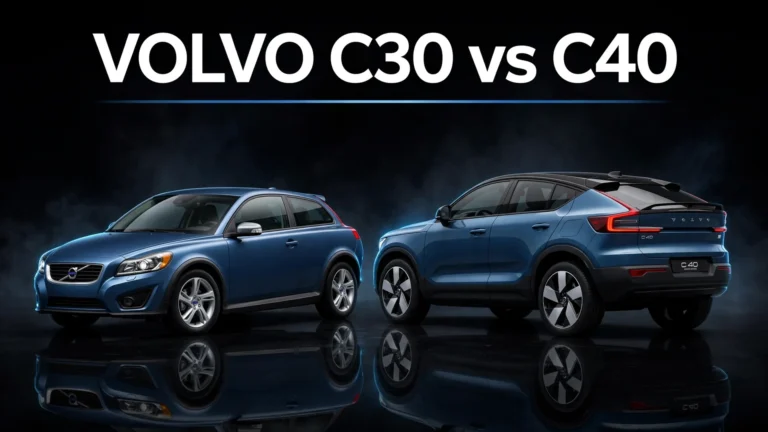
Here’s where things get really interesting. The C40 and XC40 are like siblings who share clothes – they’re built on the same CMA (Compact Modular Architecture) platform. This shared foundation is like a Swiss Army knife of car manufacturing, allowing Volvo to produce different models with amazing efficiency.
Think about it like this: if the XC40 is your favourite comfortable sneaker, the C40 is its sporty cousin. Same basic structure but with a sleeker, more aerodynamic design that helps it slice through the air like a hot knife through butter. The shared platform means both models can be produced in either facility with minimal retooling, saving time and resources while maintaining consistent quality. Key Markets and Regional Variations
Distribution and Market Segmentation
Let’s talk about how Volvo plays the global chess game of car distribution. It’s like having your favourite pizza place open in two locations to serve different neighbourhoods – except we’re talking about luxury electric vehicles, not pepperoni pies!
European customers get their C40s fresh from Belgium’s Ghent facility. If you’re cruising down the streets of Paris, Berlin, or Stockholm, chances are your C40 took its first breath in Ghent. The plant specializes in crafting vehicles that meet the exact specifications European drivers expect.
Over in Asia, the Luqiao plant keeps the Eastern markets well-supplied. They’ve got their finger on the pulse of Asian consumer preferences, tweaking everything from infotainment systems to comfort features. It’s fascinating how one car can speak so many different languages, isn’t it?
Sustainable Production Practices at Volvo Plants
Now, here’s where things get really exciting – and green! Both plants are like eco-warriors in disguise, working tirelessly to shrink their carbon footprint. The Ghent facility, for instance, has already started using renewable energy sources. They’re so serious about sustainability that they probably recycle their recycling bins!
Volvo’s 2030 goals aren’t just fancy promises written on a PowerPoint somewhere. These plants are actively working towards carbon neutrality, with real changes happening on the factory floor. From using recycled plastics in car components to saying goodbye to leather interiors, they’re revolutionizing how we think about car manufacturing.
Supply Chain and Production Challenges
Impact of Global Logistics on Production
Remember when you couldn’t find toilet paper during the pandemic? Well, car manufacturing faces similar challenges, just with slightly more expensive parts! Global supply chains are like giant domino sets – when one piece falls, it affects everything else.
Volvo’s been pretty clever about this, though. They’ve developed strategies to keep production running smoothly, even when the world throws curveballs their way. It’s like having a backup plan for your backup plan’s backup plan!
Battery and Component Sourcing
Here’s a fun fact: the batteries that power your C40 are probably better travelled than most people! Volvo’s working hard to bring battery production closer to home, though. It’s like trying to grow your own vegetables instead of buying them from across the country – better for everyone involved.
The company’s getting creative with materials, too. Those sleek aluminium components? Many are made from recycled materials. The battery modules are sourced through carefully selected partners who share Volvo’s commitment to sustainability. It’s like a dating app, but for car parts – only the best matches make the cut!
Volvo’s Transition to a Fully Electric Future
Manufacturing Shifts to Meet EV Demand
Volvo isn’t just dipping its toes in the electric vehicle pool – they’ve done a full cannonball! The C40 represents a massive shift in how they’re approaching manufacturing. They’re retooling factories faster than a Formula 1 pit crew changes tyres.
By 2025, they’re aiming for 50% of their sales to be electric vehicles. And by 2030? They’re going all-in with 100% electric. That’s like announcing you’re going to learn a new language and then signing up to write a novel in it – bold, ambitious, and totally Volvo!
C40 Recharge as a Flagship EV Model
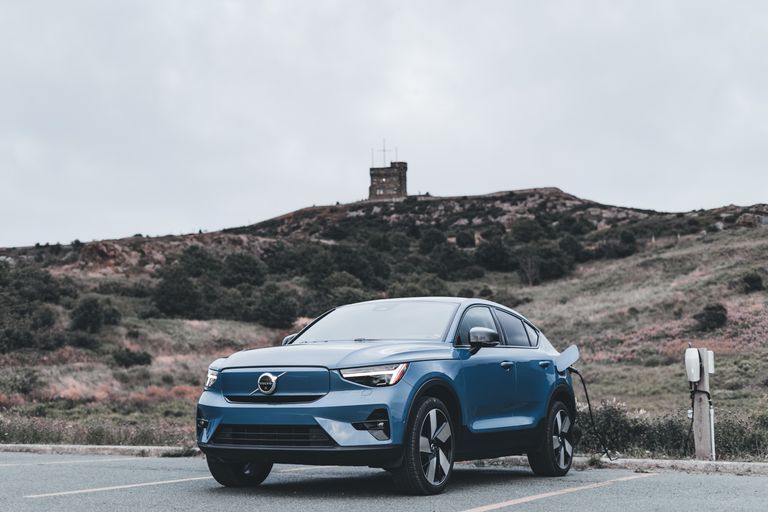
The C40 Recharge isn’t just another electric car – it’s Volvo’s way of showing the world what it can do. In some markets, they’ve even made it online exclusive. That’s right; you can order one while sitting in your pyjamas! How’s that for revolutionary?
The design team really outdid themselves with this one. They looked at the laws of aerodynamics and said, “Challenge accepted!” The result? A car that’s as slippery through the air as a fish through water, maximizing range and efficiency.
Environmental Impact and Sustainability Efforts
CO2 Emissions Analysis for C40 Production
Let’s crunch some numbers – but don’t worry, I’ll keep it interesting! When you compare the C40’s lifecycle emissions to traditional cars, it’s like comparing a person’s carbon footprint to that of a small village. Sure, manufacturing an electric vehicle initially requires more energy, but the long-term benefits are huge.
Each C40 that rolls off the production line represents Volvo’s commitment to reducing its environmental impact. They’re measuring everything from the electricity used to build the car to the emissions saved over its lifetime. It’s like counting calories but for carbon dioxide!
Green Energy Initiatives at Volvo Facilities
Both production facilities are turning into clean energy champions. Solar panels, wind power, and other renewable sources are becoming as common as coffee machines in these plants. The Ghent facility, in particular, is like a showcase for green manufacturing techniques.
They’ve even implemented circular production practices – fancy talk for “we reuse everything we possibly can.” Waste materials from one process become resources for another. It’s like a manufacturing version of the Circle of Life, minus the Lion King soundtrack.
Conclusion – Future of Volvo’s Manufacturing Strategy
As we wrap up our journey through the world of C40 production, it’s clear that Volvo’s not just building cars – they’re building the future. With dual manufacturing hubs strategically placed in Europe and Asia, they’re perfectly positioned to meet the growing demand for electric vehicles worldwide.
The future looks bright (and electric) for Volvo’s manufacturing strategy. As demand for EVs continues to grow faster than a teenager’s appetite, both the Ghent and Luqiao facilities stand ready to answer the call. Whether you’re in Brussels or Beijing, your C40 represents the best of what global manufacturing has to offer – with a Swedish accent, of course!
Remember, every C40 that rolls off these production lines isn’t just another car – it’s a piece of automotive history in the making. And now you know exactly where that history begins!