Does the Volvo C40 Qualify for the EV Tax Credit?

Does the Volvo C40 Qualify for the Federal EV Tax Credit?
You found the car. You love the car. Now you’re wondering if the government will help you pay for it. Fair question — and the answer has two parts, one old and one very new.
TL;DR
- The Volvo C40 Recharge never qualified for the IRA federal EV tax credit because it is assembled in Belgium, not North America.
- The $7,500 federal EV tax credit (Section 30D) expired on September 30, 2025, so it no longer exists for any new buyer regardless of vehicle.
- If you financed a C40 in 2025, you may still be able to deduct up to $10,000 of loan interest per year — but only if the vehicle qualifies under new assembly rules.
- State and utility incentives can still bring real savings. Massachusetts, for example, offers a $3,500 rebate on the C40.
- The smartest move right now: check your state’s rebate program and talk to a tax professional about the new loan interest deduction.
The Core Question: Did the Volvo C40 Ever Qualify for the Federal Tax Credit?
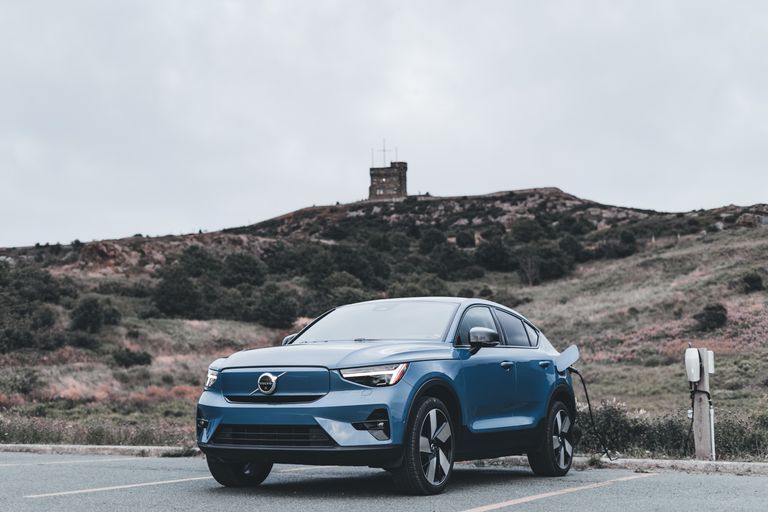
No — the Volvo C40 Recharge has never qualified for the federal EV tax credit under the Inflation Reduction Act (IRA). The reason is straightforward: the IRA required final assembly in North America, and the C40 Recharge is built at Volvo’s manufacturing plant in Ghent, Belgium. Not South Carolina. Not Ohio. Belgium.
The Treasury Department’s official list of eligible vehicles covered cars placed in service between January 1 and September 30, 2025 — and the Volvo C40 Recharge appears nowhere on it.
The C40 has always been a stylish, capable EV. It just never got the tax break that made a Chevy Equinox EV or Tesla Model Y feel like a better deal on paper.
What Happened to the $7,500 EV Tax Credit?
It’s gone. The federal EV tax credit of up to $7,500 on electric cars and plug-in hybrids expired on September 30, 2025, due to a budget reconciliation bill known as the One Big Beautiful Bill Act.
In July 2025, the One Big Beautiful Bill Act accelerated the termination of multiple IRA clean energy credits. For electric vehicles, the cutoff was set at September 30, 2025. After that date, no federal purchase credit is available for new or used EVs, regardless of the vehicle, your income, or where it was assembled.
So even if Volvo had moved C40 production to the US overnight, it would have made zero difference for anyone buying today.
Pull quote: “The federal EV tax credit is over. The question now is: what replaced it, and does the C40 qualify?”
There’s a Narrow Exception: Did You Sign a Contract Before October 1, 2025?
If you locked in a purchase agreement before the deadline, you may still be able to claim the credit — but the C40 still fails the assembly test.
Buyers can still claim the tax credit on eligible vehicles as long as they entered into a binding contract to purchase and made a payment before September 30, 2025, according to IRS guidance. The buyer can claim the credit upon placing the vehicle in service, even if delivery occurred after September 30, 2025.
However, this exception only helps buyers of eligible vehicles. Since the C40 was assembled in Belgium, it was never on the eligible list — so this window doesn’t apply to C40 buyers, regardless of when they signed.
Pull quote: “Even with the binding-contract exception, the C40 was always disqualified by assembly location — not timing.”
What Federal Incentive Does Apply in 2026?
The IRA credit is gone, but a new loan interest deduction has taken its place — with a catch.
The One Big Beautiful Bill Act created a new annual deduction of up to $10,000 on qualified passenger vehicle loan interest. To qualify, the vehicle must be made in America and purchased brand-new after December 31, 2024. The deduction applies to loans originated between January 1, 2025 and December 31, 2028.
Anyone with a modified adjusted gross income up to $100,000 (single) or $200,000 (married filing jointly) is eligible for the full deduction.
Here’s the problem for C40 buyers: “made in America” means final assembly in the US. The IRS requires proof of final U.S. assembly, documented via the vehicle’s window sticker (Monroney label), which the IRS may request in an audit. Since the C40 is assembled in Ghent, Belgium, it almost certainly does not qualify for this deduction either.
| Incentive | C40 Qualifies? | Reason |
|---|---|---|
| IRA Section 30D ($7,500 credit) | ❌ No | Expired Sept 30, 2025; C40 was also Belgium-assembled |
| IRA Section 25E used EV credit ($4,000) | ❌ No (expired) | Expired Sept 30, 2025 |
| OBBBA Loan Interest Deduction (up to $10,000/yr) | ❌ Likely No | Requires US final assembly |
| Massachusetts MOR-EV Rebate | ✅ Yes | C40 Recharge listed at $3,500 rebate for new 2024 models |
| Other state incentives | Varies | See your state’s EV rebate program |
💡 Expert Insight: Why the C40 Keeps Missing Federal Incentives
The C40’s problem isn’t the car — it’s the supply chain. Volvo is a Swedish brand owned by China’s Geely, assembling EVs in Belgium. That combination has failed every “Made in America” test that US legislators have written since 2022.
Volvo’s South Carolina plant exists, but it produces different models (historically the S60 and XC90-based vehicles). Until Volvo decides to move C40 production stateside, federal incentives will remain out of reach.
Pros & Cons by Buyer Persona
The Budget-Conscious EV Shopper
Pros: The C40 competes well on features per dollar against eligible rivals. State rebates can still trim the price meaningfully. Cons: Without the $7,500 federal credit — which competitors like the Chevy Equinox EV did receive through September 2025 — the C40 costs more out of pocket on an apples-to-apples comparison.
The Eco-Motivated Professional
Pros: Zero tailpipe emissions, leather-free interior, and Volvo’s strong safety reputation all deliver on your values without compromise. Cons: The loan interest deduction (up to $10,000/year) that could soften the price is tied to US assembly — which the C40 can’t claim.
The Volvo Brand Loyalist
Pros: The C40 is genuinely one of the better compact EVs on the market. If you’ve owned Volvos before, the experience is familiar and refined. Cons: You’re paying a loyalty premium this time, because brand loyalty doesn’t unlock federal tax savings.
💡 Expert Insight: The One Thing Dealers May Not Tell You
Some Volvo dealers were advertising EV tax credit eligibility right up to September 30, 2025 — but those ads were for models like the EX90, not the C40. Under the tax law in effect through September 30, 2025, none of Volvo’s electric vehicles qualified for the federal EV tax credit due to MSRP, assembly, and battery sourcing rules. Always verify the VIN’s assembly location before assuming any credit applies.
What About Used C40s?
Pre-owned all-electric vehicles acquired from January 1, 2023 through September 30, 2025 may have been eligible for a federal income tax credit equal to 30% of the sale price, up to a maximum of $4,000.
That window has also now closed. If you’re buying a used C40 in 2026, no federal used-EV credit applies.
Alternatives: Choose This If…
Choose the Chevrolet Equinox EV if… you want a compact electric SUV with a similar footprint and price range, and you financed before October 2025 to capture the $7,500 credit. The Equinox EV (2024–2026 model years) was among the Treasury Department’s eligible vehicles for the full $7,500 credit. Going forward, it’s also assembled in the US — making it a candidate for the loan interest deduction.
Choose the Volvo EX30 or EX40 if… you want to stay in the Volvo family but want a model that may have better future prospects for US incentive alignment. These newer models are part of Volvo’s repositioned lineup — though assembly location still matters, so always verify.
💡 Quick Tip: Check Your State Before You Buy
Federal incentives are gone, but states are filling the gap. Massachusetts offers a $3,500 MOR-EV rebate on the Volvo C40 Recharge for new 2024 model year vehicles. Colorado, New York, California, and others have their own rebate programs with different income limits and amounts. A 10-minute check at your state’s clean vehicle program website could be worth thousands.
Real-World Scenario
Sarah in Denver is shopping for her first EV in June 2026. She test-drove the C40 Recharge and loved it. Her dealer mentioned “possible tax deductions.” Before signing, she checks with her accountant, who confirms: the C40 is assembled in Belgium, so it doesn’t qualify for the new loan interest deduction. Colorado’s state EV rebate, however, applies — saving her $2,500 at the state level. She buys the car knowing exactly what she’s getting. No nasty surprises at tax time.
💡 Quick Tip: Keep Your Window Sticker
Whether you buy a C40 or any other EV, keep the Monroney (window) sticker. The IRS may request this document to verify final assembly location when auditing vehicle loan interest deduction claims. Snap a photo of it before you drive off the lot.
FAQ
Q: Did the Volvo C40 ever qualify for the $7,500 federal EV tax credit? No. The C40 Recharge is assembled in Ghent, Belgium, which disqualified it from the IRA’s North American assembly requirement. It was never on the Treasury’s eligible vehicle list.
Q: Can I still claim any EV tax credit on a 2025 Volvo C40 purchase? Only if you entered a binding purchase contract and made a payment before September 30, 2025 — and even then, the C40’s Belgium assembly would disqualify it from the IRA credit.
Q: Is the $7,500 EV tax credit still available in 2026? No. The $7,500 new EV credit and the $4,000 used EV credit both expired on September 30, 2025.
Q: Does the new car loan interest deduction (up to $10,000/year) apply to the C40? Almost certainly not. The deduction requires final assembly in the United States, and the C40 is assembled in Belgium.
Q: Are there any savings I can get on a new Volvo C40 in 2026? Yes — state-level rebates. Programs like Massachusetts MOR-EV offer rebates on the C40, and several other states have active incentive programs. Check your state’s clean vehicle or energy office website for current offers.
Key Takeaways
- The Volvo C40 Recharge never qualified for the IRA federal EV tax credit due to its Belgium assembly location.
- The $7,500 federal EV tax credit expired September 30, 2025 and is no longer available to any new buyer.
- The replacement incentive — a loan interest deduction of up to $10,000/year — also requires US assembly, which the C40 does not meet.
- State rebates are your best option: programs like Massachusetts MOR-EV still offer meaningful savings on the C40.
- Always verify assembly location using the VIN and window sticker before assuming any federal incentive applies.
- Consult a tax professional before purchasing — the rules changed significantly in 2025, and dealer advertising may not reflect current law.
Your Next Step
Before you sign anything, take five minutes and look up your state’s EV incentive program — search “[your state] electric vehicle rebate 2026.” Then talk to a tax professional about whether any loan deductions apply to your specific situation. The federal credit is gone, but state-level savings are real and often overlooked.