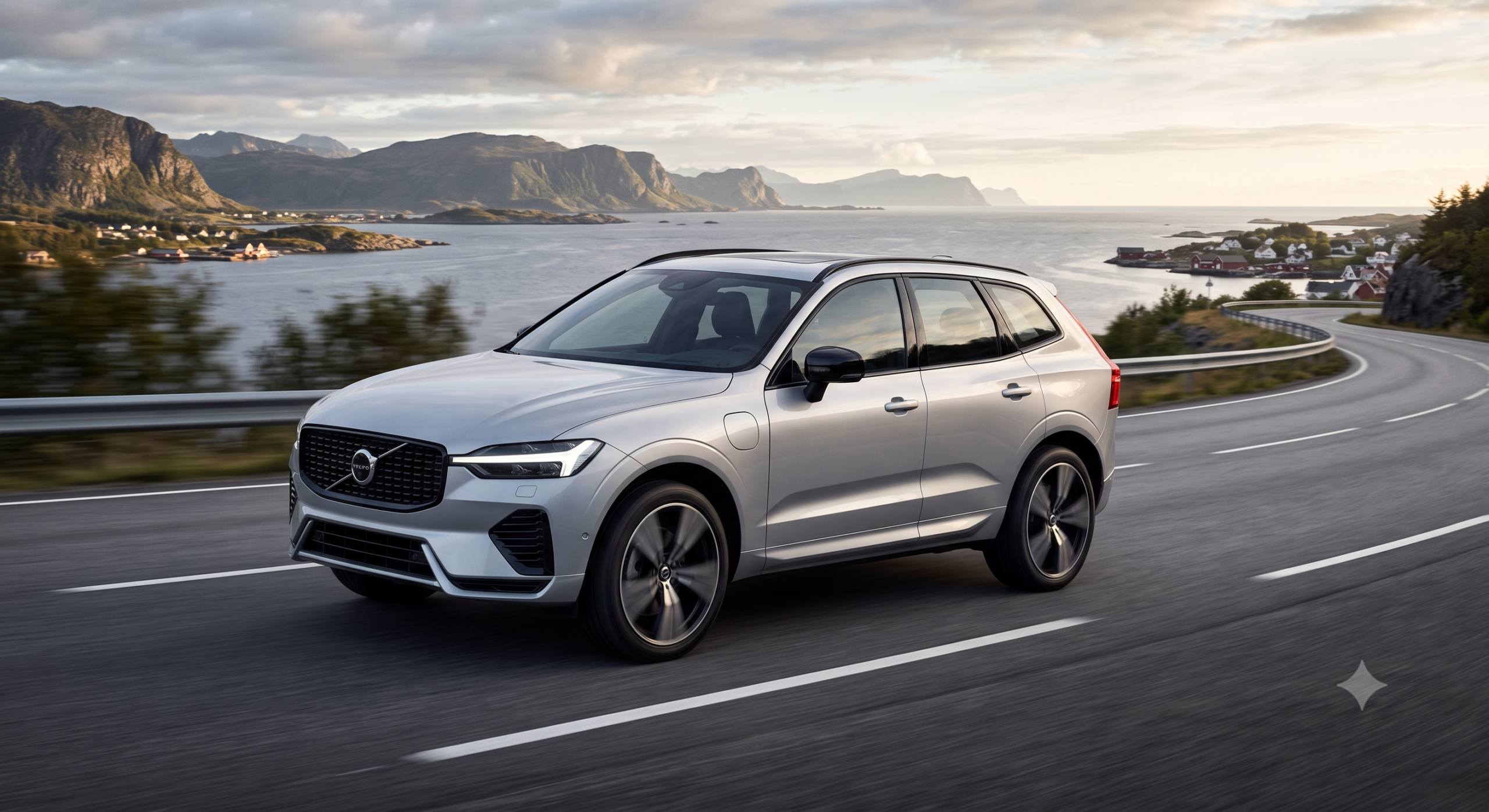
Has Anyone Died in a Volvo XC60?

Yes — But That’s the Wrong Question
Here’s an uncomfortable fact: no car on the road has a death toll of zero. Not the XC60, not a Volvo semi-truck, not a padded room on wheels. People have died in Volvo XC60 crashes, just like they’ve died in nearly every mass-produced vehicle ever built. The real question isn’t “has it happened” — it’s “how often, compared to everything else you could be driving.”
TL;DR
- Yes, fatal crashes involving Volvo XC60s have happened — no vehicle is death-proof.
- The XC60 consistently ranks among vehicles with the lowest driver death rates in its class, according to IIHS data.
- The national average driver death rate is 38 per million registered vehicle years; the XC60 has historically scored well below that, in the single digits to low teens depending on the study year.
- The XC60 earned 5-star ratings from Euro NCAP and ANCAP, and IIHS Top Safety Pick awards in multiple recent model years.
- Safety tech, not luck, is the biggest reason — but ratings do shift year to year as test standards get tougher.
So How Many People Have Actually Died in a Volvo XC60?
There’s no public “body count” tied to a specific model — that’s not how crash data works, and any site claiming an exact number is guessing. What IIHS and NHTSA actually track is a rate: deaths per million vehicles registered for a year, which lets you compare apples to apples across models.
By that measure, the XC60 does very well. An IIHS analysis of real-world fatal crash data found the Volvo XC60 four-wheel-drive tied for the fourth-lowest driver death rate of any vehicle sold in the U.S., alongside models like the Audi Q5 and Porsche Macan. For comparison, the overall average across all 2020-model-year vehicles was 38 deaths per million registered vehicle years — and minicars like the Mitsubishi Mirage sat as high as 205.
Quick Tip: When you see a “death rate” for a car, check the model year. IIHS updates these numbers periodically, and a redesign — or even a software update to the crash-avoidance system — can move a car up or down the list fast.
What Makes the XC60 Statistically Safer Than Average
Weight, structure, and driver demographics all play a role — and the XC60 benefits from all three. Midsize luxury SUVs like the XC60 tend to outperform smaller cars for a simple physics reason: mass matters in a crash. They also tend to be bought by slightly older, more cautious drivers, which nudges the numbers further in their favor.
Volvo layers real engineering on top of that natural advantage. The XC60’s IntelliSafe suite includes automatic emergency braking, run-off-road protection, and oncoming-lane mitigation — features designed to prevent the crash in the first place, not just survive it.
A 2023 industry report from IIHS noted that the overall driver death rate for all vehicles has actually crept back up in recent years — 38 per million for 2020 models versus 28 for 2011 models — largely tied to a nationwide rise in speeding-related crashes. The XC60’s relative ranking has held up better than most against that trend.
Real-World Scenario: The Highway Merge
Picture a family driving an XC60 on I-95, merging into fast-moving traffic. A distracted driver in the next lane drifts over. In a lot of older vehicles, this is where things go very wrong, very fast. In the XC60, the blind-spot monitoring and lane-keeping assist are designed to catch exactly this — nudging the wheel or flashing a warning before the driver even notices the danger.
That’s not a hypothetical Volvo markets on faith. It’s the specific crash type — side and merge collisions — that IIHS’s crash-avoidance testing is built to measure, and it’s a category where the XC60 has historically scored well.
XC60 Safety Ratings at a Glance
| Rating Source | Score / Result | What It Means |
|---|---|---|
| IIHS driver death rate | Historically top-4-lowest in its class | Real-world fatality data, adjusted for driver age/gender |
| IIHS Top Safety Pick | Earned for 2023–2024 models | Good ratings across crash tests + acceptable/good headlights |
| IIHS 2025 status | Dropped from the list | Front crash-prevention system downgraded to “Acceptable” |
| Euro NCAP (2017 test) | 5 stars — 98% adult, 87% child, 76% pedestrian | Independent European crash-test body |
| ANCAP | 5 stars | Australian equivalent of Euro NCAP |
As of mid-2026, the XC60’s exact rating tier can vary by model year — Volvo’s lineup has seen mixed results recently as IIHS toughens its front crash-prevention and headlight tests faster than some automakers can update software. Always check the specific model year you’re buying against the current IIHS listing.
Pros & Cons by Buyer Type
The Safety-First Parent
- ✅ Strong track record on driver death rate data
- ✅ Standard advanced driver-assist tech across trims
- ⚠️ Recent model years lost Top Safety Pick status over crash-prevention scoring — worth checking before you buy
The Budget-Conscious Used-Car Shopper
- ✅ Pre-2018 and 2023–24 models carry strong safety pedigree at lower resale prices
- ✅ Five-star international crash ratings across most model years
- ⚠️ Repair costs run higher than mainstream (non-luxury) SUVs
The Highway Commuter
- ✅ Excellent crash-avoidance tech for merge and lane-drift scenarios
- ✅ Historically low driver death rate versus the national average
- ⚠️ Headlight performance has scored only “acceptable” in several recent IIHS tests — a real factor for night driving
Expert Insight: A car’s star rating tells you how it performs in a crash. Its death rate tells you how often people in it actually die. They usually agree — but not always, so it’s worth checking both before you buy.
If You Want an Alternative
Choose the Volvo XC90 instead if you want three-row seating and the current top-tier Top Safety Pick+ award — it’s Volvo’s best-scoring model in the 2025–26 lineup.
Choose the Lexus RX instead if you want a class-leading driver death rate on paper — some Lexus RX configurations have scored at or near zero in IIHS’s real-world death-rate studies.
Quick Tip: Don’t shop by badge alone. Within the same nameplate, all-wheel-drive versions often score differently than front-wheel-drive versions on death-rate studies — always check the specific trim.
FAQ
Has anyone died driving a Volvo XC60? Yes — fatal crashes have occurred in XC60s, as with virtually every mass-market vehicle. What sets it apart is a driver death rate that’s historically well below the national average.
Is the Volvo XC60 one of the safest SUVs you can buy? It’s consistently ranked among the safer midsize luxury SUVs by IIHS driver death rate data, though its Top Safety Pick status has varied by model year.
Why did the XC60 lose its IIHS Top Safety Pick award? For 2024–25 models, its front crash-prevention system was downgraded from “Superior” to “Acceptable” in IIHS testing, which knocked it off the award list even though its crash-test ratings stayed strong.
Are older or newer XC60 models safer? The 2018–2026 XC60 generation shares the same core structure, so crash-test ratings apply broadly, but crash-avoidance tech and headlights have been updated over time — newer isn’t automatically safer on every metric.
How does the XC60 compare to the XC90? The XC90 currently holds the stronger IIHS award (Top Safety Pick+) and is Volvo’s flagship for family-oriented safety, while the XC60 remains competitive but has slipped slightly in recent front crash-prevention scoring.
Key Takeaways
- No vehicle, including the XC60, has zero fatalities — the meaningful comparison is the rate, not the raw fact.
- The XC60 has historically ranked among the lowest driver death rates in its class, per IIHS data.
- Its Top Safety Pick status has fluctuated by model year — 2023–24 models qualified; 2025 models did not.
- Five-star Euro NCAP and ANCAP ratings back up its structural crash performance.
- Always check the specific model year before assuming a safety rating carries over.
What to Do Next
Before you buy, pull up the IIHS ratings page for the exact model year you’re considering — ratings can shift year to year even on the same nameplate.