How to Check Volvo Transmission Fluid?

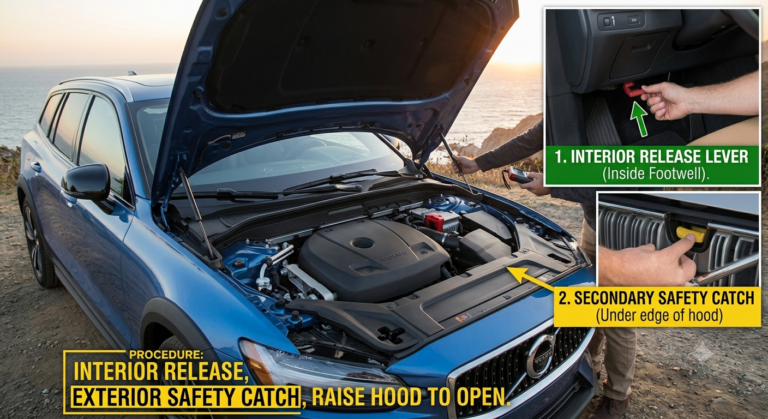
Popping the hood to check your Volvo’s transmission fluid sounds simple — until you realize there’s no dipstick anywhere in sight. That’s not a defect; it’s actually intentional on newer models, and it changes the entire process. I’ve researched Volvo transmission service procedures across both older dipstick-equipped models and newer sealed systems, and figuring out which category your car falls into is really the first step.
TL;DR
- Older Volvos (roughly pre-2010) typically have a transmission dipstick under the hood — check it with the engine running, fluid warm, between the MIN and MAX marks.
- Newer Volvos (S90, XC60, XC40, and most models after 2010) usually have a sealed transmission with no dipstick — checking requires a technician using a diagnostic tool.
- “Sealed for life” doesn’t mean “never needs service” — most transmissions still benefit from a fluid change around 50,000–100,000 miles.
- Checking fluid on a sealed system requires precise temperature monitoring, which is why Volvo designed it as a dealer-service task rather than a DIY one.
- Warning signs like clunky shifting or hesitation are worth checking regardless of which system your Volvo has.
The Core Answer
How you check your Volvo’s transmission fluid depends entirely on your model year. On older Volvos, roughly pre-2010, look for a dipstick under the hood near the engine. With the engine running and fluid at operating temperature, pull the dipstick, wipe it clean, reinsert it fully, then pull it again to read the level — it should sit between the MIN and MAX marks.
Newer Volvos — including the S90, XC60, and XC40 — typically use a sealed transmission with no dipstick at all. In these, fluid level is checked from underneath the vehicle at a very specific oil temperature (Volvo’s own procedure calls for checking at +80°C, monitored through a diagnostic tool), which is why this task is usually left to a dealer or technician rather than done in your driveway.
Pull-quote: “No dipstick doesn’t mean no fluid to check — it just means the check moved from your driveway to a dealer’s lift.”
Why Newer Volvos Ditched the Dipstick
Volvo shifted to sealed transmissions to reduce contamination risk and extend service intervals — but “sealed for life” is a bit of a misleading phrase. Volvo, like many automakers, began marketing these transmissions as needing no routine maintenance, and largely stopped including dipsticks after this shift.
In practice, many long-time Volvo owners and independent technicians still recommend a fluid change around 50,000 to 100,000 miles, since “lifetime” fluid generally means the fluid is designed to last as long as the transmission is expected to under normal conditions — not that it never degrades. The tradeoff for the sealed design is that checking or changing that fluid now requires specialized tools and precise procedures that go well beyond pulling a dipstick.
Quick Tip: If you’re shopping for a used Volvo and want to inspect transmission fluid condition yourself, ask specifically whether the model has a dipstick before assuming you’ll be able to check it in the driveway.
How to Check Fluid on Older, Dipstick-Equipped Models
If your Volvo has a dipstick, the process is genuinely simple once you know the steps. With the engine warmed up and running, locate the transmission dipstick — often near the engine dipstick, though its exact position varies by model.
Pull it out, wipe it clean with a lint-free cloth, reinsert it fully into the tube, then pull it out again to read the level. It should sit between the MIN and MAX marks; if it’s low, add fluid slowly through the dipstick tube using a funnel, checking frequently to avoid overfilling.
Expert Insight: A properly warmed transmission can reach fluid temperatures around 176°F during this check — Volvo’s own technical documentation explicitly warns this heat can scald skin, so handle the dipstick and any spilled fluid carefully.
How Fluid Gets Checked on Sealed, Dipstick-Less Models
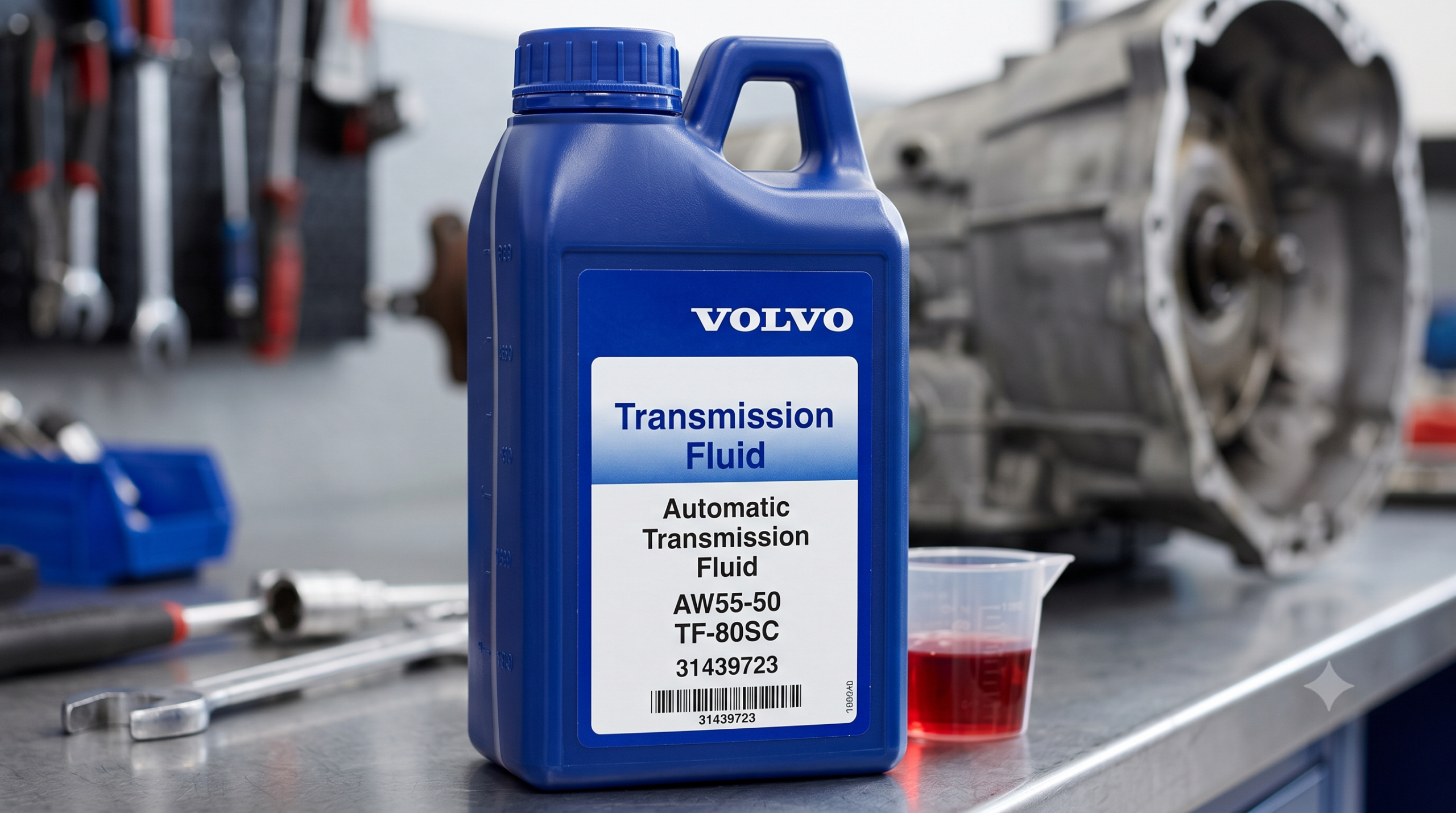
Sealed transmissions require a completely different, more technical process. Rather than a dipstick, these systems use a fill plug, drain plug, and separate level plug accessed from underneath the vehicle. The check has to happen at a specific fluid temperature — Volvo’s documented procedure targets +80°C, monitored through a diagnostic tool like VIDA or a comparable scanner, since checking at the wrong temperature gives an inaccurate reading.
The process typically involves warming the transmission through a specific sequence (idling, cycling through gear positions, waiting in each for several seconds), then checking the level from below once the correct temperature is confirmed. Given the precision and equipment required, this is realistically a dealer or specialist task rather than a home driveway job.
Here’s how the two systems compare:
| Dipstick Models (mostly pre-2010) | Sealed Models (mostly 2010+) | |
|---|---|---|
| DIY-friendly? | Yes | Not realistically |
| Tool needed | Rag, funnel | Diagnostic scanner (VIDA or equivalent) |
| Check location | Under the hood | Underneath the vehicle |
| Temperature-sensitive? | Somewhat | Very — precise temp required |
| Recommended check frequency | Every 1-2 months | At regular dealer service intervals |
Pros & Cons by Reader Type
Owner of an older Volvo with a dipstick
- ✅ Can check fluid level and color yourself in a few minutes
- ✅ Costs nothing and catches problems early
- ❌ Locating the dipstick can be tricky on some models — it’s not always obvious even when present
Owner of a newer sealed-transmission Volvo
- ✅ Reduced contamination risk from a sealed system
- ❌ Cannot realistically check fluid level without dealer-level tools
- ❌ “Sealed for life” language can create a false sense that no service is ever needed
Used Volvo shopper deciding between model years
- ✅ Knowing which system a specific model has helps set maintenance expectations before buying
- ❌ Sealed systems mean you can’t verify fluid condition yourself during a pre-purchase inspection
Real-World Scenario
Picture someone shopping for a used 2011 XC90 3.2, popping the hood expecting to check the transmission fluid the same way they would on their older car. Documented owner forum discussions confirm this exact scenario — many 2010-and-newer non-turbo XC90s simply don’t have a dipstick, and checking the level requires draining from the bottom plug at a controlled temperature using dealer-level diagnostic equipment.
That’s a good reason to ask a seller directly about recent transmission service history, since you won’t be able to verify fluid condition yourself in the driveway.
Alternatives Worth Considering
- Ask your dealer to check it during routine service if your model has a sealed transmission — this is realistically the only reliable way to verify fluid level and condition.
- Consider a proactive fluid change around 50,000-60,000 miles if you want to extend transmission life, even though Volvo markets the fluid as “lifetime” — many independent technicians recommend this regardless of the sealed design.
FAQ
How do I know if my Volvo has a transmission dipstick? Check under the hood near the engine dipstick for older models (roughly pre-2010); if you don’t see one, your model likely has a sealed transmission.
Can I check a sealed transmission’s fluid level myself? Not realistically — it requires precise temperature monitoring with a diagnostic tool, which is why Volvo designed this as a dealer-service task.
Does “sealed for life” mean the fluid never needs to be changed? Not necessarily — many technicians still recommend a change around 50,000 to 100,000 miles, even though Volvo doesn’t require it on a fixed schedule.
What should healthy transmission fluid look like? It should be relatively clear or light red, not dark brown or burnt-smelling — a drain and fill lets you inspect this even on models where a full level check is complex.
What are signs my Volvo’s transmission fluid needs attention? Clunky shifting, hesitation between gears, or a “reduced performance” dashboard message are all signs worth having checked, regardless of which fluid system your Volvo uses.
Key Takeaways
- Volvos roughly pre-2010 typically have a transmission dipstick you can check yourself.
- Newer Volvos (S90, XC60, XC40, and most post-2010 models) usually have sealed transmissions requiring dealer-level tools to check.
- “Sealed for life” doesn’t mean maintenance-free forever — a fluid change around 50,000-100,000 miles is still often recommended.
- Sealed system checks require precise temperature control, which is why this isn’t a realistic DIY task.
- Clunky shifting or a “reduced performance” message are worth checking on any Volvo, regardless of transmission type.
Next Step
Check under your hood for a dipstick first — if you don’t find one, schedule a transmission fluid check with a Volvo dealer or specialist during your next service visit.