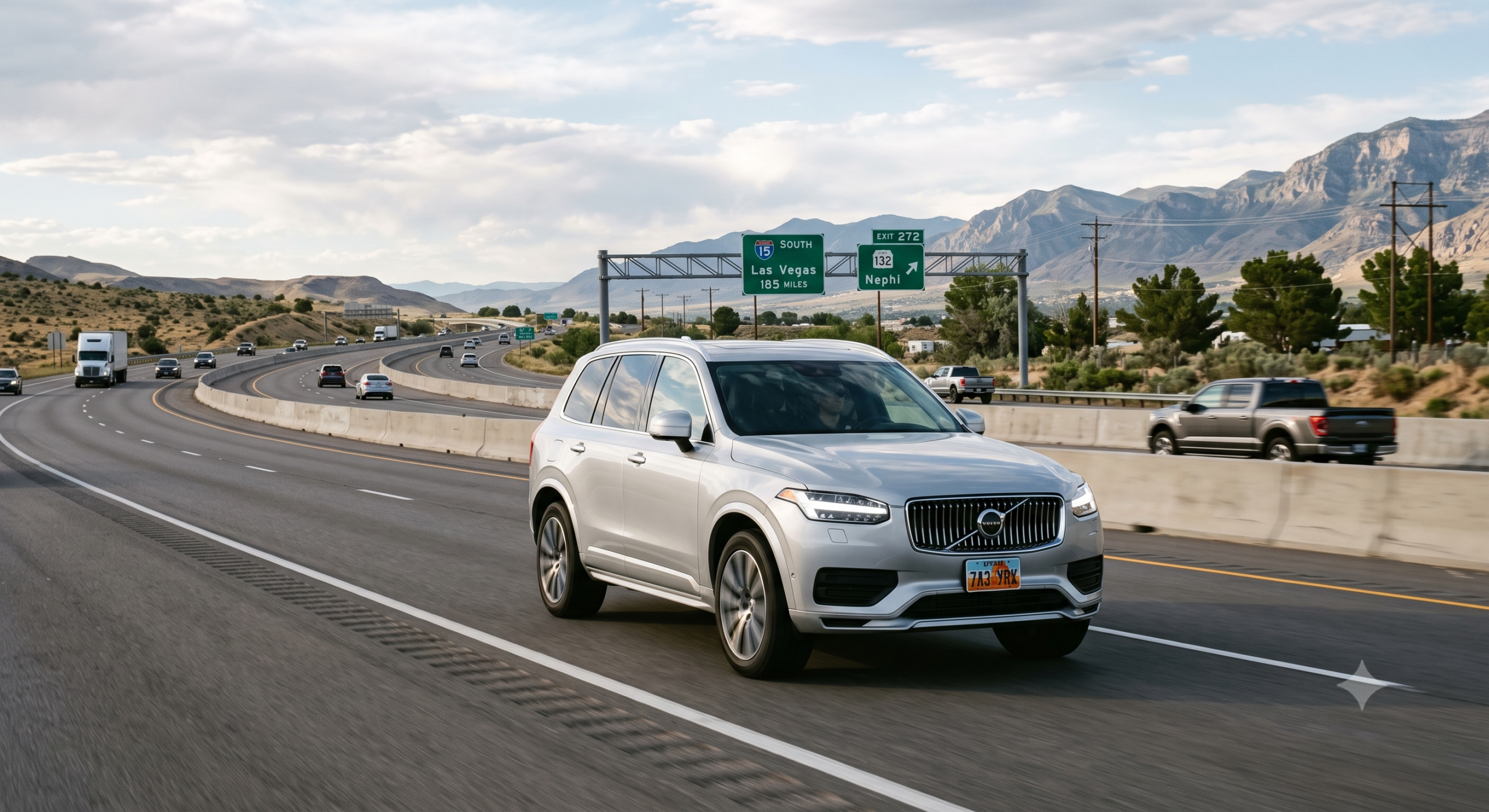
Has the Volvo XC90 Ever Had a Fatality?

You’ve probably seen the headline floating around: “no one has ever died in a Volvo XC90.” It sounds almost too good to be true for a mass-market SUV, so let’s look at what the actual crash data says, and where that claim gets a little more complicated.
TL;DR
- IIHS data for 2009–2012 U.S. model years found zero recorded driver deaths in the Volvo XC90
- A separate UK analysis by Thatcham Research found no recorded XC90 occupant fatalities from 2004 to 2017
- Earlier XC90 model years (2005–2008) did show a nonzero driver death rate in older IIHS data
- The XC90 has repeatedly earned IIHS Top Safety Pick+ ratings across multiple generations
- “Zero fatalities” claims are period-specific and based on limited data windows, not a lifetime guarantee
The Quick Answer
The honest answer is nuanced: multiple respected safety studies found no recorded driver or occupant deaths in Volvo XC90 models during specific study periods, both in the U.S. and UK. But earlier XC90 model years showed some fatalities in other datasets, so “zero deaths ever” isn’t quite as absolute as the headlines suggest.
Why This Matters Beyond the Headline
Most articles repeat the “zero deaths” claim without explaining which years, which country, or which data source it comes from. That context changes the picture quite a bit, and it’s worth understanding before you treat the XC90 as literally invincible.
We’ll also cover what “driver death rate” actually measures, since it’s a very different number from total crashes or injuries.
What the U.S. Data Shows
IIHS studies looking at driver deaths per million registered vehicle years found that Volvo XC90 models from the 2009 through 2012 model years had a recorded rate of zero, placing it among nine vehicle models with no driver deaths reported in that window. This finding got widespread media coverage at the time, including as part of Volvo’s broader “Vision 2020” safety push.
That said, earlier IIHS driver death rate data covering 2005–2008 model year XC90s showed a nonzero rate, meaning fatalities were recorded in that earlier generation’s driving population during that study window. So the “zero” finding applies to a specific later period, not the nameplate’s entire history.
Quick Tip: When you see a “zero fatalities” car safety claim, always check the model years and time window. A car can have a perfect record in one study period and a completely different one in another.
What the UK Data Shows
Thatcham Research, cross-referencing UK police and insurance data, reported no confirmed XC90 occupant fatalities, whether driver or passenger, in car-to-car accidents between 2004 and 2017, covering both the first and second generation models. Around 70,000 XC90s had been sold in the UK by that point, giving the finding a fairly large sample size.
Thatcham’s research director attributed this largely to strong passive safety, like structural rigidity, seatbelt pretensioners, and airbags, rather than active safety tech alone, noting that the newer generation’s autonomous emergency braking wasn’t even available on earlier models.
Real-World Scenario
Picture a family cross-shopping SUVs and reading a “zero deaths” headline about the XC90. If they stop there, they might assume it’s a guaranteed outcome. But if they dig one layer deeper, they’ll find the claim is really “no recorded fatalities in this specific multi-year study,” which is still an excellent safety signal, just not an absolute promise.
Or consider a used XC90 shopper comparing a 2007 model to a 2011 model. Since the safety data differs meaningfully between those generations, the study period actually matters to their decision, not just the nameplate.
Comparison: What Different Safety Ratings Actually Measure
| Metric | What It Measures | Where XC90 Stands |
|---|---|---|
| IIHS driver death rate | Real-world deaths per million registered vehicle years | Zero in 2009–2012 study; nonzero in 2005–2008 data |
| IIHS crash test ratings | Structural performance in controlled lab crash tests | Consistently rated Top Safety Pick+ in recent years |
| Thatcham/UK occupant data | Real-world fatalities cross-checked with insurance records | Zero recorded occupant deaths, 2004–2017 |
Pros & Cons by Reader Type
The Safety-First Family Shopper
- Pros: Strong real-world and lab-test track record across multiple studies
- Cons: “Zero deaths” claims are period-specific, not an absolute guarantee
The Used-Car Buyer Comparing Model Years
- Pros: Even older XC90 generations perform well versus competitors of their era
- Cons: Earlier generations lack the active safety tech that boosts newer models’ real-world performance
The Skeptical Researcher Who Wants Primary Sources
- Pros: IIHS and Thatcham data is publicly available and methodologically transparent
- Cons: Sample sizes and time windows vary, making apples-to-apples comparisons tricky
Alternatives Worth Considering
Choose a newer XC90 (2016 or later) if: you want the benefit of standard autonomous emergency braking and other active safety tech layered onto the same strong passive safety structure.
Choose to compare against a similar-class SUV, like a Lexus RX or Audi Q7, if: you want to weigh the XC90’s record against vehicles with comparable sales volume and safety data availability.
FAQ
Q: Has anyone ever died in a Volvo XC90? A: Some datasets covering earlier model years (2005–2008) do show recorded fatalities, while other major studies covering later periods found zero recorded deaths, so the honest answer depends on which years and dataset you’re looking at.
Q: What does “zero driver deaths” actually mean in these studies? A: It means that, within the specific vehicles and years measured, no fatal crashes involving the driver were recorded in that study window, not that the model is guaranteed fatality-free forever.
Q: Is the Volvo XC90 still considered one of the safest SUVs? A: Yes, it has continued to earn IIHS Top Safety Pick+ recognition in recent model years, reflecting strong performance in current crash testing.
Q: Does the “zero fatalities” claim apply to every XC90 generation? A: No, it specifically applies to certain study windows (like 2009–2012 in the U.S. and 2004–2017 in the UK), and doesn’t necessarily extend to every single model year in every country.
Q: Why do UK and U.S. studies show slightly different pictures? A: They use different data sources, sample sizes, and time windows, so the specific numbers won’t match exactly even though both point toward a strong overall safety record.
Key Takeaways
- Multiple independent studies found no recorded XC90 fatalities during specific study windows in both the U.S. and UK
- Earlier XC90 model years (2005–2008) do appear in some datasets with a nonzero fatality rate
- The XC90 continues to earn top crash-test ratings from IIHS in recent years
- “Zero deaths” headlines are technically accurate but tied to specific time periods, not a lifetime guarantee
- Passive safety structure, not just active tech, is credited as a major reason for the XC90’s strong record
Next Step
If safety data is a top priority in your next SUV purchase, check the specific model year’s IIHS rating and driver death rate data directly on iihs.org rather than relying on a headline alone.