
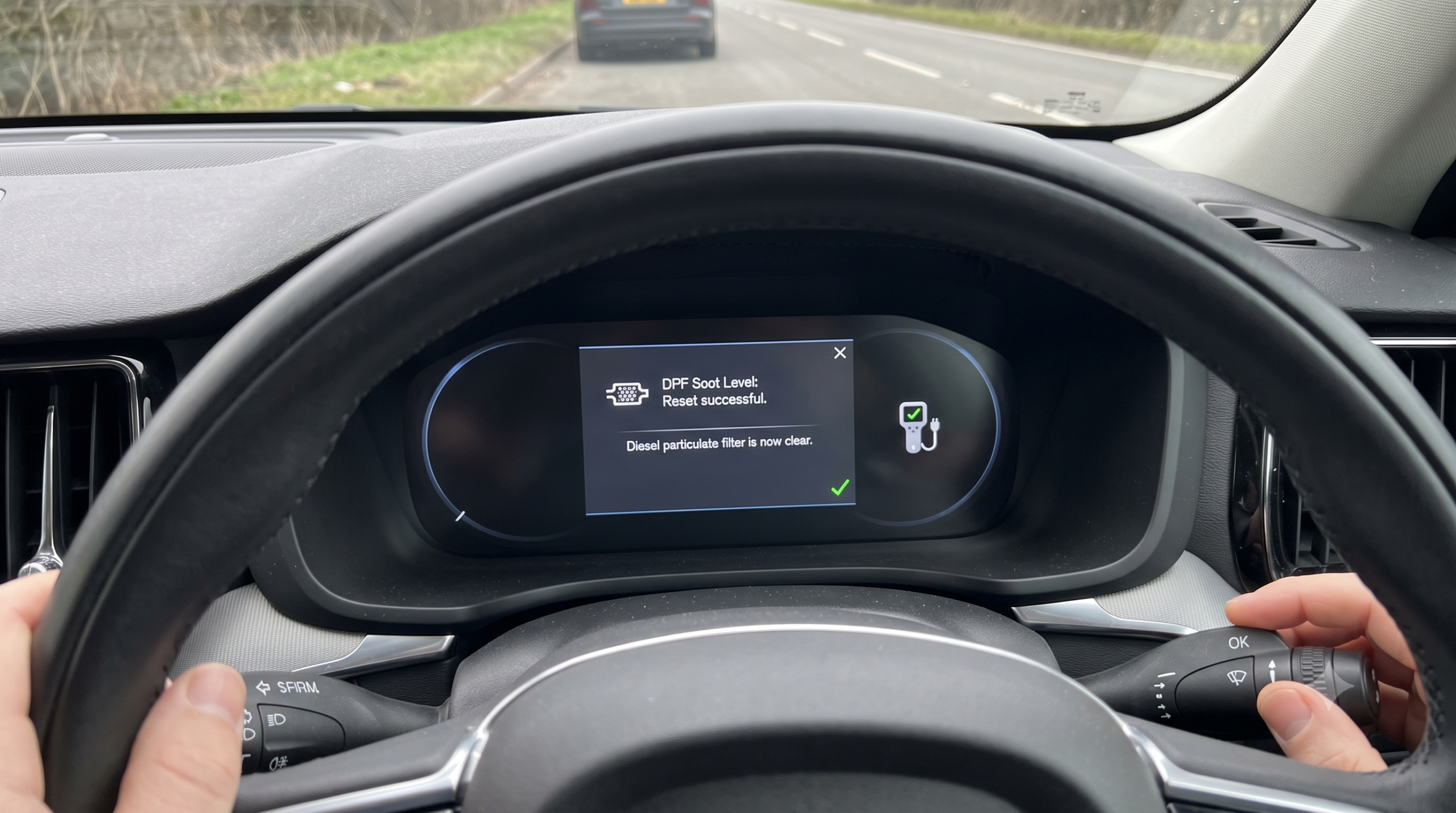
How to Reset Soot Level on a Volvo?

If you’re staring at a high soot reading on your Volvo diesel and hoping there’s a dashboard button that just wipes it clean, there’s some good and bad news here. In most cases, the soot level resets itself automatically once a regeneration finishes — but if you’ve had the filter cleaned or replaced by an independent shop, you’ll likely need a professional-grade diagnostic tool to reset it manually. I’ve researched both Volvo Trucks aftertreatment systems and Volvo passenger diesel DPF behavior, and the “how do I reset this” answer depends heavily on which situation you’re actually in.
TL;DR
- In most cases, the soot level resets itself automatically once a regeneration cycle (passive, active, or forced) completes successfully.
- Manual soot resets are only needed after the DPF has been cleaned or replaced by a non-dealer shop — the ECM doesn’t automatically know the filter is now clean.
- On Volvo Trucks, the official tool for this is Volvo Tech Tool (VCADS); consumer OBD-II scanners cannot perform this reset.
- On Volvo passenger diesels, a proper highway drive is usually enough to clear high soot readings without any manual reset at all.
- If soot levels stay high even after a completed regen, that points to a sensor fault or a genuinely clogged filter — not something a reset alone will fix.
The Core Answer
For most Volvo owners, you don’t actually need to “reset” the soot level manually — it resets on its own once a regeneration cycle finishes successfully, whether that’s passive (automatic highway driving), active (ECM-initiated), or forced (technician-initiated).
The situation where you genuinely need a manual reset is after having your DPF removed, cleaned, or replaced by a shop that isn’t a Volvo dealer. In that case, the engine control module still thinks the old, dirty filter is installed, so it needs to be told the filter is now clean. For Volvo Trucks, that requires Volvo Tech Tool (VCADS) — a professional-level diagnostic tool that ordinary OBD-II scanners cannot substitute for.
Pull-quote: “Most soot resets aren’t something you do — they’re something your Volvo does automatically once a regen finishes.”
Why a Regular Regen Usually Handles It
Soot level is essentially a live counter that goes up as the filter fills and drops when regeneration burns that soot off. As one Volvo Trucks forum thread put it, the regeneration process itself resets the soot level once it completes — there’s no separate manual step required in normal day-to-day operation.
On passenger diesels, that typically means driving at highway speed for a sustained period, letting the exhaust reach the temperature needed to trigger a regen. Once soot readings — often tracked as a percentage or gram count — drop back down, the counter has effectively reset itself.
Quick Tip: If you’re monitoring soot percentage with an app like a Bluetooth OBD reader, don’t panic at gradual increases — that’s completely normal between regen cycles.
When You Actually Need a Manual Reset
A manual reset becomes necessary specifically when the physical filter has been serviced outside the vehicle’s normal regeneration process. If you had your DPF baked, cleaned, or swapped by an independent shop rather than through a dealer-initiated service regen, the ECM and aftertreatment control module still have the old soot data stored — they don’t automatically know the filter is now clean.
On Volvo Trucks and Mack platforms, this reset must be done through Volvo Tech Tool (VCADS) or a comparable professional-grade scanner — consumer OBD-II tools simply don’t have access to this function. Skipping this step after a DPF cleaning can cause the truck to display false pressure readings or trigger unnecessary parked regens, since the system is still working from outdated data.
Here’s how the situations compare:
| Situation | Reset Needed? | Tool Required |
|---|---|---|
| Normal driving, regen completes on its own | No — resets automatically | None |
| High soot reading, haven’t done a regen recently | No — take a highway drive | None |
| DPF cleaned/replaced by independent shop | Yes | Professional scanner (e.g., Volvo Tech Tool) |
| Soot stays high even after regen completes | Not a reset issue — likely a sensor or filter fault | Diagnostic scan to find root cause |
Pros & Cons by Reader Type
Passenger Volvo diesel owner watching soot creep up
- ✅ A dedicated highway drive is usually all that’s needed — no tools required
- ✅ Completely normal behavior between regen cycles
- ❌ Frequent short trips can prevent the automatic reset from ever happening
Fleet or truck owner who just had the DPF cleaned independently
- ✅ A manual soot reset is a quick procedure for a shop with the right tool
- ❌ Requires professional-grade equipment (VCADS/Tech Tool) — not something a basic OBD-II reader can do
- ❌ Skipping this step risks false pressure readings and unnecessary derates
Owner whose soot level won’t drop even after a completed regen
- ✅ This is diagnosable — usually a differential pressure sensor or genuinely clogged filter
- ❌ Not solvable with a simple reset; needs a proper inspection
Real-World Scenario
Picture a truck owner who just had their DPF baked and cleaned at a local shop rather than through a Volvo dealer. Documented forum guidance for this exact situation confirms that VCADS is the only way to reset the soot level after independent cleaning, and that skipping this step can leave the system still registering the old, dirty-filter data even though the physical filter is now clean.
Compare that to a passenger XC60 diesel owner whose soot percentage climbed from short commutes — in that case, no tool is needed at all, just a 20-30 minute highway drive to let the automatic regen finish and the counter reset itself.
Alternatives Worth Considering
- Take a dedicated highway drive if you’re a passenger diesel owner seeing elevated soot readings but haven’t had any filter work done — this handles the vast majority of cases.
- Bring it to a dealer or shop with Volvo Tech Tool if you’ve had DPF service done independently — this is the only reliable way to sync the ECM’s data with the actual state of the filter.
FAQ
Do I need special tools to reset the soot level after a normal regen? No — the soot level resets automatically once a regeneration cycle completes successfully.
What tool is required for a manual soot reset on Volvo Trucks? Volvo Tech Tool (VCADS) or an equivalent professional-grade scanner — consumer OBD-II scanners can’t perform this function.
Why would I need a manual reset at all? Only after having your DPF cleaned or replaced by a shop that isn’t using dealer-integrated service tools — the ECM needs to be told the filter is now clean.
What if my soot level stays high even after a completed regen? That usually points to a faulty differential pressure sensor or a genuinely clogged filter, not something a reset alone will fix.
Can I reset the soot level myself with a basic code reader? No — documented guidance confirms basic OBD-II tools cannot access this function; it requires professional-level diagnostic software.
Key Takeaways
- Most soot level “resets” happen automatically once a regeneration cycle finishes — no manual action needed.
- Manual resets are only required after independent DPF cleaning or replacement.
- Volvo Trucks require Volvo Tech Tool (VCADS) for a manual reset — consumer scanners won’t work.
- Passenger diesel owners can usually clear high soot readings with a sustained highway drive.
- Soot levels that stay high after a completed regen point to a sensor or filter problem, not a reset issue.
Next Step
If you’ve had your DPF cleaned or replaced outside a dealer, bring your Volvo to a shop equipped with Volvo Tech Tool to properly reset the soot level data.