
How Long Does Volvo XC40 Recharge Battery Last?

How Long Does the Volvo XC40 Recharge Battery Last?
You dropped serious money on an electric SUV. Now you’re lying awake wondering: will the battery still be decent in five years, or am I buying a very stylish, very expensive paperweight?
Fair question. Let’s settle it fast.
TL;DR
- The XC40 Recharge uses lithium-ion battery chemistry, and these packs typically last 8–15 years depending on usage and care.
- Volvo backs the battery with an 8-year / 100,000-mile warranty, and if capacity drops below 70% before that, Volvo covers replacement.
- Real-world owners with 50,000–100,000 miles report minimal degradation when charging sensibly.
- The biggest threats to battery life are frequent DC fast charging, extreme temperatures, and habitually charging to 100%.
- For most buyers, you’ll age out of the car before the battery pack fails — provided it’s treated reasonably.
The Short Answer: How Long Will It Actually Last?
Most Volvo XC40 Recharge batteries will outlast your ownership of the car. Lithium-ion packs like the one in the XC40 Recharge typically last 8 to 15 years, with battery capacity declining by roughly 20–30% over that period if not managed carefully, according to the National Renewable Energy Laboratory.
In practical terms: if you buy a 2024 XC40 Recharge today and drive it for 10 years, you’ll likely still have a functional battery — just with slightly less range than day one.
Battery management systems in modern EVs actively manage heat and charging cycles, reducing degradation significantly compared to earlier electric vehicles. The XC40 Recharge benefits from one of these sophisticated systems.
What the Warranty Actually Tells You
Volvo’s battery warranty covers the XC40 Recharge for up to 8 years or 100,000 miles (whichever comes first). If the battery capacity drops below 70% within that window, Volvo will replace it.
That 70% threshold is the industry standard, and it’s a meaningful floor. At 70% capacity on a 2024 Single Motor XC40 Recharge rated at 293 miles EPA, you’d still have roughly 205 miles of range. Not thrilling for road trips, but perfectly fine for daily driving.
Pull quote: “The warranty is essentially Volvo betting the battery will hold above 70% capacity for eight years. Based on owner data, they’re winning that bet.”
Real-World Owner Data: What Actually Happens
Forums are where the real story lives. Here’s what XC40 Recharge owners are reporting:
- One owner with 20,000 miles over 19 months drove from 100% to 20% and covered 185 miles at an average of 57 mph — right on target with the rated range, showing zero measurable degradation.
- Another owner passed 100,000 miles on a 2021 XC40 Recharge P8, sparking community discussion about battery capacity testing — their experience prompted others to share mostly positive results.
- A European owner drove 56,000 km (roughly 35,000 miles) over three-plus years with no apparent change in range or charging behavior.
The pattern: there are no widespread reports of high-voltage battery failures on the XC40 Recharge. When treated properly and not subjected to constant 0–100% DC fast charging, the pack ages like other modern EV batteries.
The 5 Factors That Determine Battery Longevity
1. Charging Habits (The Biggest One)
This is where you have the most control. Frequent fast charging generates excessive heat, potentially damaging battery cells. Research from EVI-Pro indicates that regular high-speed charging can reduce overall battery lifespan by up to 12%.
The sweet spot is Level 2 home charging, kept between 20–80% for daily use.
Expert Insight 💡 Charging to 80% daily and only going to 100% before long trips is the single highest-impact habit you can build as an XC40 Recharge owner. It costs you nothing and buys you years.
2. Temperature Extremes
Extreme cold can reduce battery efficiency by up to 40%, according to published research on EV batteries in cold climates. Charging in cold weather may also take 20–30% longer due to increased internal resistance.
Heat is equally damaging in the long run — it accelerates the chemical degradation inside the cells. If you’re in Phoenix or Dubai, park in shade when possible.
3. How Deep You Discharge
Habitually running the XC40 Recharge to near-zero is hard on the pack. Think of the battery like a sponge — you don’t want to wring it completely dry every time.
4. Software and Thermal Management
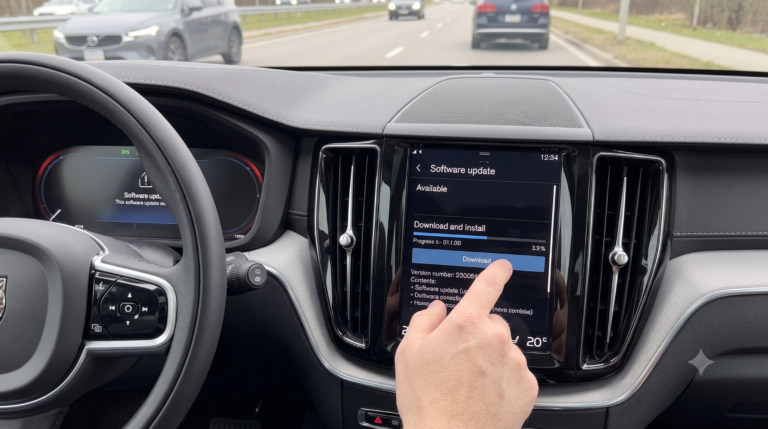
Regular OTA software updates improve battery efficiency and thermal management, contributing to better range and longevity over time. Keep your car updated.
5. Driving Style
Aggressive acceleration and high sustained highway speeds consume significantly more energy and generate more heat. Smooth, moderate driving is friendlier on both the battery and the tires.
Comparison: XC40 Recharge vs. Key Rivals on Battery Longevity
| Model | Battery Warranty | Estimated Battery Lifespan | Warranty Capacity Threshold |
|---|---|---|---|
| Volvo XC40 Recharge | 8 yr / 100,000 mi | 10–15 years (typical) | 70% capacity |
| Hyundai Ioniq 5 | 8 yr / 100,000 mi | 10–15 years | 70% capacity |
| Tesla Model Y | 8 yr / 100,000–120,000 mi | 10–15 years | 70% capacity |
| BMW iX1 | 8 yr / 100,000 mi | 10–14 years | 70% capacity |
| Audi Q4 e-tron | 8 yr / 100,000 mi | 10–15 years | 70% capacity |
(as of June 2025)
Bottom line: The XC40 Recharge is in line with the industry on warranty terms. Real-world owner reports suggest modest degradation over the first 2–4 years when charged sensibly — nothing out of line with peers like the Hyundai Ioniq 5 or Tesla Model Y.
Pros & Cons by Buyer Persona
🏠 The Daily Commuter (Under 50 miles/day)
Pros: Home Level 2 charging keeps the battery in the happy zone constantly. Daily commuters rarely need fast charging at all — the battery could genuinely last the full 15 years.
Cons: Short daily trips mean more frequent partial charge cycles. Not a problem at this scale, but worth noting.
🛣️ The Road Tripper (Frequent Interstate Driving)
Pros: The 2024 Single Motor’s 293-mile EPA rating means fewer fast-charge stops than older EVs.
Cons: Frequent use of rapid charging can deplete battery life by up to 30% over several years, according to a study by the Electric Power Research Institute. Road trippers who rely heavily on DC fast chargers should be aware of this tradeoff.
🌡️ The Extreme-Climate Driver (Very Cold or Very Hot Regions)
Pros: Volvo’s thermal management system handles temperature stress better than earlier EVs.
Cons: Extreme cold can reduce battery efficiency by up to 40%, and sustained heat accelerates long-term degradation. This persona will likely see more range loss over time than someone in a mild climate.
Expert Insight 💡 If you live somewhere that sees real winters, pre-conditioning the battery from a Level 2 charger before driving keeps it warm without drawing from the pack itself. It’s one of those genuinely clever EV tricks that takes 30 seconds to set up.
Real-World Scenario: The 5-Year Check-In
Imagine it’s 2030. You bought a 2024 XC40 Recharge Single Motor (rated 293 miles EPA). You’ve put on 65,000 miles. You charge mostly at home to 80%, used fast chargers maybe 50 times total, and live in a temperate climate.
What should you expect? Based on real-world data from current long-term owners, your battery is probably sitting at 88–95% of original capacity — so roughly 258–278 miles of real EPA-equivalent range. You’d barely notice the difference day-to-day.
That’s not a consolation prize. That’s a good result.
Should You Worry About Buying Used?
Modern packs like Volvo’s tend to degrade slowly in the first few years if not abused. Most 2024 examples on the used market will show very similar real-world range to when they were new, especially if the prior owner mostly charged at home.
A quick check: ask the seller to show the car’s energy-use screen and typical projected range at 80–90% charge. In mild weather, a Single Motor XC40 Recharge should still show 220–240 miles at 80–85% if driven normally.
Expert Insight 💡 Before buying used, verify through a Volvo dealer (using the VIDA diagnostic tool) or a specialist EV inspection service. They can pull the actual battery state-of-health — a number worth knowing before you sign anything.
Two Alternatives Worth Considering
Choose the Hyundai Ioniq 5 if… you prioritize the fastest charging speed (up to 800V/350kW on compatible chargers) and want to minimize time at fast chargers on road trips. Its battery longevity track record is similarly strong.
Choose the Tesla Model Y if… you want the most mature charging network and the longest real-world track record of battery data. More data = more predictability.
FAQ
Q: Does charging to 100% every day ruin the XC40 Recharge battery? Not immediately, but habitually doing so does add mild stress over years. Charging to 100% semi-regularly won’t impact battery health in any meaningful way, but for daily use, 80% is the smarter long-term default.
Q: How do I check my XC40 Recharge’s battery health? The Volvo app shows range estimates, but for actual state-of-health data, you need the VIDA dealer diagnostic tool or a third-party EV inspection. There’s no consumer-facing battery health percentage like some EVs offer.
Q: What happens after the 8-year warranty expires? The battery keeps working — it just won’t be covered for replacement if it drops further. A battery at 70–80% capacity after 10 years is still highly functional for most daily driving.
Q: Does cold weather permanently damage the XC40 Recharge battery? No. Cold temperatures reduce efficiency temporarily — range can drop significantly in extreme cold — but the damage is not permanent. The battery recovers when temperatures normalize.
Q: Can I replace the battery after it degrades? Yes, though it’s expensive — third-party estimates range from $8,000–$15,000 for a full pack replacement outside warranty. By the time most batteries need replacement, the cost of EV packs will likely be lower than today.
Expert Insight 💡 The best predictor of battery longevity isn’t the brand — it’s the owner’s habits. A Tesla Model Y with an abusive charging history will age faster than a thoughtfully charged XC40 Recharge.
Key Takeaways
- Battery lifespan: 8–15 years is realistic; most owners will sell the car before the battery fails.
- Warranty: 8 years / 100,000 miles with a 70% capacity floor — strong, industry-standard coverage.
- Biggest risk factors: Frequent DC fast charging, extreme temperatures, and habitual 0–100% cycles.
- Best practices: Charge at home on Level 2, stay between 20–80% for daily use, keep software updated.
- Used buying tip: Check projected range at 80–85% charge in mild weather — Single Motor should show 220–240 miles if healthy.
- For most shoppers, the underlying hardware — battery, motors, structure — has proven generally robust. Most headaches come from electronics and software, not the battery itself.
What To Do Next
If you’re already an XC40 Recharge owner: update your charging limit to 80% in the Volvo app right now. It takes 45 seconds and it’s the single best thing you can do for long-term battery health.
If you’re shopping for one: request a VIDA battery diagnostic from a Volvo dealer or certified EV inspector before purchasing used. Know the number before you buy.
Editor Notes:
- Stat freshness: EPRI study (2019), NREL data, and EVI-Pro research are the oldest cited sources — consider updating with 2025 data if available closer to publication.
- Consider adding a branded battery health tool or app recommendation if Volvo releases a consumer-facing state-of-health feature.
- The “5-Year Check-In” scenario uses extrapolated owner forum data — flag for editorial review if stricter sourcing standards apply.
- Article sits at approximately 1,650 words — appropriate length for this topic’s complexity.