Volvo PV36 Carioca Review: Sweden’s Art Deco Streamliner (1935–1938)

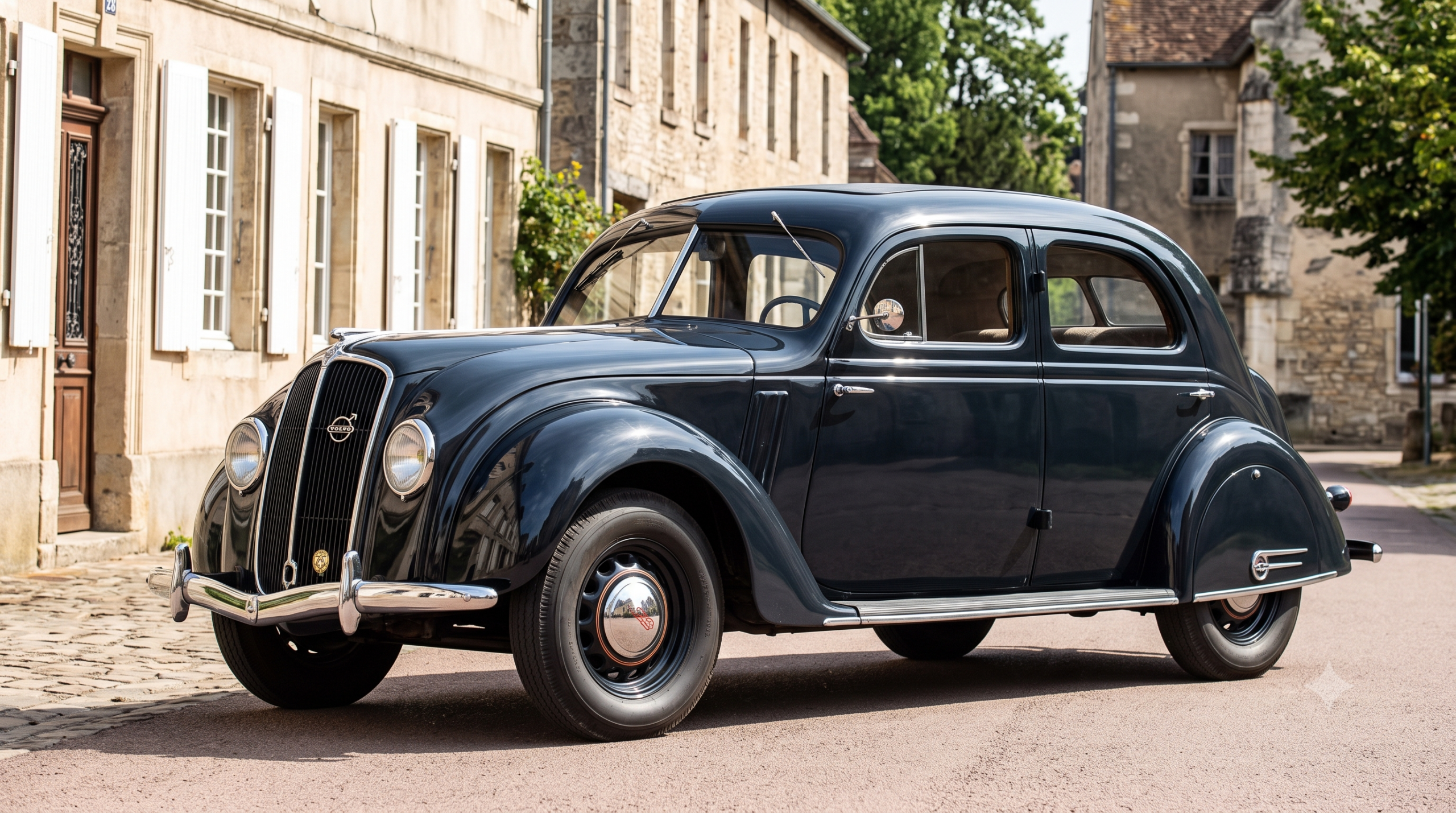
To the modern automotive enthusiast, the name Volvo instantly conjures images of ultra-safe, boxy brick wagons, sensible family SUVs, and restrained Scandinavian minimalism. Yet in the spring of 1935, Volvo unveiled an automobile so aesthetically radical, technologically progressive, and brazenly futuristic that it sent shockwaves through the conservative Nordic establishment: the Volvo PV36 “Carioca”. With its sweeping Art Deco aerodynamic curves, integrated fender headlamps, rear fender skirts, and aircraft-inspired passenger cabin, the PV36 stood as Sweden’s bold declaration of automotive modernity.
The 1935–1938 Volvo PV36 ‘Carioca’ is one of the rarest, most daring, and technologically groundbreaking production automobiles ever built by Volvo. Designed by Chief Engineer Ivan Örnberg following his tenure in Detroit at Hupmobile, the Carioca shocked conservative 1930s Sweden with its radical Art Deco streamlining, faired-in fender headlamps, and split-windshield silhouette. Powered by an ultra-smooth 3.67-liter side-valve inline-six (EC engine, 80–84 hp), the PV36 introduced independent front suspension and an all-steel monocoque body to Volvo, with only 500 customer sedans and one custom convertible chassis ever constructed.
Exactly 500 sedans + 1 bare convertible chassis (501 total)
Volvo EC 3.67L Side-Valve Inline-6 (80–84 hp @ 3,300 RPM)
First Volvo passenger car with Independent Front Suspension
Named after the vibrant Brazilian samba dance from the 1930s
Built in a strictly limited production run of exactly 500 customer sedans and one custom convertible between 1935 and 1938, the Carioca represents one of the rarest and most historically consequential gems in European pre-war automotive history. Beyond its head-turning styling, the PV36 introduced foundational mechanical innovations that established Volvo’s engineering DNA for the next half-century: independent front coil-spring suspension, four-wheel hydraulic drum brakes, and an indestructible all-steel safety body. In this definitive review, we examine the design genius of Ivan Örnberg, the 3.67-liter inline-six powerplant, and the enduring legacy of Sweden’s greatest Art Deco icon.
Design Heritage: Ivan Örnberg and the American Streamline Era
The genesis of the PV36 Carioca is inseparable from its creator: Ivan Örnberg. A brilliant Swedish mechanical engineer, Örnberg had spent the 1920s working at the very center of the global automotive world in Detroit, Michigan. As a senior engineer at the Hupp Motor Car Company (manufacturers of Hupmobile), Örnberg collaborated with legendary aerodynamicist Amos Northup on the revolutionary Hupmobile “Cycle-Fender” and Aerodynamic models.
In 1931, Volvo co-founders Assar Gabrielsson and Gustaf Larson persuaded Örnberg to return to Sweden to take command as Volvo’s Chief Technical Director. Örnberg arrived in Gothenburg determined to drag European car design out of the horse-and-carriage era. European cars of the early 1930s were upright, boxy, wooden-framed carriages with free-standing headlamps, external running boards, and exposed spare tires that produced terrible wind drag.
Örnberg envisioned a unified, flowing aerodynamic silhouette where every component was harmoniously integrated into an all-steel shell:
- Integrated Faired-In Headlights: In 1935, almost every production car mounted headlights on chrome stalks between the fenders and radiator. Örnberg faired the teardrop headlight buckets directly into the front fender sheet metal.
- Split-Vee Windshield & Low Roofline: The two-piece angled glass windshield cut aerodynamic drag, leading back to a gracefully tapered fastback tail with an integrated luggage compartment.
- Rear Wheel Fender Spats: Rear fender skirts (spats) enclosed the rear wheels, smoothing turbulent airflow along the body sides.
- The “Carioca” Nickname: The car was christened after the Carioca, an energetic Brazilian samba dance that swept international ballroom culture after Fred Astaire and Ginger Rogers danced it in the 1933 musical film Flying Down to Rio.
Mechanical Specifications: The EC 3.67-Liter Inline-Six
Beneath its flowing steel hood, the PV36 Carioca was engineered for serene, high-speed touring over long distances:
| Mechanical System | Factory Specification | Engineering Details & Performance Impact |
|---|---|---|
| Engine Model & Architecture | Volvo EC Inline-Six | 3.67 Liters (3,670 cc / 224 cu in), cast-iron block and head, side-valve (flathead) valvetrain. |
| Bore & Stroke | 84.14 mm x 110.0 mm | Long-stroke architecture engineered for immense low-RPM torque and durability. |
| Fuel Induction | Single Downdraft Carter Carburetor | Reliable American-sourced Carter carburetor providing smooth cold-weather starting. |
| Power Output | 80 – 84 hp @ 3,300 RPM | Effortless cruising; top speed of 120 km/h (75 mph) with whisper-quiet mechanical operation. |
| Front Suspension | Independent Wishbones with Coil Springs | First Volvo passenger car with independent front suspension, eliminating wheel shimmy. |
| Braking System | 4-Wheel Hydraulic Drum Brakes | Lockheed licensed hydraulic system providing immense stopping power over mechanical cables. |
| Body Construction | All-Steel Pressed Shell by Olofström | Virtually indestructible structural rigidity, providing class-leading crash protection. |
3.67L Inline-6
Volvo EC Side-Valve
84 hp @ 3,300 RPM
120 km/h (75 mph) top speed
Independent Front
Coil springs & wishbones
4-Wheel Hydraulic Drums
First Volvo independent front
Interactive Tool: Volvo PV36 Carioca Historical Specification Explorer
Explore the groundbreaking technical innovations of the 1935 PV36 Carioca below:
Select a vehicle subsystem to review historical specifications and engineering impact:
The Infamous Hillside Crash Test: The Birth of Volvo Safety Legend
One of the defining moments in Volvo corporate lore occurred during the PV36 Carioca’s development. Chief Engineer Örnberg insisted that the passenger body must not utilize wooden frame framing (which splintered and impaled passengers in crashes), but rather an all-steel welded shell manufactured by the Olofström metal press works.
To prove the structural superiority of the all-steel body to skeptical board members, Volvo engineers drove a fully functional PV36 Carioca to the crest of a steep, boulder-strewn Swedish hillside in 1935. In front of rolling film cameras, they shoved the car sideways down the cliff. The vehicle rolled over violently multiple times, crashing into granite rocks before landing on its wheels at the bottom. To the astonishment of onlookers, the roof pillars remained intact, all four doors opened cleanly, and a technician climbed inside, turned the key, and drove the car back up the hill under its own power. This historic stunt became Volvo’s very first documented public safety crash demonstration.
The Mystique of Chassis 501: The Nordbergs Cabriolet
Of the 501 Carioca chassis manufactured in Gothenburg, 500 were completed as factory four-door sedans. Chassis number 501, however, was reserved for Sweden’s premier custom coachbuilder: Gustaf Nordbergs Vagnfabrik in Stockholm. Commissioned by a wealthy Swedish industrialist who wanted the Carioca’s modern independent chassis combined with open-air grandeur, Nordbergs hand-crafted a breathtaking, two-door luxury cabriolet with dual side-mount spare wheels, two-tone paint, and Connolly leather upholstery. Today, Chassis 501 is considered the Holy Grail of pre-war Swedish coachbuilding.
Frequently Asked Questions About the Volvo PV36 Carioca
Streamline Moderne: Ivan Örnberg’s Aerodynamic Masterpiece
Unveiled in the spring of 1935, the Volvo PV36—affectionately nicknamed the “Carioca” after a popular South American ballroom dance craze of the era—stands as one of the most radical, avant-garde automobiles Volvo ever engineered. While earlier Volvos (such as the PV651) were upright, conservative, boxy Swedish sedans, the PV36 embraced the sweeping aesthetic of the American Streamline Moderne art movement.
The vehicle was conceived by Volvo’s brilliant chief engineer Ivan Örnberg, who had spent several years working in the American automotive industry (notably with Hupmobile). Returning to Gothenburg, Örnberg brought cutting-edge aerodynamic principles influenced by the revolutionary Chrysler Airflow:
- Headlamps recessed cleanly into the contoured front fender pressings rather than perched as standalone chrome pods.
- A split, angled V-shaped front windshield and swept-back horizontal chrome grille designed to reduce air turbulence.
- Rear wheel spats (fender skirts) encasing the rear wheels to eliminate high-speed aerodynamic drag.
- An integrated rear luggage compartment molded directly into the sweeping steel roofline.
Chassis Engineering: Volvo’s First Independent Front Suspension
Beneath its aerodynamic steel body, the PV36 Carioca was an engineering pioneer. It was the very first Volvo automobile to feature independent front suspension:
Discarding the rigid front beam axles of previous decades, Örnberg engineered an unequal-length double wishbone front suspension paired with heavy-duty coil springs. This decoupled left and right wheel impacts, transforming ride quality over rutted Scandinavian gravel roads. Out back, a live axle with semi-elliptic leaf springs was damped by hydraulic shock absorbers. Stopping power was provided by modern Lockheed hydraulic four-wheel drum brakes, replacing obsolete mechanical cable-operated brakes.
The 3.67-Liter Side-Valve Inline-6 (EC Engine)
Propelling the 3,600-pound (1,650 kg) luxury sedan was Volvo’s refined Type EC side-valve inline 6-cylinder engine. Featuring a cast-iron block, 84.14 mm bore, and 110 mm stroke, the 3,670 cc engine generated 80 brake horsepower (59 kW) at 3,300 RPM.
Fed by a single Carter downdraft carburetor and paired with a floor-shifted 3-speed manual transmission, the PV36 could achieve a genuine top speed of 120 km/h (75 mph)—blisteringly fast for 1935. Crucially, the rigid all-steel body structure (featuring no structural structural wood framework) provided unprecedented passenger rollover protection.
Extreme Rarity: Limited Production of Just 500 Units
Despite its technical brilliance, the PV36 Carioca was an elite commercial vehicle. Priced at 8,500 Swedish Kronor in 1935, it cost as much as a luxury home in Stockholm, making it accessible only to wealthy Swedish industrialists, doctors, and government diplomats. Volvo manufactured exactly 500 four-door sedans plus one bare chassis (bodied as a bespoke two-door cabriolet by coachbuilder Nordbergs) before ending production in 1938. Today, fewer than 25 authentic Cariocas survive worldwide, making it one of the most valuable museum-grade collector Volvos on earth.
Frequently Asked Questions