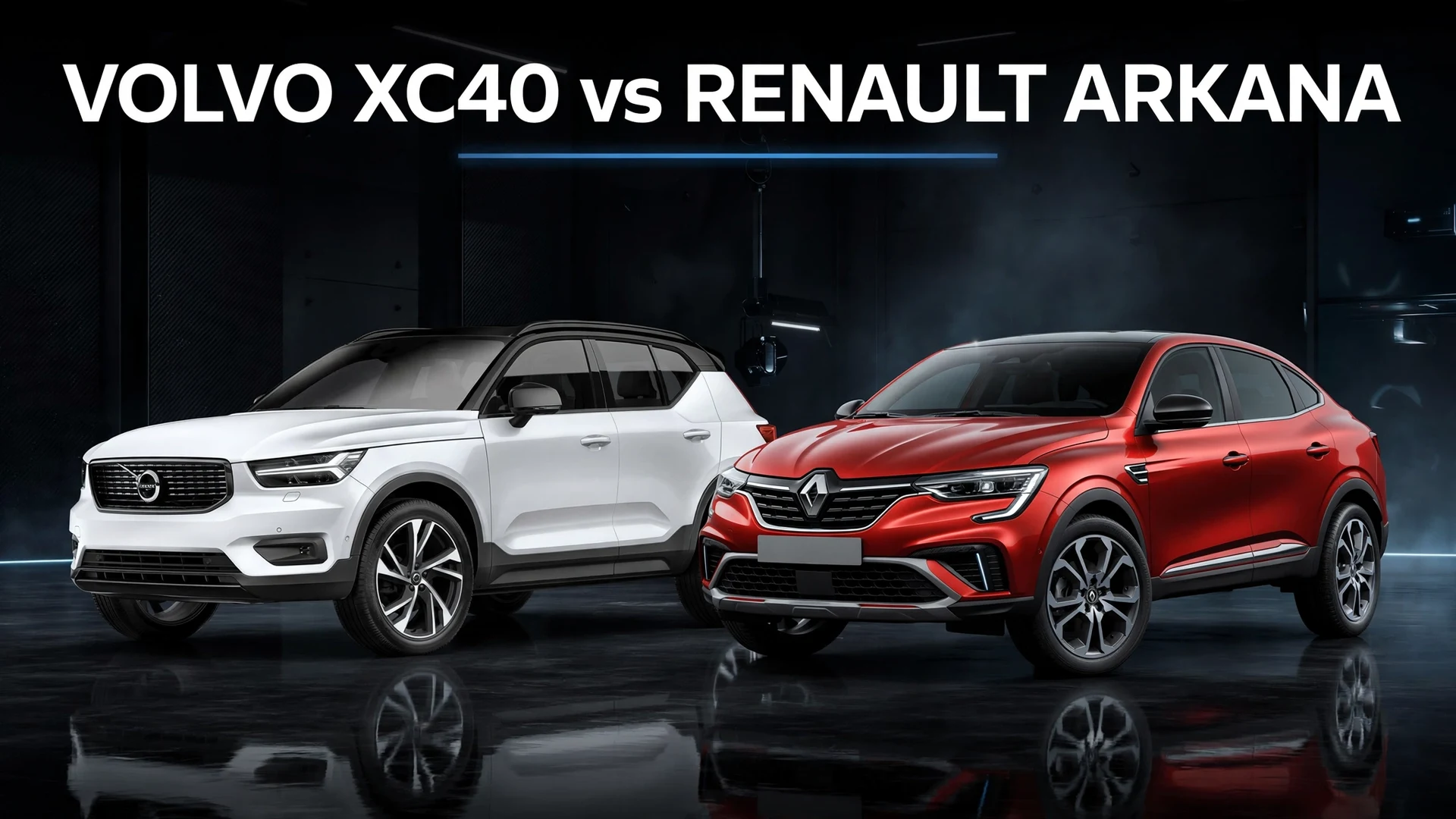
Volvo XC40 vs Renault Arkana: Premium Luxury vs Coupe SUV Compared

In modern European suburban driveways and urban boulevards, compact crossovers have become the default family chariot. But standing out in this saturated segment requires distinctive styling. For buyers seeking a fashionable, eye-catching compact SUV without stepping into massive, full-sized territory, two vehicles frequently catch the eye: the Volvo XC40 and the Renault Arkana. With the Arkana bringing sleek, sloping coupe-SUV aesthetics down to mainstream price points and the XC40 delivering chic, youthful Scandinavian luxury, buyers frequently ask: How do these two distinct crossovers compare in real-world performance, safety, and everyday ownership?
While both crossovers compete for stylish European urban buyers, the Volvo XC40 and Renault Arkana represent completely different market segments and automotive classes. The Volvo XC40 is a true entry-luxury compact SUV built on Volvo’s dedicated Compact Modular Architecture (CMA), featuring powerful 2.0-liter turbocharged engines (up to 248 hp), mechanical all-wheel drive, class-leading crash safety, and an available 402-hp pure electric powertrain. The Renault Arkana is a mainstream budget-conscious coupe-SUV built on the supermini CMF-B platform, offering striking fastback styling and economical full-hybrid (E-Tech 145) powertrains, but is strictly front-wheel drive and lacks the luxury cabin refinement, towing capacity, and power of the Swedish crossover.
Volvo: CMA Premium Architecture | Renault: CMF-B Supermini
Volvo: Mechanical BorgWarner AWD | Renault: Strictly FWD Only
Volvo: 197–402 hp (Gas, MHEV, EV) | Renault: 140–145 hp (MHEV, Hybrid)
Volvo: Hot-formed Boron Steel cage with Top Safety Pick+
The crucial insight that every shopper must understand is that the XC40 and Arkana operate in fundamentally different automotive classes. The Volvo XC40 is a true entry-luxury vehicle engineered on a heavy-duty, crash-tested modular platform (CMA) shared with the high-performance Polestar 2. The Renault Arkana is a style-forward mainstream crossover built on the lighter CMF-B platform shared with subcompact hatchbacks like the Renault Clio and Captur. While the Arkana offers high-efficiency hybrid tech and rakish fastback looks at a budget price, the XC40 delivers superior structural safety, punchier turbocharged powertrains, genuine all-wheel-drive capability, and a tranquil luxury cabin. Below is our comprehensive head-to-head analysis.
Chassis & Platform DNA: Luxury Architecture vs. Supermini Roots
To understand why the two vehicles feel so distinct over road imperfections and at 70 mph on the motorway, you must look at what lies beneath the bodywork:
| Engineering Feature | Volvo XC40 (Scandinavian Luxury) | Renault Arkana (French Mainstream Coupe) | Real-World Ownership Impact |
|---|---|---|---|
| Platform Architecture | Compact Modular Architecture (CMA) | CMF-B Platform (Subcompact / Supermini) | Volvo Wins: CMA chassis engineered for 400+ hp electric motors and rigorous IIHS small-overlap crash tests; significantly more rigid. |
| Drivetrain & Traction | Mechanical BorgWarner AWD or Dual-Motor e-AWD | Front-Wheel Drive (FWD Only Worldwide) | Volvo Crushes: Arkana cannot be had with AWD at any price. XC40 delivers confident winter snow and muddy trail traction. |
| Powertrain Spectrum | 2.0L Turbo MHEV (197–248 hp) or 402 hp Electric EV | 1.3L Turbo MHEV (140 hp) or 1.6L E-Tech Hybrid (145 hp) | Volvo Wins: 0-60 mph in 6.1s (gas) or 4.6s (EV) vs. 10.8s for the Arkana E-Tech. Volvo offers effortless highway overtaking. |
| Rear Passenger Space | Upright Scandinavian roofline (Generous headroom) | Sloping fastback roofline (Compromised headroom) | Volvo Wins: Rear passengers over 6 feet tall will hit their heads on the Arkana’s sloping rear glass; XC40 has plentiful clearance. |
| Towing Capacity | Up to 2,100 kg (4,630 lbs) braked | Up to 900 kg (1,980 lbs) braked | Volvo Wins: XC40 can easily tow large horse trailers, caravans, and boats; Arkana is limited to light utility trailers. |
Volvo AWD
BorgWarner AWD Standard/Avail
Strictly Front-Wheel Drive
Volvo conquers winter snow
Volvo Power
197 to 402 hp (0-60 in 4.6–6.1s)
140 to 145 hp (0-60 in 10.8s)
Volvo is twice as fast
Renault E-Tech
50 – 58 mpg (UK) Full Hybrid
32 – 40 mpg (Gas) / Pure EV
Arkana is cheaper at city pumps
Interactive Tool: Volvo XC40 vs. Renault Arkana Priority Matchmaker
Select your driving priorities and winter weather requirements below to generate a tailored comparison evaluation:
Match transport requirements against platform capabilities:
Interior Appointments & Practical Living
Inside the cabin, the price and segment disparity becomes immediately apparent:
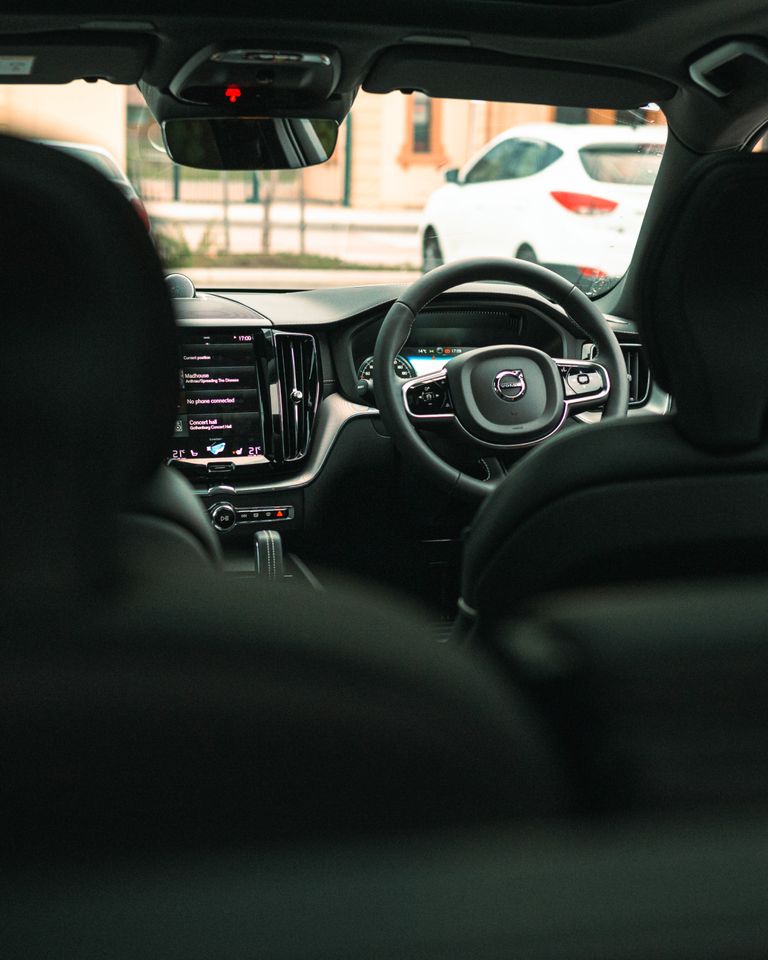
- Volvo XC40 (Scandinavian Sanctuary): The XC40 features tailored wool blend or premium leather seating, genuine driftwood or metallic deco inlays, felt-lined door pockets made from recycled ocean plastics (large enough to hold a 15-inch laptop!), and a removable center console waste bin. Infotainment is powered natively by Google Android Automotive OS with flawless voice commands.
- Renault Arkana (Mainstream Coupe Cockpit): The Arkana’s dashboard features Renault’s portrait-oriented Easy Link touchscreen and digital dials. While upper trims (such as the R.S. Line or E-Tech Engineered) feature attractive red contrast stitching and faux-carbon accents, hard scratchy plastics dominate the lower door cards and center console.
Frequently Asked Questions About Volvo XC40 vs Renault Arkana
Platform Architecture: Volvo CMA vs Renault CMF-B / CMF-C
Comparing the Volvo XC40 and the Renault Arkana illustrates the engineering gulf between a dedicated European luxury crossover and a mass-market coupe-SUV:
- Volvo XC40 (CMA Platform): Engineered upon Volvo’s Compact Modular Architecture. Employs 20% hot-formed ultra-high-strength boron steel across its safety cage, forged aluminum front suspension knuckles, hydroformed subframes, and acoustic laminated side glass. Torsional rigidity exceeds 32,000 Nm/degree.
- Renault Arkana (CMF Platform): Built on the Renault-Nissan-Mitsubishi Alliance CMF-B/C architecture (shared with budget vehicles like the Renault Clio and Captur). While offering stylish coupe-crossover rooflines, it utilizes conventional mild-steel pressings, a lightweight rear torsion beam suspension on most trims, and thinner acoustic insulation.
Powertrain Engineering: B5 Mild Hybrid vs Renault E-Tech 145
Under the hood, these two European crossovers take radically divergent mechanical paths:
| Powertrain Metric | Volvo XC40 B5 AWD | Renault Arkana E-Tech Hybrid 145 |
|---|---|---|
| Combustion Engine | 2.0L Turbo 4-Cylinder (Drive-E) | 1.6L Naturally Aspirated 4-Cylinder |
| Hybrid System Type | 48-Volt Mild Hybrid (ISG) | Dual Electric Motors Full Hybrid (FHEV) |
| Transmission | Aisin 8-Speed Torque Converter Auto | F1-Derived 4-Speed Dog-Clutch Multimode |
| Horsepower Output | 247 HP @ 5,500 RPM | 143 HP Combined (94 HP Gas + 49 HP Motor) |
| Torque Output | 258 lb-ft @ 1,800 RPM | 109 lb-ft Gas + 151 lb-ft Electric |
| 0 – 62 MPH (100 km/h) | 6.4 seconds | 10.8 seconds (Sluggish passing power) |
| Drivetrain Layout | Full-Time Mechanical All-Wheel Drive | Front-Wheel Drive Only (No AWD available) |
| Fuel Economy | 28 – 30 MPG (Combined) | 58.9 MPG UK (4.8 L/100km Combined) |
Interior Luxury, Sound Isolation & Crash Safety Verdict
Step inside both cabins, and the price differential becomes immediately justified:
The Volvo XC40 delivers authentic Scandinavian minimalist luxury: FSC-certified driftwood inlays, Orrefors crystal gearshifter, tailored wool blend seating, and an integrated Android Automotive infotainment display with Google built-in. Sound pressure levels inside the XC40 at 70 mph are nearly 3.5 dBA quieter than the Arkana.
While the Arkana provides a sporty, swooping exterior profile and outstanding urban fuel economy through its E-Tech hybrid system, the Volvo XC40 offers vastly superior structural crash safety, real all-weather AWD capability, double the horsepower, and true premium resale value.
Diagnostics & Serviceability: Volvo VIDA vs Renault Clip
When assessing long-term ownership costs beyond the showroom floor, maintenance diagnostics and software ecosystems play a critical role:
| Diagnostic / Service Metric | Volvo XC40 (CMA Architecture) | Renault Arkana (CMF-C/D Architecture) |
|---|---|---|
| Diagnostic Protocol | Ethernet-over-CAN (DoIP) via Volvo VIDA | CAN-bus via Renault CAN Clip Diagnostic Tool |
| Over-The-Air (OTA) Updates | Standard Over-The-Air firmware updates | Infotainment only; ECU updates require dealership visits |
| Independent Parts Availability | High (Tier-1 OEM: Mann, Lemförder, Bosch) | High across Europe (Valeo, SNR, Bosch) |
| Electronic Parking Brake Service | Requires scan tool or cluster service mode toggle | Requires Clip tool or manual caliper motor retraction |
| Air Filter Replacement | 5-minute tool-free engine airbox access | 10-minute Torx T20 fastener removal |
While the Renault Arkana benefits from cheaper routine mechanical consumables across mainland Europe, the Volvo XC40 offers vastly superior factory software support. With native Google built-in, the XC40 regularly receives Over-The-Air (OTA) operating system patches, navigation improvements, and powertrain calibration refinements delivered directly over cellular connection without ever setting foot inside a dealership service bay.
Chassis Geometry & Road Isolation Dynamics
The Volvo XC40’s multi-link independent rear suspension utilizes decoupled shock absorbers and progressive polyurethane coil spring bump stops, absorbing sharp highway expansion joints with refined Scandinavian composure. In contrast, the Renault Arkana’s lightweight rear twist-beam axle transmits noticeably more road vibration into the passenger seat cushions when navigating broken asphalt.
Furthermore, the XC40’s standard acoustic laminated windshield and front door glass deliver library-quiet interior cabin comfort, elevating every daily commute into a peaceful sanctuary.
Frequently Asked Questions