Volvo XC60 vs Audi Q5?

Volvo XC60 vs Audi Q5?
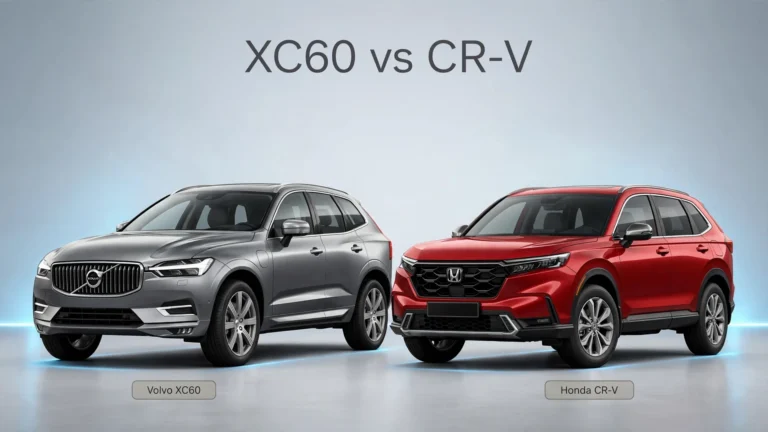
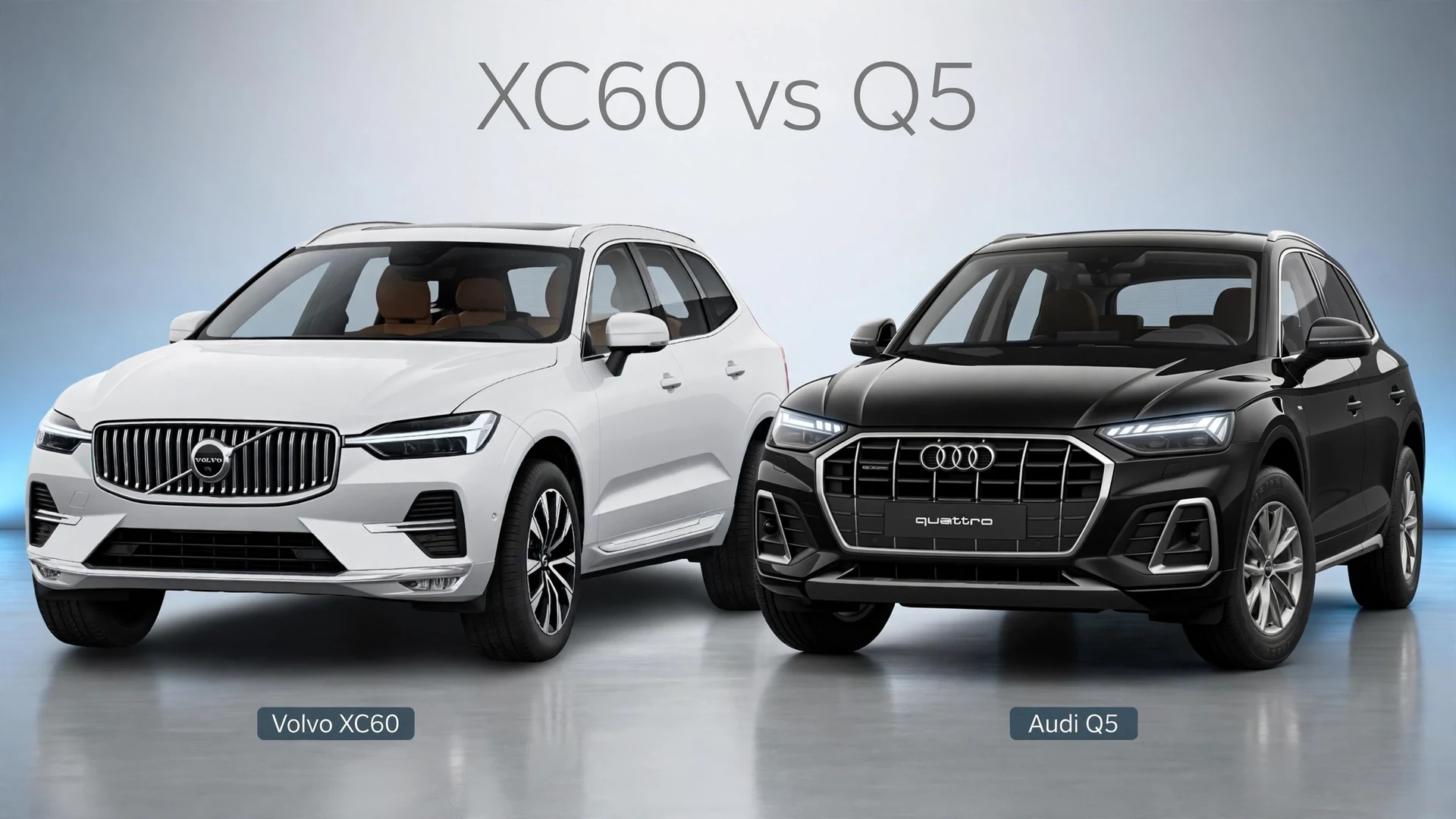
The Volvo XC60 and Audi Q5 are the thinking person’s alternatives to the BMW X3: two mature, well-engineered compact luxury SUVs that prioritize competence over flash. The XC60 (247-hp B5 from $47,050, or the 455-hp T8 plug-in hybrid with 36 miles of electric range) is the comfort-first choice with the stronger plug-in. The Q5 (201-hp 40 TFSI, 261-hp 45 TFSI, or the 362-hp 55 TFSI e plug-in) is the driver’s choice — quicker in base form, tow-rated to 4,400 lbs, and backed by the quattro legend. The short version: the Q5 is the better all-rounder for most buyers; the XC60 wins if you want a plug-in with real punch or the lowest purchase price. Here’s the full breakdown.
- Base pace: Q5 45 TFSI (261 hp, 0–60 in 5.7 sec) is notably quicker than the XC60 B5 (247 hp, 6.7 sec) — Audi wins the entry-level drag race.
- Plug-in punch: reversed at the top — XC60 T8 (455 hp, 36-mi range) outguns the Q5 55 TFSI e (362 hp, ~23-mi range).
- Towing: Q5 is rated to 4,400 lbs vs 3,500 lbs for the XC60 — a meaningful gap for trailer owners.
- Cargo: Q5 maxes at ~54 cu ft vs 49.8 for the XC60.
- AWD: both use front-biased on-demand systems (quattro ultra vs Volvo’s BorgWarner unit) — fine for weather, neither is a rock-crawler.
- Money: the XC60 starts cheaper ($47,050); both depreciate ~55–60% over five years.
How the Lineups Stack Up
Audi gives you three rungs. The Q5 40 TFSI (2.0-liter turbo, 201 hp / 236 lb-ft, 7-speed dual-clutch S tronic, quattro AWD) is the price leader with a 6.8-second 0–60 and 23/29 mpg. The Q5 45 TFSI (same 2.0-liter, 261 hp / 273 lb-ft) is the sweet spot: 5.7 seconds to 60, 22/28 mpg, and standard S line trim. The Q5 55 TFSI e plug-in hybrid (362 hp / 369 lb-ft, ~23 miles of EPA electric range, 58 MPGe / 26 mpg) is the efficiency flagship at 5.0 seconds to 60 — quicker than the 349-hp SQ5. Speaking of which, the SQ5 (3.0-liter turbo V6, 349 hp / 369 lb-ft, 4.7 sec, 19/24 mpg) is the enthusiast’s Q5 and has no Volvo equivalent.
Volvo’s lineup is simpler: the B5 mild hybrid (247 hp / 258 lb-ft, 8-speed automatic, 22/28 mpg, $47,050 base for 2025) and the T8 plug-in (455 hp / 523 lb-ft, 36-mile EPA range, from $62,600). The 295-hp B6 was dropped in the US from 2024, so used 2022–2023 B6 cars fill the middle. Trim walk is Core, Plus, Ultra (plus Polestar Engineered for the T8). Fewer choices, but every XC60 comes well equipped — Pilot Assist, Google built-in, and heated seats are standard or near-standard across the range, where Audi charges for equivalent tech in packages.
Powertrain Comparison
| Spec | XC60 B5 | Q5 45 TFSI |
|---|---|---|
| Engine | 2.0L turbo I4 + 48V | 2.0L turbo I4 + 12V MHEV |
| Power / torque | 247 hp / 258 lb-ft | 261 hp / 273 lb-ft |
| 0–60 mph | 6.7 sec | 5.7 sec |
| EPA economy | 22 / 28 mpg | 22 / 28 mpg |
| Transmission | 8-speed automatic | 7-speed dual-clutch |
| Max towing | 3,500 lbs | 4,400 lbs |
| Cargo (max) | 49.8 cu ft | ~54 cu ft |
| Base price (2025) | $47,050 | ~$45k (40 TFSI; 45 from ~$50k) |
The base-price row needs a footnote: Audi’s advertised entry price belongs to the 201-hp 40 TFSI, so a like-for-like 45 TFSI vs B5 comparison actually favors Volvo on price. And that towing figure deserves emphasis — 4,400 lbs vs 3,500 lbs is the difference between comfortably pulling a 21-foot bowrider and being stuck with a jet ski. If you tow, the Q5 wins outright.
| Plug-in spec | XC60 T8 Recharge | Q5 55 TFSI e |
|---|---|---|
| Combined power / torque | 455 hp / 523 lb-ft | 362 hp / 369 lb-ft |
| EPA electric range | 36 miles | ~23 miles |
| 0–60 mph | ~4.5–4.7 sec | 5.0 sec |
| Hybrid-mode economy | 28 mpg | 58 MPGe / 26 mpg |
| Battery | 18.8 kWh (14.9 usable) | ~17.9 kWh |
| Level 2 charging | ~5 hrs (3.7 kW) | ~2.5 hrs (7 kW) |
The pattern is consistent: Audi wins the base comparison on pace and towing; Volvo wins the plug-in comparison on power and range. Note the Q5 55 e’s consolation prize — 7-kW onboard charging roughly halves the Volvo’s charge time, which matters if you top up at public stations between trips.
quattro vs Volvo AWD: The Engineering Story
The quattro badge carries forty years of rally-bred mythology, but the modern Q5’s system is pragmatic, not romantic. The 40/45 TFSI use quattro with ultra technology: a front-biased, on-demand setup that disconnects the rear axle entirely in steady cruising to save fuel, re-engaging it predictively (via navigation data and drive-mode inputs) before slip occurs. It’s clever and efficient, but it’s reactive all-wheel drive, not a permanent 40:60 torque split. The SQ5 gets a more rear-biased tune plus an optional sport differential that can vector torque across the rear axle.
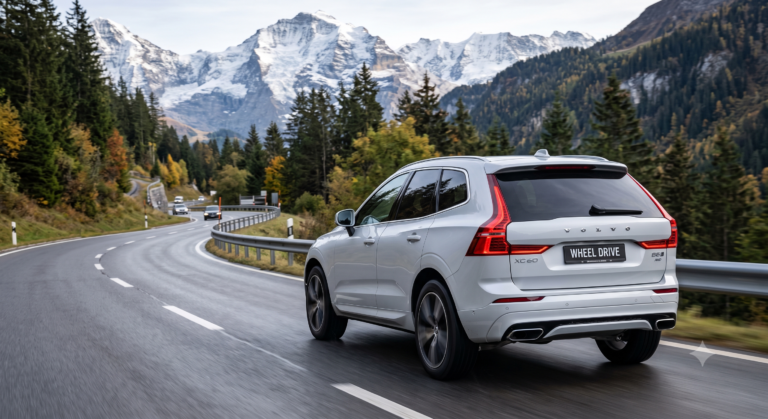
Volvo’s system (a BorgWarner Generation 5 unit on the SPA XC60) is philosophically identical: front-biased, on-demand, fully automatic, with an electronic center coupling that can send up to ~50% of torque rearward. In the T8, the rear axle is driven by its own electric motor — a “through-the-road” hybrid AWD with no mechanical connection front-to-rear, which gives instant rear torque and excellent low-traction behavior.
In real weather — rain, snow, gravel — both systems are excellent and the differences are academic. Neither has a low range, locking differentials, or serious ground clearance (XC60: 8.5 in; Q5: 8.0 in), so neither is an off-roader. Buy on the rest of the car; the AWD badges are marketing parity.
Cabin Tech and Comfort
This is the most subjective chapter and the one most buyers decide on. The Q5’s cabin is the sportier, more driver-focused space: the 10.1-inch MMI touchscreen, 12.3-inch Virtual Cockpit, and crisp switchgear feel a generation more modern than the Volvo’s calm minimalism — though Audi’s option-sheet culture means the base Q5 can feel sparse until you add the Convenience and Technology packages. The SQ5’s sport seats are among the best in the class.
The XC60 is the comfort pick: standard heated seats, the superb Google-based 11.2-inch touchscreen (2026 facelift, Snapdragon-powered), and seats that long-distance drivers consistently rate above Audi’s. Volvo’s Pilot Assist (adaptive cruise + lane centering) is standard; Audi’s equivalent highway assist requires option packages. Both offer wireless CarPlay/Android Auto, 360 cameras, and head-up displays.
Space favors Audi slightly: ~54 cu ft maximum cargo vs 49.8 for the XC60, and a touch more rear legroom. The XC60 counters with a lower load floor and a more practical boxy shape. Both tow — Q5 to 4,400 lbs, XC60 to 3,500 lbs — and both earn top crash-test scores (XC60: IIHS Top Safety Pick+, 5-star NHTSA).
Reliability Report Card
The current Q5 (second generation, 2018+) has a good reputation with one asterisk. The EA888 2.0-liter turbo (gen 3/4) is a proven unit — the oil-consumption woes belonged to the earlier gen-2 engines in 2009–2012 Q5s, not this car. Owner-reported issues on the current car cluster around MMI infotainment glitches, occasional water-pump/thermostat replacements on the 2.0T, and the 7-speed S tronic’s low-speed hesitation in stop-and-go traffic (a dual-clutch trait, not a defect). The 55 TFSI e adds battery and charging-module complexity but has no widespread horror stories.
The SPA XC60 (2018+) is similarly solid mechanically — the Drive-E 2.0-liter family is well proven — with owner forums (Swedespeed) pointing at infotainment/Sensus and Google-system quirks, periodic software updates for the 48-volt mild-hybrid system, and on early T8s, plug-in powertrain software campaigns. Neither car is a reliability champion in the Consumer Reports sense; both sit around the segment average. Volvo’s edge is the ownership package: 4-year/50,000-mile warranty plus 4-year unlimited-mile roadside assistance and lifetime Tow-for-Life. Audi matches the 4/50 warranty with 4-year roadside assistance, but without the lifetime tow perk.
Depreciation
Both lose value at the premium-compact-SUV rate: roughly 55–60% over five years at trade-in. CARFAX data puts the XC60 at about 59% over five years (14th of 22 in segment). The Q5 tracks similarly, with the 45 TFSI holding slightly better than the 40 and the 55 TFSI e depreciating hardest — plug-in complexity plus battery-age anxiety is a resale killer across brands. Practical advice: buy the volume engine (B5 or 45 TFSI), avoid loading $10k of options you’ll never recover, and the depreciation math is a wash.
Which Should You Buy?
Verdict: Audi for Most, Volvo for the Plug-in
The Q5 45 TFSI is the more complete compact luxury SUV: quicker, roomier, tow-rated higher, and available in the genuinely fun SQ5 flavor. But the XC60 refuses to lose on value — $47,050 buys a lot of Swedish calm — and the T8 is simply the better plug-in hybrid: more power, more range, similar money. Buy the Q5 if you want the best all-rounder or you tow. Buy the XC60 if you want the best plug-in or the lowest price of entry. Either way, skip the base 40 TFSI unless the budget demands it; the 45 TFSI and B5 are where both lineups start making sense.
Sources
- Kelley Blue Book (2025 Q5 specs) — 40/45/55 TFSI outputs (201/261/362 hp), cargo ~54 cu ft.
- AudiWorld buyer’s guide — Q5 45 TFSI: 261 hp / 273 lb-ft, 0–60 5.7 sec, 22/28 mpg, 4,400-lb towing; 55 TFSI e: 362 hp, ~23-mi range, 5.0 sec.
- MotorTrend (2025 Q5) — SQ5: 349 hp / 369 lb-ft, 4.7 sec, 19/24 mpg; 55 TFSI e charging and range details.
- CarBuzz / CARFAX — XC60 B5: 247 hp, $47,050 base, 22/28 mpg, 49.8 cu ft max, 3,500-lb towing, ~59% five-year depreciation.
- Mike Hagerty / TrueCar / encyCARpedia — XC60 T8: 455 hp / 523 lb-ft, 36-mi EPA range, ~4.5–4.7 sec 0–60.
- CarWeek / Autoblog — XC60 B6 (295 hp) discontinued in the US from 2024.
Frequently Asked Questions
Which is faster, the Volvo XC60 or the Audi Q5?
The Q5 45 TFSI is faster than the XC60 B5: 5.7 vs 6.7 seconds 0–60. But the XC60 T8 plug-in (4.5–4.7 sec) beats the Q5 55 TFSI e (5.0 sec). The fastest of all is the SQ5 at 4.7 seconds with its 349-hp V6.
Which can tow more, XC60 or Q5?
The Audi Q5, by a wide margin: 4,400 lbs versus 3,500 lbs for the XC60. If you tow a boat or camper, the Q5 is the clear choice.
Is the Audi Q5 reliable?
The current-generation Q5 (2018+) has a solid reputation. The EA888 2.0T’s oil-consumption issues belonged to 2009–2012 models, not this car. Owner-reported niggles include MMI infotainment glitches, occasional water-pump replacement, and low-speed dual-clutch hesitation.
XC60 T8 vs Q5 55 TFSI e: which plug-in is better?
The XC60 T8 wins on headline numbers: 455 hp and 36 miles of electric range vs 362 hp and ~23 miles for the Audi. The Q5 55 e counters with faster 7-kW onboard charging (~2.5 hrs vs ~5 hrs).
What is quattro ultra?
It’s Audi’s on-demand AWD for the Q5 40/45: a front-biased system that fully disconnects the rear axle while cruising to save fuel, re-engaging it predictively when slip is expected. Effective in bad weather, but not a permanent AWD system like Audi’s older Torsen setups.
Which depreciates less, XC60 or Q5?
They’re close: both lose roughly 55–60% over five years at trade-in. The XC60’s figure is about 59% per CARFAX. Plug-in versions of both depreciate harder than the volume mild-hybrid models.