Volvo XC60 vs Jaguar F-Pace?

Volvo XC60 vs Jaguar F-Pace?
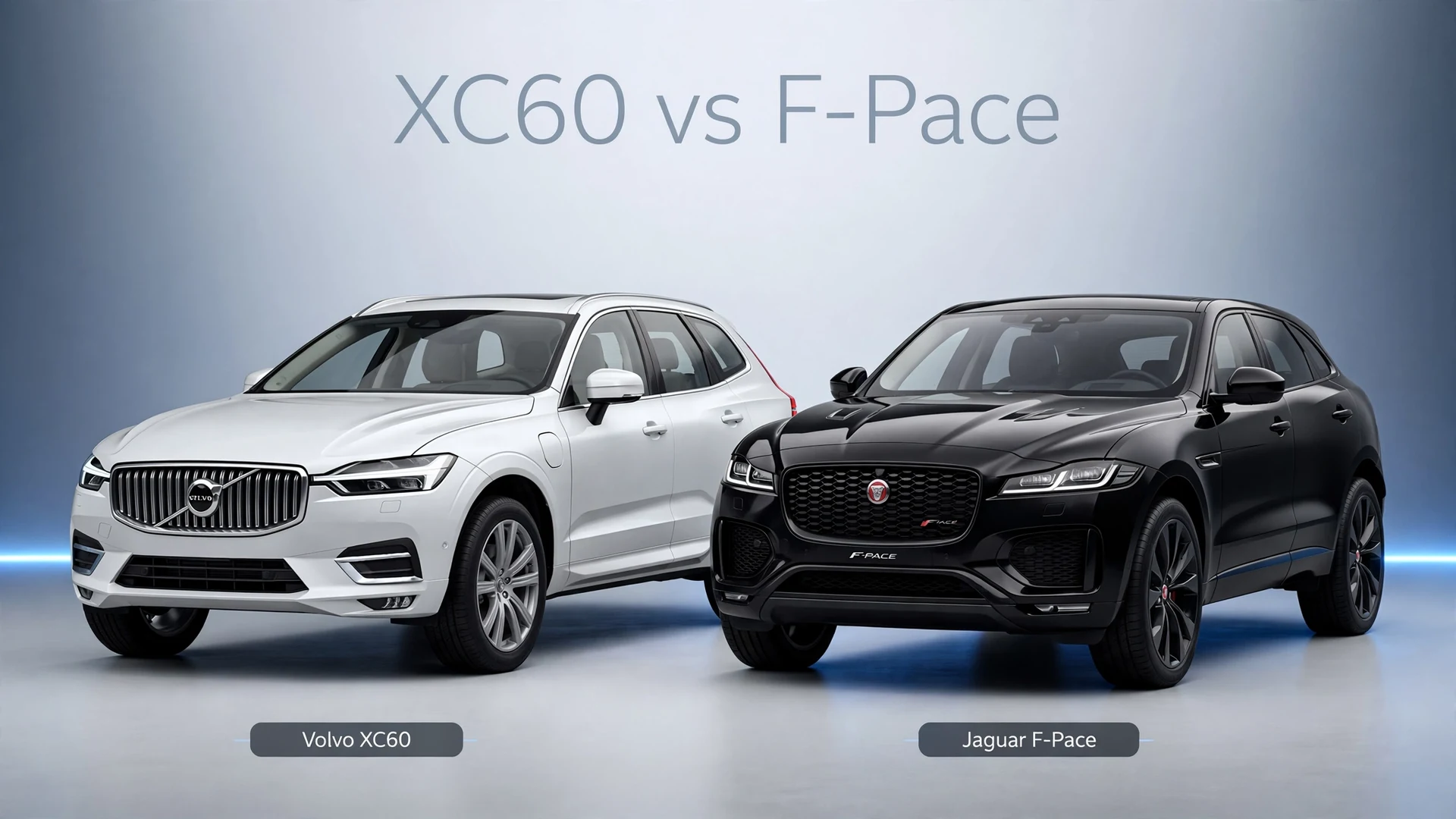
Two European takes on the premium midsize SUV: the Volvo XC60 ($47,050–$75,200) is the rational, refined, safety-first choice; the Jaguar F-Pace counters with head-turning design, a 395-hp straight-six P400, and the 567-hp SVR supercharged V8 flagship at $92,400. The F-Pace is the more desirable object; the XC60 is the better car to own. Verdict: buy the F-Pace P400 for style and six-cylinder character — with eyes open on depreciation; buy the XC60 (especially the T8) for lower running costs, better residuals, and a plug-in hybrid the Jag can’t match.
- Lineups: XC60: B5 (247 hp), B6 (295 hp), T8 PHEV (455 hp). F-Pace: P250 (247 hp), P400 (395 hp), SVR 575 (567 hp).
- Performance: F-Pace P400 395 hp / ~5.1–5.9 s vs XC60 T8 455 hp / ~5.0 s; SVR’s 567-hp V8 (3.8 s claimed) has no Volvo rival.
- Economy: XC60 T8’s 35-mile EV range beats anything Jaguar offers; F-Pace P250 manages 22/27 mpg.
- Reliability: the Ingenium engine’s worst issues concern 2015–2018 diesels — not the 2025 US petrol models — but JLR residuals and repair costs remain weak points.
- Resale: the XC60 holds value better; F-Pace depreciation is steep, making used examples tempting.
Design and Desirability: The Jag’s Strongest Card
Let’s be honest about why anyone cross-shops these two: the F-Pace is gorgeous. Its proportions, stance, and detailing still turn heads nearly a decade after launch, and the SVR with its quad exhausts and 22-inch wheels is one of the best-looking SUVs ever made. The XC60 is handsome in a restrained Scandinavian way, but nobody has ever bought one for the drama.
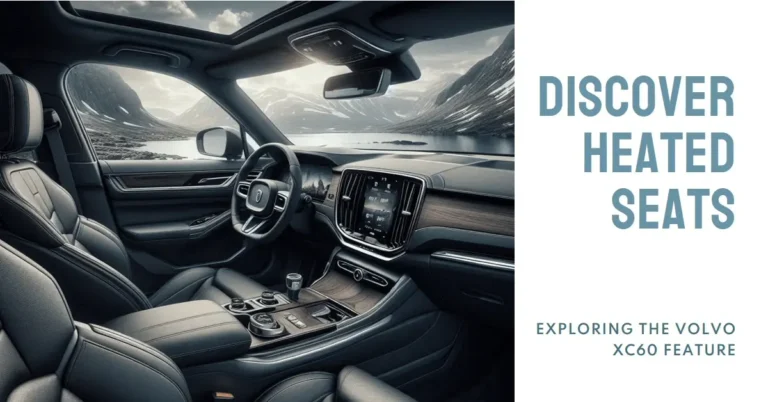
Inside, the dynamic flips. The XC60’s cabin — Google infotainment, superb seats, thoughtful materials — feels more modern and more carefully resolved than the F-Pace’s, which gained Jaguar’s Pivi Pro system in its facelift but still trails on ergonomics and perceived quality in places. The Volvo is the nicer place to spend a commute; the Jaguar is the nicer thing to look at from the driveway.
Pricing frames the choice: the F-Pace P250 starts in the mid-$50,000s — several thousand above the XC60 B5 Core’s $47,050 — and the P400 climbs toward $70,000, while the XC60 T8 Plus delivers 455 hp for $62,600. Jaguar charges a design premium at every step; Volvo’s pricing is the more honest of the two.
Powertrain Lineup Compared
The entry point is a dead heat on paper: both the XC60 B5 and F-Pace P250 use 2.0-liter turbocharged fours with 247 hp (the Jag makes 269 lb-ft to the Volvo’s 266) and hit 60 mph in 6.9 seconds. The F-Pace P250 is EPA-rated 22/27 mpg city/highway; the XC60 B5 23/30/26 — the Volvo edges it on highway economy.
The mid-range is where it gets interesting. The F-Pace P400’s 3.0-liter straight-six with 48-volt assistance makes 395 hp and 406 lb-ft — Jaguar claims 5.1 seconds to 60, though some independent figures suggest 5.9. The XC60 has no six-cylinder answer, but the T8 plug-in hybrid’s 455 hp and 523 lb-ft hit 60 in about 5.0 seconds while offering 35 miles of electric range. Then the SVR 575 ends the argument with a supercharged 5.0-liter V8: 567 hp, 516 lb-ft, a claimed 3.8-second 0–60, and 15/21 mpg — glorious, and gloriously thirsty.
| Specification | Volvo XC60 | Jaguar F-Pace |
|---|---|---|
| Entry engine | B5: 2.0L turbo MHEV, 247 hp | P250: 2.0L turbo MHEV, 247 hp |
| Mid-range engine | T8 PHEV: 455 hp / 523 lb-ft | P400: 3.0L I6, 395 hp / 406 lb-ft |
| Flagship | T8 Polestar: 455 hp, $75,200 | SVR 575: 5.0L supercharged V8, 567 hp, $92,400 |
| 0–60 mph (mid-range) | ~5.0 s (T8) | 5.1–5.9 s (P400, source-dependent) |
| EV range | 35 miles (T8) | None offered |
| Entry economy (mpg) | 23/30/26 (B5) | 22/27 (P250) |
| Max towing | 3,500 lb | 5,291 lb |
| Cargo (seats up) | 17.1 cu ft | 32.1 cu ft |
The Ingenium Question — Stated Precisely
Jaguar Land Rover’s Ingenium engines carry a fearsome internet reputation, so let’s be precise about what applies to the 2025 F-Pace you can buy today. The serious, well-documented failures — timing-chain stretch and failure, oil dilution from failed DPF regenerations, turbo failures — overwhelmingly concern the 2.0-liter Ingenium diesels built roughly 2015–2018, mostly in UK-market cars. They do not describe the 2025 US-market F-Pace, which is petrol-only (P250, P400, SVR).
That’s not a clean bill of health, though. JLR’s petrol Ingenium fours have their own thinner file of complaints (coolant loss, electrical gremlins), JLR dealer service is expensive and inconsistent, and Jaguar’s US lineup is shrinking as the brand pivots to electric — which raises long-term parts and support questions. The XC60’s B5 is the simpler, better-proven powertrain here; the T8 adds complexity (ERAD failures, the March 2025 battery recall of ~73,000 PHEVs) but Volvo’s support network is stable. On balance, the Volvo is the lower-risk ownership proposition.
Running Costs and Depreciation
Fuel economy favors the Volvo across the board. The B5’s 26 mpg combined beats the P250’s ~24; the T8’s 35-mile electric range has no Jaguar equivalent; and the P400 and SVR drink accordingly (the SVR’s 15/21 mpg on premium is a lifestyle choice). Servicing costs are high for both — premium European rates, main-dealer dependency — but Jaguar parts and labor run slightly higher in most markets, and JLR warranty claims data is less flattering than Volvo’s.
Depreciation is the F-Pace’s Achilles’ heel. Jaguars shed value fast: a three-year-old F-Pace typically retains 45–50% of its price, versus 50–55% for the XC60 — and the gap widens on high-spec cars. A new P400 at roughly $70,000+ losing half its value in three years is a $35,000 haircut. The SVR is the exception that proves the rule: limited numbers and V8 desirability slow its fall, but 15-mpg running costs cap the buyer pool.
Insurance follows the same pattern: the F-Pace’s higher list prices and JLR repair costs push premiums above the XC60’s, particularly for the P400 and SVR. Factor insurance into the spreadsheet before falling for the styling.
Interior and Practicality
The F-Pace is the more practical car in one important respect: cargo. With 32.1 cu ft behind the second row — nearly double the XC60’s 17.1 — and a longer 187.5-inch body, the Jaguar swallows family luggage the Volvo simply can’t. It also tows more: 5,291 lb versus 3,500.
But the XC60 counters with the better-executed cabin: more comfortable seats, quieter cruising, and superior driver assistance (Pilot Assist remains best-in-class for the segment). Rear legroom is close; both seat five in comfort. If your priority is carrying capacity, the Jag wins; if it’s cabin serenity, the Volvo wins.
| Practicality measure | XC60 | F-Pace |
|---|---|---|
| Length | 185.4 in | 187.5 in |
| Cargo, seats up | 17.1 cu ft | 32.1 cu ft |
| Max towing | 3,500 lb | 5,291 lb |
| Seat comfort | Excellent | Good |
| Driver assistance | Pilot Assist standard | Good, less refined |
| Cabin noise | Quieter | Sportier (more engine presence) |
Used-Buying Verdict
Inspection notes for used F-Paces: full main-dealer or JLR-specialist service history is non-negotiable; check for coolant loss, electrical faults, and air-suspension wear on high-spec cars; confirm all recalls completed. For used XC60s: B5s are the safe pick — check infotainment software and roof drains; T8s need the March 2025 battery recall verified plus ERAD history.
Verdict: The Jaguar Seduces, the Volvo Satisfies
Buy the Jaguar F-Pace if you want the most beautiful, most characterful SUV in the class — the P400’s straight-six is a gem and the SVR is an event. Accept steeper depreciation, higher running costs, and a thinner dealer network as the price of admission.
Buy the Volvo XC60 if you want the smarter ownership proposition: lower fuel bills (especially the T8’s electric miles), better residuals, superior seats and safety tech, and a plug-in hybrid Jaguar simply doesn’t offer. Head versus heart, made simple.
If the F-Pace has won your heart, buy it with your eyes open and a specialist on speed dial. Insist on a full Jaguar service history and have a JLR-independent specialist — not a generic garage — perform the pre-purchase inspection; they’ll know exactly which engine variant is in front of them and what its specific weaknesses are. Petrol cars from 2021 onward with the mild-hybrid straight-six are the sweet spot for reliability confidence. And price an extended warranty before you commit: on a used F-Pace it’s not pessimism, it’s budgeting, and the quote itself tells you what the market thinks of the car’s risk profile.
Sources
- motortrend.com — 2025 F-Pace overview: P250 247 hp/269 lb-ft, 6.9 s, 22/27 mpg; cargo 32.1 cu ft; length 187.5 in.
- motordonkey.com — F-Pace SVR 575: 567 hp/516 lb-ft, 3.8 s claimed, 15/21 mpg, $92,400.
- stedmansgarage.co.uk — Ingenium 2.0 diesel: timing chain, oil dilution, DPF issues (2015–2018 focus).
- stargaragemansfield.co.uk — JLR Ingenium 2.0 timing-chain problem explainer.
- carbuzz.com / truecar.com — 2025 XC60: B5 $47,050, 247 hp/266 lb-ft, 26 mpg combined, 3,500-lb towing; T8 $62,600–$75,200, 455 hp/523 lb-ft, 35-mi EV range.
- carscoops.com — March 2025 Volvo PHEV battery recall (~73,000 vehicles).
- insideevs.com — Volvo ERAD failure explainer.
Frequently Asked Questions
Is the Jaguar F-Pace reliable compared to the Volvo XC60?
The XC60 is the lower-risk bet. The F-Pace’s worst documented engine issues concern 2015–2018 Ingenium diesels — not 2025 US petrol models — but JLR still trails on repair costs, electronics, and dealer consistency. The XC60 B5 is the proven powertrain here.
Which is faster, XC60 T8 or F-Pace P400?
The XC60 T8: 455 hp and ~5.0 s 0–60 versus the P400’s 395 hp and 5.1–5.9 s (depending on source). The F-Pace SVR’s 567-hp V8 (3.8 s claimed) beats both — for $92,400 and 15/21 mpg.
Do Jaguar Ingenium engine problems affect the 2025 F-Pace?
The serious timing-chain, oil-dilution, and DPF failures documented online overwhelmingly concern 2015–2018 2.0L Ingenium diesels. The 2025 US F-Pace is petrol-only (P250, P400, SVR) and doesn’t share those diesel-specific problems.
Which holds its value better, XC60 or F-Pace?
The Volvo XC60: roughly 50–55% retained after three years versus 45–50% for the F-Pace. The Jaguar’s steeper depreciation makes 2–3-year-old F-Paces strong used value.
Can the F-Pace tow more than the XC60?
Yes — 5,291 lb versus the XC60’s 3,500 lb — and it offers nearly double the cargo space (32.1 vs 17.1 cu ft). For carrying and towing, the Jaguar is the more capable tool.
Should I buy a used Jaguar F-Pace?
Yes, with caveats: 2020–2022 facelift P250s at half their new price are excellent value. Insist on full JLR-specialist service history, check cooling and electronics, and avoid patchy-maintenance examples — that’s where these cars get expensive.