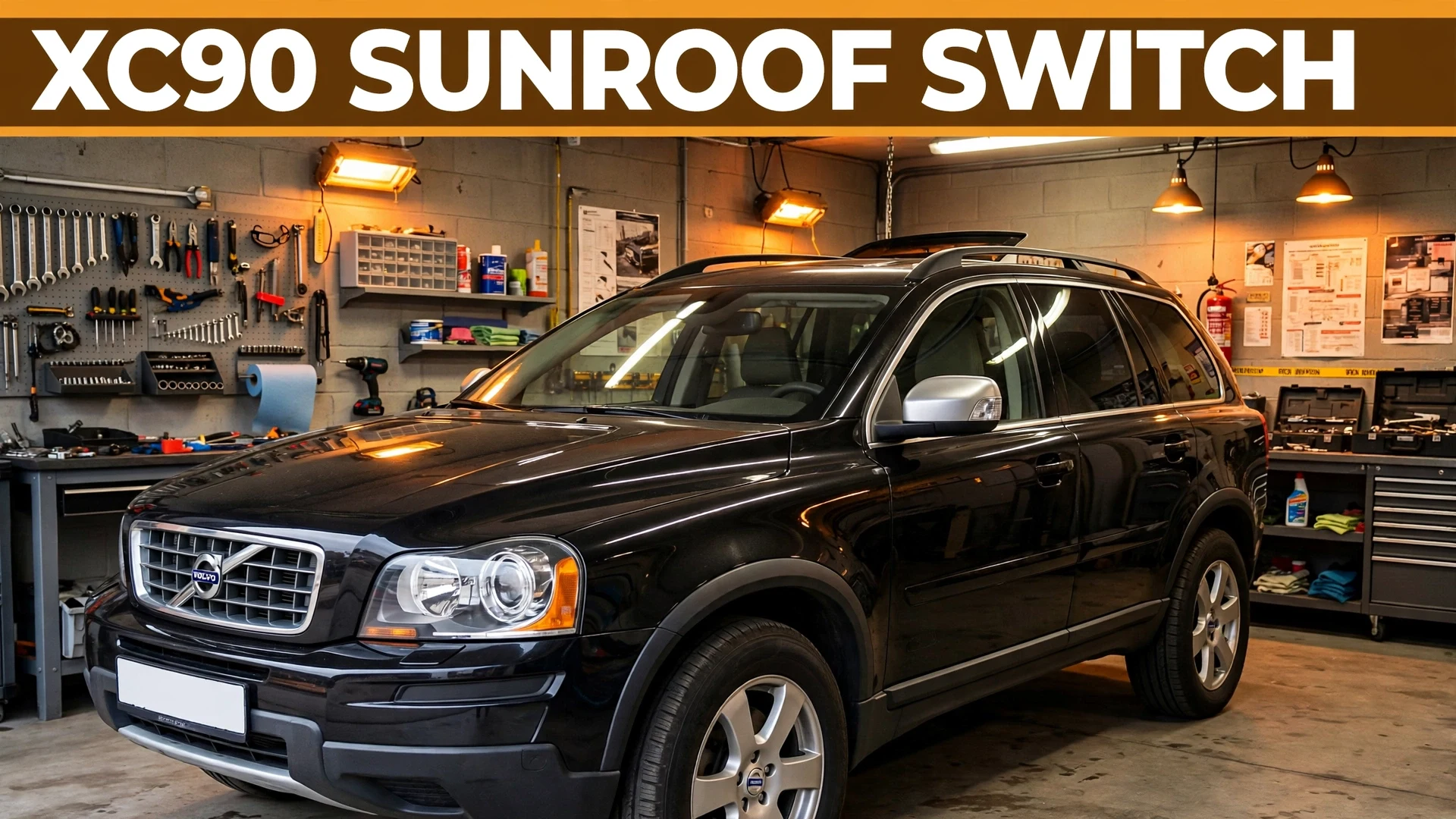
Where Is the Sunroof Switch on a 2008 Volvo XC90? Location, Use & Fixes

The short answer
On a 2008 Volvo XC90, the sunroof switch lives in the overhead console in the roof panel, between the front dome light and the windshield — not on a door, the dash, or the center console. Push the rocker up to tilt the rear edge of the glass for ventilation, pull it back to slide the roof open, and push it forward to close it.
Key Takeaways
- Location: overhead console in the roof panel, next to the dome/map light — look up, not at the doors or dash.
- Operation: one rocker does everything — push up to tilt, pull back to slide open, push forward to close. The slide control has two detents: halfway for manual movement, all the way for one-touch automatic.
- Dead switch? Check the sunroof fuse in the interior fuse box first — the cheapest, most common fix.
- Glitchy or misaligned roof? Owners report a reset procedure (hold the switch at the halfway detent for 40–45 seconds) that can restore normal operation without new parts.
- Hidden gotcha: the alarm siren module shares circuitry with the sunroof — a failing siren can silently disable the roof.
Where exactly to find the sunroof switch
Sit in the driver seat and tilt your head back toward the headliner. The 2008 XC90’s sunroof control is integrated into the overhead console — the molded roof-panel module between the windshield header and the front dome light. On most 2008 XC90s this console also holds the front dome/map lamp lens and, on equipped cars, the On Call SOS buttons.
The switch itself is a single rocker — a small paddle you can nudge up, pull back, or push forward. If you have been checking the driver door armrest or the center stack, you are looking in the wrong place entirely: Volvo has always put the XC90’s sunroof control directly under the glass, within easy reach of the driver and front passenger.
The diagram below shows the typical layout of the 2008 XC90 overhead console:
Illustrative diagram, not to scale — your console may differ slightly by trim and options.
How the sunroof switch works: every mode explained
Volvo’s owner’s documentation describes two fundamental roof positions: a ventilation position (rear edge of the glass tilts up) and a sliding position (glass moves rearward, or forward to close). One rocker handles both:
| Switch action | Roof movement | Notes |
|---|---|---|
| Push rocker up | Rear edge of glass tilts up | Ventilation mode — ideal for airflow without fully opening the roof. Also used for the calibration step below. |
| Pull rocker back to the halfway detent | Glass slides open while you hold | Manual mode — the roof stops when you release the switch. Use it for partial openings. |
| Pull rocker back all the way | Glass slides fully open automatically | One-touch auto-open. Release immediately — the roof completes the travel on its own. |
| Push rocker forward | Glass slides closed | If the roof was tilted, push forward once to drop the tilt, again to slide closed. |
| Press any direction during travel | Roof stops where it is | Tap the switch while the glass is moving to halt it mid-travel. |
Why Volvo put the switch overhead
Many drivers expect a sunroof switch on the driver door next to the window controls. Volvo’s logic is simpler: the switch sits directly beneath the mechanism it controls, so the wiring run to the motor is short, stays inside the headliner, and never flexes through a door harness — one less failure point. It is also within equal reach of the driver and the front passenger.
What to check when the switch does nothing
A silent, unresponsive sunroof rarely means a dead motor. On a 2008 XC90 the usual suspects, in order of likelihood and cost, are the fuse, the switch signal path, the alarm siren module link, and only then the motor or cables. Work through these steps before ordering parts:
- Check the fuse first. The sunroof is protected by a fuse in the interior fuse box (on left-hand-drive cars, beneath the glove box area — check the fuse map on the cover or in your owner’s manual for the exact slot). A blown fuse is the cheapest possible cause and takes minutes to rule out. If a fresh fuse blows again immediately, suspect a short in the circuit.
- Confirm the ignition is on. The roof only responds with the ignition on or in accessory mode — no response with the ignition fully off is by design, not a fault.
- Reset the upper electronic module. Owner forums describe a reset for P2-era Volvos: close all doors, then use the physical key blade in the driver’s door lock to lock and unlock the car three times in succession. If the roof wakes up afterward, the module had simply lost its state.
- Test for the alarm siren link. A failing alarm siren module can disable the sunroof entirely — both share circuitry through the upper module. If the roof died around the same time the alarm started false-triggering or threw a siren fault message, the siren module is a prime suspect.
- Listen for the motor. A clicking or humming from the headliner means the motor has power but the mechanism is jammed or the cables have jumped — a mechanical problem, not an electrical one. Total silence points back to fuse, switch, module, or siren.
- Inspect the switch last. If the rocker feels loose or only works when wiggled, its connector may be the fault — but the switch is one of the least likely parts to fail, so check the electrical items above first.
Resetting and recalibrating a glitchy sunroof
If the roof opens but stops short, reverses on its own, or no longer seals flush when closed, the mechanism has usually lost its learned end positions — common after a battery disconnect. The procedure below is widely reported by XC90 owners; treat it as an owner-reported fix and consult your owner’s manual or dealer if you are unsure.
- Ignition to position II (engine off is fine).
- Pull the switch back to the halfway (manual) detent — not all the way.
- Hold it there for 40 to 45 seconds. The roof should cycle through its positions on its own — do not release until it finishes.
- Release and test normal operation.
A second calibration step addresses a roof that closes but does not seal tightly: tilt the glass fully up to the ventilation position, then hold the rocker in the tilt-up position for about five seconds to re-teach the closed position.
Keeping the sunroof healthy: drains and seals
A sunroof is designed to let a little water past the glass — the seal is a wind barrier, not waterproof. What keeps your headliner dry are the drain tubes: one at each corner of the sunroof cassette, routed down the A-pillars and rear quarters. When they clog with leaves or dust, water backs up and spills into the cabin — often down the A-pillar trim.
Maintenance is simple and worth doing once a year on a car this age:
- Check the drains. Open the roof fully and look into the front corners of the cassette tray for the small drain holes. Pour in a little water and confirm it drains out under the car. If it pools, the tube is blocked.
- Clear blockages gently. Owners clear tubes with flexible trimmer line or low-pressure compressed air from the top. Avoid high pressure, which can blow a tube off its fitting inside the headliner.
- Condition the seal. Wipe the perimeter seal with a damp cloth and treat it with a silicone-based rubber conditioner — never petroleum products, which degrade rubber.
- Lubricate the tracks. With the roof open, wipe the guide rails clean and apply a thin film of silicone grease. Grit in the tracks makes the motor strain and cables skip.
Is it the switch or something else? Diagnose it
Pick the symptom that matches your XC90:
Frequently asked questions
Where is the sunroof switch on a 2008 Volvo XC90?
It is in the overhead console in the roof panel, next to the front dome and map light housing — between the windshield and the front seats. Volvo never put it on the door, dash, or center console.
How do I open and close the sunroof, and what is the tilt function?
Push the rocker up to tilt the rear edge of the glass for ventilation. Pull the rocker back to slide the roof open — halfway is manual mode (stops when released), all the way back is one-touch auto-open. Push the rocker forward to close the roof.
Why does my 2008 XC90 sunroof switch do nothing when I press it?
Check the sunroof fuse in the interior fuse box first, then confirm the ignition is on. If the fuse is good, try the module reset (lock and unlock the driver’s door three times with the key). A failing alarm siren module can also disable the sunroof on these cars, since they share circuitry.
How do I reset or recalibrate the sunroof on a 2008 XC90?
Owners report this procedure: ignition on, pull the switch to the halfway (manual) detent and hold for 40 to 45 seconds without releasing until the roof cycles through its positions. To fix a roof that closes but does not seal, tilt the glass up and hold the rocker in the tilt position for about five seconds.
Why is water dripping from the headliner after rain?
The sunroof drain tubes are probably clogged. The glass seal is a wind barrier, not waterproof — four drain tubes carry water away from the cassette. When they block, water backs up into the headliner and A-pillars. Open the roof, check the drain holes in the cassette corners, and clear the tubes gently with trimmer line or low-pressure air.