Gemini Generated Image 5avwkn5avwkn5avw scaled

Volvo Leatherette vs Leather?

The Upholstery Decision Volvo Shoppers Almost Always Get Backwards

Most car shoppers assume leather is the “upgrade” and leatherette is the compromise. With Volvo, that assumption doesn’t always hold — and on some of the newest electric models, leather isn’t even on the menu. The badge on the configurator matters less than what actually happens to that seat after five years of daily use.

I’ve gone through Volvo owner forums, materials comparisons, and Volvo’s own sustainability announcements to give you a realistic picture of how leatherette and leather actually perform in a Volvo cabin. Here’s what to expect from each.

TL;DR

  • Leatherette is Volvo’s synthetic upholstery — more resistant to cracking, fading, and temperature swings than real leather.
  • Leather offers a richer, more traditional look and feel, but requires more conditioning and shows wear sooner without care.
  • Many Volvo owners report the two are genuinely hard to tell apart by look or feel in current models.
  • Volvo’s pure electric models are moving away from leather entirely — some newer EVs don’t offer a genuine leather option at all.
  • Neither is objectively “better” — the right pick depends on climate, driving habits, and how much upkeep you’re willing to do.

The short version: leatherette is the lower-maintenance, more weather-resistant choice, while leather offers a classic look some drivers still prefer — but the practical gap between the two has narrowed enough that many Volvo owners say they can barely tell the difference. And if you’re shopping Volvo’s electric lineup specifically, the decision may already be made for you, since genuine leather is being phased out there.

What Is Volvo Leatherette?

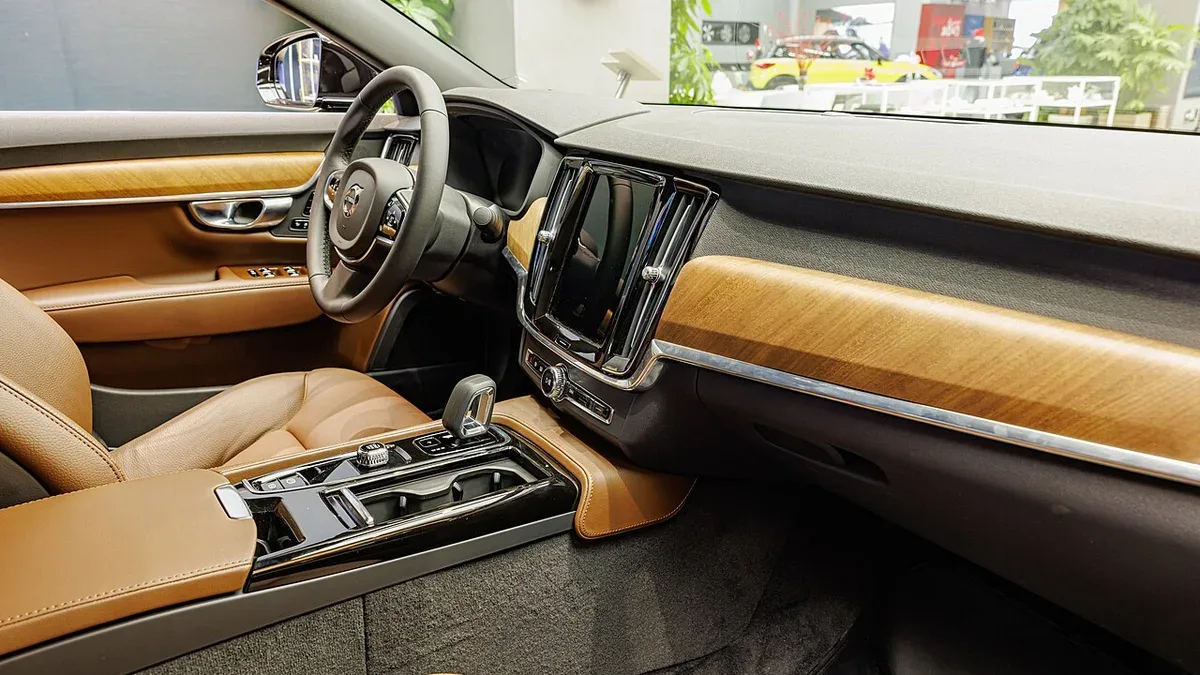
Leatherette is Volvo’s synthetic upholstery — a vinyl-based material engineered to closely mimic the look and feel of real leather.

Modern leatherette has come a long way from the “cheap vinyl” reputation older drivers may remember. Volvo owners comparing the two directly often can’t spot a difference at all — one owner testing a loaner car noted they <cite index=”69-1″>had no idea the seats weren’t real leather until checking the configurator, and actually found them slightly softer than the genuine leather seats in their other Volvo</cite>.

Where leatherette clearly wins is durability. It <cite index=”69-1″>tends to be far more resistant to everyday wear and tear than leather</cite>, and it doesn’t require the conditioning or cleaning regimen leather does. It also resists denim dye transfer — a small but real annoyance for anyone who’s ever gotten blue jean stains on light-colored leather seats.

Quick Tip: If you live somewhere with big seasonal temperature swings, leatherette’s more consistent surface temperature is a genuinely practical advantage — it won’t get quite as hot in direct summer sun as leather can.

What Is Volvo Leather?

Genuine Volvo leather offers the classic, natural-grain look and feel that many drivers still associate with a premium interior — but it demands more care to stay looking that way.

Leather’s appeal is mostly about character. Real hides carry <cite index=”73-1″>unique natural markings and variations that add individuality to the cabin</cite>, something no synthetic material fully replicates. Volvo offers this in different grades and finishes depending on trim, from smoother leather to more textured options on higher trims.

The tradeoff is upkeep. Multiple long-term owners report that leather is <cite index=”69-1″>soft and comfortable but more prone to cracking and wear, and requires regular conditioning to stay in good shape</cite>. Skip that maintenance for a few years and the difference between leather and leatherette in appearance can flip entirely — a neglected leather seat often ages worse than a leatherette one that’s never been conditioned at all.

Expert Insight: Leather’s biggest advantage — natural texture and character — is also its biggest liability. That same organic material that looks great new is exactly what makes it vulnerable to drying, cracking, and fading without consistent care.

The New Wrinkle: Volvo’s Electric Models Are Going Leather-Free

Here’s a detail that changes this comparison for EV shoppers specifically: Volvo has committed to leather-free interiors across its fully electric lineup, with the transition already well underway.

Volvo’s own sustainability announcement was unambiguous — the company said it <cite index=”78-1″>aims to offer only fully electric cars by 2030, all of them leather-free</cite>, citing concerns about the environmental impact of cattle farming as a driving factor. The first model to launch without any genuine leather option was the C40 Recharge, and Volvo has continued that approach across newer EVs since.

In place of leather, Volvo developed Nordico, a leather-like material described as consisting of <cite index=”78-1″>textiles made from recycled PET bottles, bio-attributed material from sustainable forests, and cork recycled from the wine industry</cite>. Owners and reviewers describe Nordico as offering similar softness and warmth to leather, without any animal-derived material at all.

Quick Tip: If you’re shopping a Volvo EV specifically, check the configurator before assuming leather is an available option — on many electric models, your real choice is between leatherette, Nordico, or a wool-blend textile, not leather at all.

Leatherette vs Leather: Side-by-Side Comparison

FeatureLeatheretteLeather
FeelSoft, consistent, increasingly close to real leatherRich, natural texture with individual character
DurabilityMore resistant to cracking and wearProne to cracking without regular conditioning
MaintenanceMinimal — occasional wipe-downRequires regular conditioning and cleaning
Temperature in sunStays more consistentCan get notably hot in direct sunlight
Dye/stain resistanceBetter resistance to denim dye transferMore susceptible to staining
AvailabilityStandard or no-cost option on many trimsAvailable on combustion/hybrid trims; being phased out on EVs
Long-term resale characterConsistent but less “premium” perceptionAges with character if maintained, poorly if not

The pattern here is consistent: leatherette wins on low-maintenance durability, leather wins on classic look and feel — if you’re willing to put in the care it needs.

Pros and Cons by Owner Type

The Low-Maintenance Owner

  • ✅ Leatherette: Genuinely minimal upkeep — no conditioning routine required.
  • ✅ Leatherette: More forgiving of kids, pets, and daily wear.
  • ❌ Leather: Needs periodic conditioning to avoid premature cracking.

The Traditionalist Who Wants a Classic Cabin Feel

  • ✅ Leather: Natural grain and individual character many drivers still prefer.
  • ✅ Leather: Available across a wide range of finishes on combustion and hybrid trims.
  • ❌ Leatherette: While very close in feel, some owners can still spot the difference up close.

The Sustainability-Minded EV Shopper

  • ✅ Leatherette or Nordico: Aligns with Volvo’s animal-welfare and sustainability commitments.
  • ✅ Nordico: Made substantially from recycled and bio-based materials.
  • ❌ Leather: Simply may not be offered as an option on the electric model you’re considering.

Real-World Scenario: Two Owners, Two Outcomes

One Volvo owner who kept leather seats in a 2017 model for over 90,000 miles reported they still looked and felt excellent — but they credited regular conditioning as the reason, not the material alone. Another owner who bought leatherette specifically to avoid maintenance found their seats still looked new after years of daily use, with zero conditioning routine at all. The lesson isn’t that one material always wins — it’s that leather’s advantage disappears fast without effort, while leatherette’s advantage requires none.

Choose Leatherette If…

You want a low-maintenance interior that resists cracking, fading, and stains without any conditioning routine. Choose this if durability and ease of care matter more than the exact texture of natural hide.

Choose Leather If…

You value the classic, individual character of natural leather and are willing to commit to regular conditioning to keep it looking its best. Choose this if traditional look and feel matter more than minimizing upkeep — and confirm it’s actually available on the model you want.

FAQ

Is Volvo leatherette as good as leather? It depends what “good” means to you. Leatherette is more durable and requires less maintenance, while leather offers a more natural texture and individual character. Many owners report the two are difficult to distinguish by feel in current Volvo models.

Can I still get leather in a Volvo? Yes, on most combustion and hybrid Volvo models leather remains available as an option. However, Volvo’s fully electric models are increasingly leather-free, with alternatives like Nordico and wool blends offered instead.

Why is Volvo removing leather from its electric cars? Volvo has cited animal welfare and the environmental impact of cattle farming, including deforestation, as key reasons for its leather-free commitment across its fully electric lineup by 2030.

Does leatherette get hot in the sun like leather? Leatherette generally maintains a more consistent temperature than leather, which can become notably hot in direct summer sunlight, making it a practical choice for hot climates.

Which holds up better long-term, leatherette or leather? Leatherette generally holds up better with minimal effort, since it resists cracking and drying naturally. Leather can outlast leatherette in appearance if properly conditioned regularly, but tends to age worse if neglected.

Key Takeaways

  • Leatherette offers a low-maintenance, increasingly leather-like feel, with better resistance to cracking, staining, and temperature extremes.
  • Leather offers classic texture and individual character but needs regular conditioning to avoid premature wear.
  • Volvo’s fully electric models are moving toward leather-free interiors, using materials like Nordico instead.
  • Many owners report the practical difference between the two materials has narrowed significantly in recent Volvo models.
  • The right choice comes down to climate, maintenance habits, and whether leather is even offered on the specific model you want.

Ready to Decide?

Before configuring your Volvo, sit in both material options in person if you can — the difference is far easier to judge with your own hands than from a spec sheet, and it’ll also confirm whether leather is even available on your chosen model.

Similar Posts