Volvo V90 vs BMW 5 Series Touring?

Volvo V90 vs BMW 5 Series Touring?
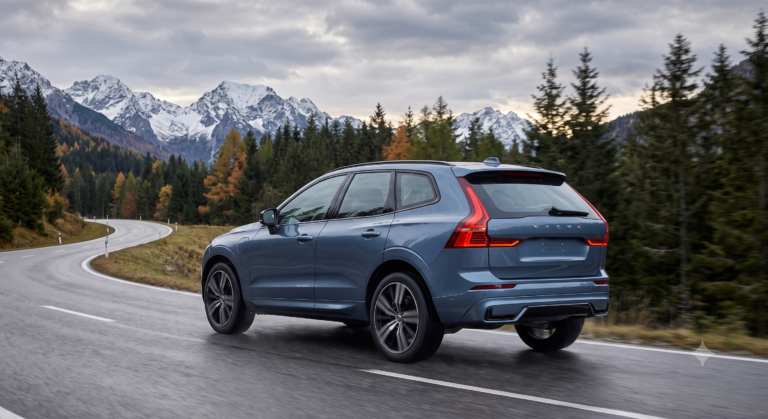
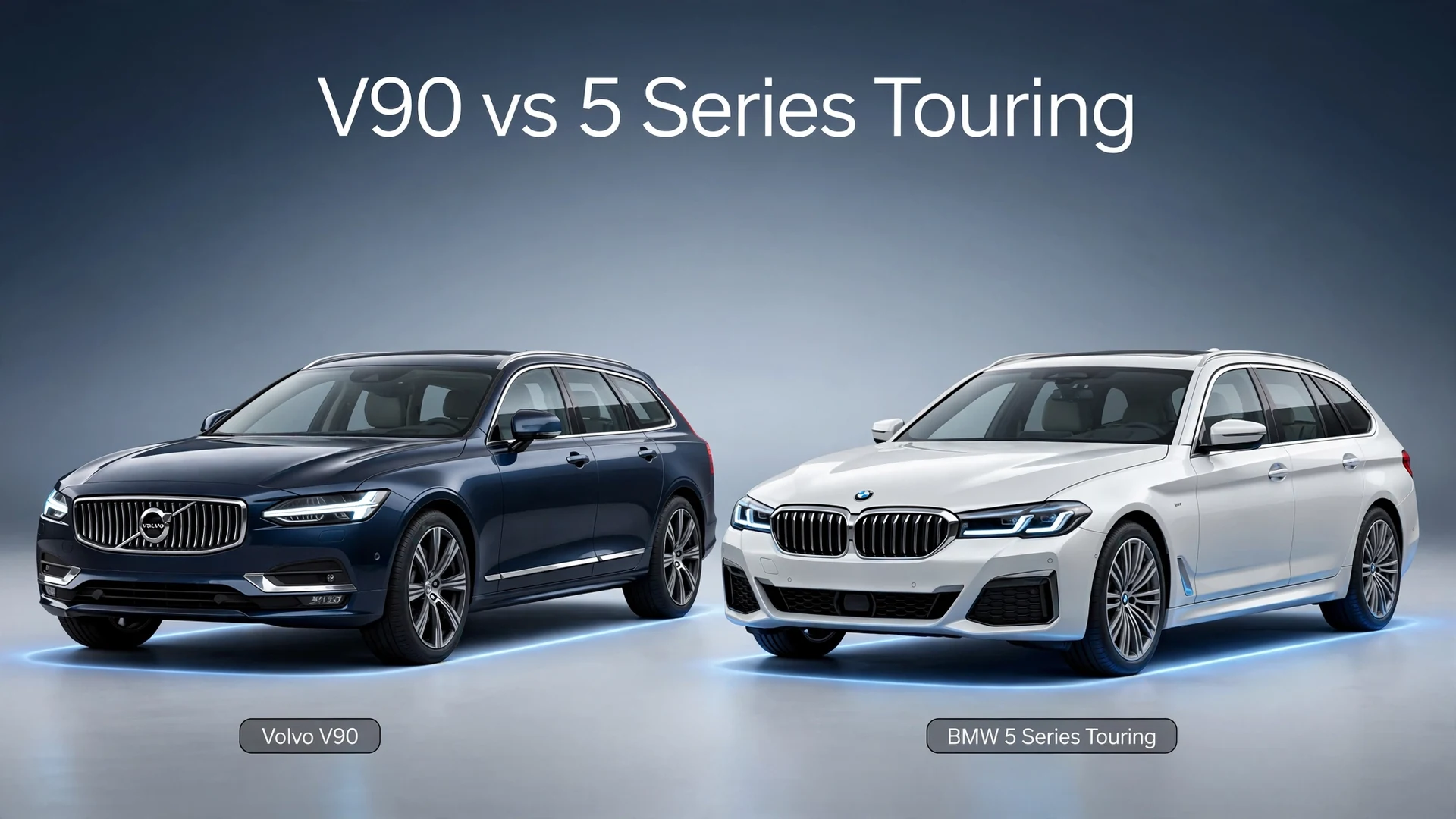
The full-size premium estate class has one defining rivalry: the Volvo V90 (2016–2025, SPA platform) versus the BMW 5 Series Touring G31 (2017–2024). Both are near-five metres of executive wagon; both do the diesel-long-distance thing brilliantly. The short answer: the V90 is the comfort-first, value-first choice — cheaper used, quieter, with standard safety kit BMW charged thousands for — while the 5 Series Touring is the driver’s car, with the better chassis, the better gearbox, and a boot that swallows 1,700 litres. If you tow, note this early: the V90 is rated to 2,200 kg braked, the BMW to 2,000 kg.
- Diesels: V90 D5 — 235 hp, 480 Nm, 0–62 in 7.2 s, 57.6 mpg claimed; BMW 520d — 190 hp, 400 Nm, 0–60 in 7.8 s, 65.6 mpg claimed. The Volvo is quicker and stronger; the BMW is thriftier.
- Petrols: V90 T6 — 310 hp, 400 Nm, 0–62 in 6.1 s; BMW 530i — 252 hp, 540i — 340 hp with the creamy straight-six.
- Boots: G31 holds 570 litres seats-up and 1,700 folded; V90 holds 560 and 1,526 — the BMW’s load bay is the more useful shape.
- Towing: V90 wins at 2,200 kg braked (Cross Country 2,500 kg) vs the BMW’s 2,000 kg.
- Used prices: like-for-like, the V90 typically costs less than the equivalent G31 — the BMW’s badge tax is real.
The Diesel Head-to-Head: D5 vs 520d
Diesel is still the engine of choice for big estates on the used market, and here the two cars’ philosophies show. The V90 D5 uses Volvo’s 2.0-litre twin-turbo Drive-E four with 235 hp and 480 Nm — strong, refined, and quick: 0–62 mph in 7.2 seconds with a claimed 57.6 mpg. It’s standard with all-wheel drive and an 8-speed automatic, and it tows 2,200 kg braked.
The BMW 520d counters with the 2.0-litre B47 four: 190 hp, 400 Nm, 0–60 in 7.8 seconds, and a claimed 65.6 mpg — meaningfully thriftier on paper. Drive them back to back and the difference is character: the D5 surges harder and sounds less strained when loaded; the 520d is smoother at a cruise and sips less fuel. Neither engine is short of real-world pace, and both will return high-40s mpg on a long run in the real world. But know the reliability footnotes: the Drive-E diesel has EGR-cooler issues (there was a large recall campaign) and can suffer DPF blockages on short-trip duty; the B47’s timing chain lives at the back of the engine — a chain job is engine-out and expensive, so listen for rattle on a cold start.
| Engine | Power / torque | 0–62/60 mph | Claimed economy | Braked tow |
|---|---|---|---|---|
| V90 D5 AWD | 235 hp / 480 Nm | 7.2 s | 57.6 mpg | 2,200 kg |
| BMW 520d Touring | 190 hp / 400 Nm | 7.8 s | 65.6 mpg | 2,000 kg |
| V90 T6 AWD | 310 hp / 400 Nm | 6.1 s | ~34 mpg | 2,200 kg |
| BMW 530d xDrive Touring | 265 hp / 620 Nm | ~5.9 s | ~50 mpg | 2,000 kg |
| BMW 530i Touring | 252 hp / 350 Nm | ~6.5 s | ~44 mpg | 2,000 kg |
| BMW 540i Touring | 340 hp / 450 Nm | ~5.1 s | ~40 mpg | 2,000 kg |
Petrol Power: T6 vs 530i and 540i
If you don’t do the miles for a diesel, the petrols are both excellent. The V90 T6 pairs a supercharged-and-turbocharged 2.0 with 310 hp and 400 Nm, all-wheel drive and a 6.1-second 0–62 time — the fastest V90 you could buy this side of the T8 hybrid (316 hp petrol + electric for 390 hp combined). BMW’s answer is the 530i (252 hp 2.0 turbo) and the glorious 540i (340 hp 3.0 straight-six, ~5.1 s 0–62), both rear-drive unless you find xDrive.
The honest assessment: the 540i is the connoisseur’s pick — smoother, sweeter-sounding, and paired with the ZF 8-speed, which remains the benchmark automatic. The T6 is faster than the 530i and cheaper used, but its four-cylinder can’t match the six’s refinement, and it’s thirsty — expect low-30s mpg at best. The T8 twin-engine is worth a mention for company-car refugees: 390 hp, ~30 miles of electric range, and low BIK when new — but buy used with a battery-health check and eyes-open about hybrid complexity.
Practicality and Towing
The numbers look close — V90: 560 litres seats-up, 1,526 folded; G31: 570 litres, 1,700 folded — but the shapes differ. The BMW’s boot is boxier and its 40:20:40 split with remote release is the more thoughtful system; the V90’s sloping tailgate and high load lip cost it usability, and its 1,526-litre maximum is genuinely small for the class (an E-Class estate does 1,820). Both get self-levelling rear air suspension as standard — a real asset for towing — and both offer powered tailgates and hands-free opening on higher trims.
Towing is the V90’s clear win: 2,200 kg braked across the range (2,500 kg on the Cross Country) against the BMW’s 2,000 kg. For caravanners with a heavy twin-axle van, that 200 kg is the difference between legal and not. Both are stable, heavy tow cars with excellent trailer-stability electronics — the BMW’s rear-drive balance and the Volvo’s Pilot Assist both earn praise — but check the towbar electrics and rear suspension on any used example that’s been worked hard.
| Practicality | Volvo V90 | BMW 5 Series Touring (G31) |
|---|---|---|
| Length / wheelbase | 4,936 mm / 2,941 mm | 4,942 mm / 2,975 mm |
| Boot seats up | 560 L | 570 L |
| Boot seats folded | 1,526 L | 1,700 L |
| Max braked towing | 2,200 kg (CC: 2,500 kg) | 2,000 kg |
| Rear suspension | Self-levelling air (standard) | Self-levelling air (standard) |
| Rear seat split | 60:40 | 40:20:40 |
Running Costs and Reliability
Servicing costs favour neither and punish both: these are £50k cars new, with £50k-car parts prices. Expect major services around £400–£600 at a specialist, less at an independent. The Volvo’s Drive-E engines need their EGR recall verified (check with a dealer by VIN), and the D5/D4’s 2.0 diesel can clog DPFs on short journeys — buy diesel only if you do regular long runs. The BMW’s B47 diesel is fundamentally strong but chain-rattle on cold start is a walk-away sign; the B58 six in the 540i is one of BMW’s most reliable modern engines and a genuine long-term keeper. Both automatics (Aisin 8-speed in the Volvo, ZF 8HP in the BMW) are durable with fluid changes every 60,000–80,000 miles — most owners never do them, so a serviced box is a real selling point and worth paying a small premium for.
Electrics: the V90’s Sensus system can freeze (software updates fix most cases) and the powered tailgate struts wear; the G31’s iDrive is more reliable but the electric tailgate and soft-close doors are failure points, and the BMW’s run-flat tyres ride harshly and cost more to replace. Budget for a full set of quality non-run-flats if the ride bothers you — many owners make the switch. Insurance groups are similar; fuel is where the 520d’s 65.6 mpg claim earns its keep against the D5’s 57.6.
Which Spec to Buy
Verdict: Comfort and Value vs the Drive
Buy the V90 if you want the most car for the money: it’s quieter, rides better, tows more, comes with safety kit BMW charged extra for, and depreciates faster — which is your gain on the used market. The D5 is the sweet spot for most buyers.
Buy the 5 Series Touring if driving matters: the G31 is simply the better steer, the ZF 8-speed is the better gearbox, the boot is the more useful shape, and the 540i is an all-time great estate. You’ll pay more for the privilege, both at purchase and at the parts counter — but you’ll understand why every time you take the long way home. And on residuals, the BMW’s badge tax works in your favour at resale: G31s hold value better, narrowing the lifetime cost gap.
Sources
- Encycarpedia — Volvo V90 T6 AWD estate spec: 560–1,526 L boot, 4,936 mm length, 310 hp/400 Nm, 0–62 in 6.1 s.
- Practical Caravan — Used Volvo V90 (2016–) tow-car buyer: 560 L boot, D5 57.6 mpg, 2,200 kg towing.
- Fleet World — G31 5 Series Touring launch specs: 570–1,700 L boot, 40:20:40 split, self-levelling air suspension, 2,000 kg towing.
- BMW Group press (Czech attachment T0286613) — 530d Touring: 265 hp, 620 Nm, 2,000 kg braked towing, 1,740/1,815 kg unladen.
- FleetNews — BMW 5 Series Touring 520d first drive: 190 hp, 400 Nm, 0–60 in 7.8 s, 65.6 mpg.
Frequently Asked Questions
Which is bigger, the Volvo V90 or BMW 5 Series Touring boot?
The BMW: 570 litres seats-up and 1,700 litres folded, versus 560 and 1,526 litres for the V90. The G31’s boot is also boxier and has a more useful 40:20:40 split.
Which tows more, V90 or 5 Series Touring?
The V90: 2,200 kg braked across the range (2,500 kg on the Cross Country). The G31 5 Series Touring is rated to 2,000 kg braked.
Is the V90 D5 or BMW 520d more economical?
On paper, the 520d: 65.6 mpg claimed vs 57.6 mpg for the D5. In the real world both return high-40s mpg on a long run; the BMW’s advantage is real but smaller than the brochure suggests.
What goes wrong on a used V90?
Check the Drive-E diesel’s EGR recall status, DPF health on short-trip cars, Sensus infotainment freezes, and tailgate strut wear. The T6’s supercharger/turbo combo is complex — buy on full service history.
What goes wrong on a used G31 5 Series Touring?
Listen for timing-chain rattle on cold start (engine-out job on the B47 diesel), check the electric tailgate and iDrive, and inspect run-flats for uneven wear. The ZF 8-speed is excellent but benefits from fluid changes.
Which is the better used buy: V90 or 5 Series Touring?
The V90 D5 is the value pick — cheaper used, quieter, tows more. The 540i Touring is the enthusiast’s pick — the straight-six and the chassis make it the best-driving estate of its era. Choose comfort-and-value or driving-pleasure accordingly.