Volvo S60 Review: America’s Last Scandinavian Sedan — And a Used-Car Bargain

The Volvo S60 spent two decades as the thinking person’s alternative to the BMW 3 Series and Audi A4 — a safe, comfortable, quietly handsome sedan that reviewers praised but Americans kept walking past in favor of SUVs. Then Volvo killed the S60 in the United States after the 2025 model year, redirecting factory capacity to electric SUVs. That makes this a used-buying guide first and a review second — and honestly, that’s good news for you, because depreciation has turned a $36,000–$58,000 car into one of the better values in the used luxury sedan market.
- You can’t buy one new in the US: Volvo ended US S60 production in mid-2024, and 2025 was the last model year sold new here. The sedan continues in China and other global markets.
- Three generations exist; this guide focuses on the third generation (2019–2025, built in Ridgeville, South Carolina), with the second generation (2011–2018) covered as a budget alternative.
- The sweet spots are the 2022+ B5 (247 hp) for simplicity and the 2022+ Recharge T8 (455 hp, 41-mile EV range) for performance — the 2022 refresh added mild-hybrid assist and a much larger plug-in battery.
- Reliability is above average: RepairPal rates the S60 3.5 out of 5.0 (11th of 31 luxury midsize cars) at $750 average annual repair cost with low repair severity; J.D. Power scored the 2020 model 84/100.
- Check two recalls before buying: a 2025 battery-fire recall on 2020–2022 plug-in hybrids (R10312) and a 2021–2025 rearview-camera software recall — both must show as completed.
A Sedan’s Life, in Three Acts
Volvo has been selling the S60 for a quarter century, and the nameplate has lived three very different lives — built on three different continents.
The second generation (2011–2018) was built in Ghent, Belgium: the 3.0-liter turbo inline-six T6 (300 hp, 325 lb-ft; R-Design 325 hp), then Volvo’s Drive-E four-cylinders — 240-hp T5, twin-charged 302-hp T6, and Polestar variants (345 hp in 2015–2016, 362 hp in 2017–2018). The budget play — but early Drive-E cars have a known oil-consumption history, covered below.
The third generation (2019–2025) is the one to buy. It rides on Volvo’s SPA platform and was built exclusively for the world in Volvo’s first-ever US factory: the Ridgeville, South Carolina plant, which opened in the summer of 2018 with an annual capacity of 150,000 vehicles. The S60 rolled off that line until mid-2024, when Volvo retooled for the electric EX90.
Third-Generation Powertrains, Decoded
Volvo renamed its engines mid-run: T5 and T6 were the 2019–2021 names; B5 and B6 are the same basic engines with a 48-volt mild-hybrid system added for 2022. The plug-in hybrid T8 got a much bigger battery for 2022, taking EV range from 21 to 41 miles.
| Powertrain | Model years | Setup | Power | Drive | 0–60 mph |
|---|---|---|---|---|---|
| T5 | 2019–2021 | 2.0L turbo 4-cyl | 250 hp / 258 lb-ft | FWD | ~6.5 s |
| T6 | 2019–2021 | 2.0L turbo + supercharged 4-cyl | 316 hp / 295 lb-ft | AWD | ~5.2 s |
| T8 Twin Engine | 2019–2021 | 2.0L twin-charged 4-cyl + plug-in hybrid | 400 hp / 472 lb-ft | AWD (eAWD) | ~4.6 s |
| B5 | 2022–2025 | 2.0L turbo 4-cyl, 48V mild hybrid | 247 hp / 258 lb-ft | FWD (AWD avail.) | 6.4 s |
| B6 | 2022–2025 | 2.0L turbo + supercharged 4-cyl, 48V mild hybrid | 295 hp / 310 lb-ft | AWD | ~5.6 s |
| T8 Recharge | 2022–2025 | 2.0L turbo 4-cyl + bigger plug-in hybrid (18.8 kWh) | 455 hp / 523 lb-ft | AWD (eAWD) | 4.3 s |
Two things jump out. The T8’s jump from 400 to 455 horsepower for 2022 — plus EV range doubling from 21 to 41 miles — makes pre-2022 and post-2022 plug-in hybrids feel like different cars. And the B5 is barely less powerful than the T5 it replaced while being smoother and slightly more efficient: 23/34 mpg city/highway (FWD) or 22/33 (AWD).
What It Costs on the Used Market
A 2019 S60 started at $36,795 new; by 2024 the range stretched from roughly $42,000 (B5 Core) to about $58,550 (Recharge T8 Ultimate Black Edition). In 2026, typical asking ranges on major listing sites look like this:
Typical asking ranges on major US listing sites in 2026; individual cars vary with mileage, trim, and region.
A three-year-old B5 costs roughly what a new Honda Accord costs, and a used T8 Recharge undercuts a new Toyota Camry XSE while offering 455 horsepower and 41 miles of electric range. The S60’s below-average resale value, which hurt new-car buyers, is exactly what makes it a smart used buy.
How It Drives
Volvo sedans have always prioritized composure over theatrics, and this S60 is the best-driving expression of that philosophy the brand ever built. Light, accurate steering, a genuinely supple ride over broken pavement, and the segment’s quietest cabin at highway speed — this isn’t a BMW 3 Series rival in the sporting sense, but the car you buy to arrive relaxed.
The B5 is the honest powertrain: 247 horsepower is plenty for real-world driving, and the mild-hybrid system smooths stop-start transitions. The T6/B6 twin-charged cars add real urgency — the supercharger fills the low-end torque hole before the turbo wakes up. But the T8 rewrites the car’s character: 455 horsepower, 523 lb-ft, 4.3-second 0–60 pace, and the ability to run your entire commute on electricity.
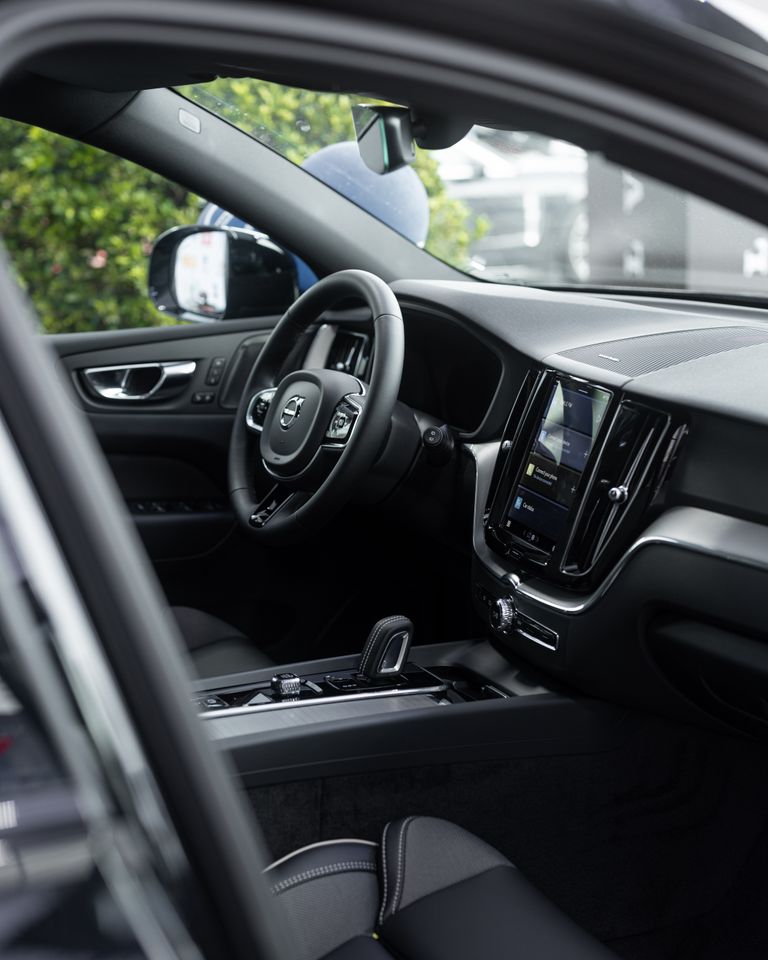
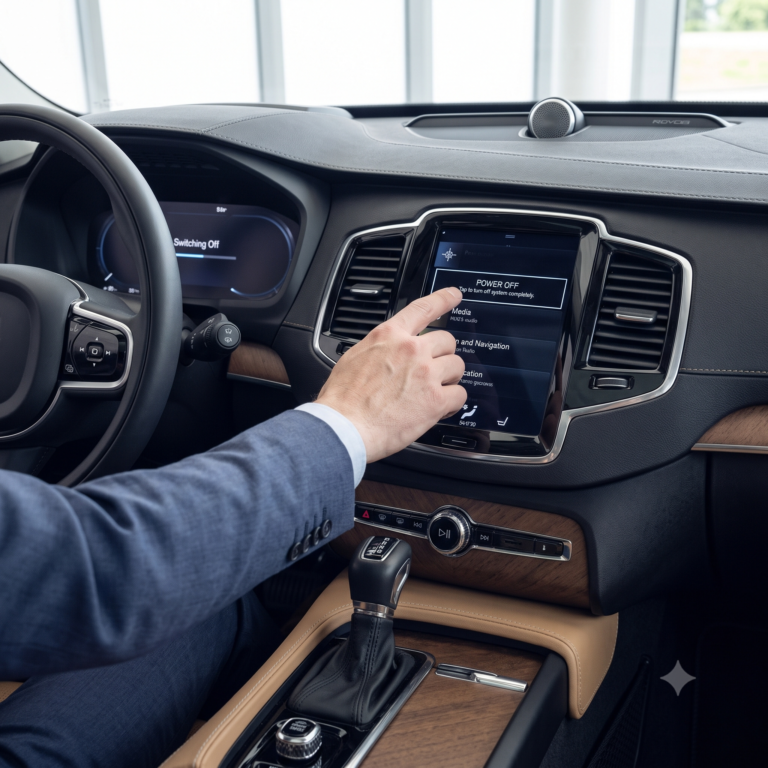
Inside, the S60 wears its Scandinavian minimalism well: a 9-inch portrait touchscreen, a 12.3-inch digital instrument cluster, and seats that are legitimately the best in the segment. The back seat is snug for six-footers and the trunk is merely adequate — the T8’s battery eats cargo space — but standard equipment was generous, with a panoramic moonroof and the full City Safety suite included from the start.
Reliability and Common Issues
This is where the used-S60 story gets encouraging. RepairPal gives the S60 a 3.5-out-of-5.0 reliability rating, ranking it 11th of 31 luxury midsize cars, with average annual repair costs of $750 and low repair severity. J.D. Power scored the 2020 S60 84 out of 100 for quality and reliability. UK warranty-claim data from MotorEasy rates the S60 better than average, with roughly two-thirds of claims involving suspension and brake components rather than powertrain failures.
The engine-specific notes that matter: the twin-charged T6/B6/T8 four-cylinders carry a supercharger in addition to the turbo, and supercharger failures — while described as relatively infrequent — are a more expensive fix than anything on the simple turbo-only B5. That’s a quiet argument for the B5 if long-term simplicity is your priority. On the second generation, the 2015–2016 Drive-E four-cylinders were part of an oil-consumption class action (piston-defect settlement with extended 8-year/100,000-mile coverage), and the 3.2-liter six (2009–2012) had its own piston-ring oil-consumption issue. The 3.0-liter turbo six T6 (2010–2016), by contrast, has one of the cleanest records in Volvo’s modern history.
Recalls — check both before buying. In 2025, Volvo recalled certain 2020–2022 plug-in hybrids over a high-voltage battery module that could short-circuit while parked and fully charged (recall R10312). NHTSA advised owners not to charge affected vehicles until dealers inspected and, if necessary, replaced the module. There’s also a rearview-camera software recall covering 2021–2025 models over a display glitch. Run the VIN through NHTSA’s free recall lookup and ask for documentation that the battery-module work was actually performed.
The 2026 Used-Buying Checklist
Shopping an S60 in 2026 is straightforward. Target 2022 and newer: the mild-hybrid B5 and the 455-hp/41-mile T8 are both meaningfully better than what they replaced, with real factory warranty runway left (4-year/50,000-mile basic; hybrid components 8 years/100,000 miles). Pick your powertrain by personality: B5 for the set-and-forget commuter, T8 Recharge for the enthusiast, B6 if you can find one. Verify both recalls via the VIN — especially R10312 on any plug-in hybrid. On 2019–2021 cars, check service records for oil-consumption history and confirm the Sensus software is current. Then get a pre-purchase inspection focused on suspension bushings and brakes.
Should You Buy One?
The Volvo S60’s American story ended not because the car failed, but because the market moved on — and that distinction is everything for a used buyer. You’re getting a genuinely premium sedan with best-in-class seats, top-tier safety equipment, and powertrains ranging from sensible to startling, at prices that reflect sedan depreciation rather than sedan quality. The B5 is the rational choice, the T8 Recharge the emotional one, both backed by above-average reliability data and a parts ecosystem that outlives the nameplate’s US presence. Run the VIN, check the two recalls, buy on records.
Frequently Asked Questions
Can you still buy a new Volvo S60 in the US?
No. Volvo ended US S60 production at its Ridgeville, South Carolina plant in mid-2024, and the 2025 model year was the last sold new in America. The S60 nameplate continues to be built and sold in China and other global markets — it is only gone from US showrooms.
What is the most reliable Volvo S60 engine?
Among third-generation cars, the B5 mild hybrid (2022–2025) has the simplest design and the strongest case for long-term reliability — no supercharger, no hybrid battery, just a turbocharged four-cylinder with 48-volt assist. Among second-generation cars, the 3.0-liter turbocharged inline-six T6 (2010–2016) has the cleanest long-term record. Avoid 2015–2016 Drive-E four-cylinders without documented oil-consumption repairs.
Is the Volvo S60 expensive to maintain?
Not by luxury-segment standards. RepairPal estimates average annual repair costs of $750 — average for the class — with a 3.5-out-of-5.0 reliability rating and low repair severity, meaning major failures are uncommon. Warranty-claim data shows most issues involve suspension and brake components rather than powertrain failures.
Which Volvo S60 model year is the best used buy?
The 2022 model year is the sweet spot: it brought the mild-hybrid B5/B6 powertrains and the much-improved T8 Recharge with 455 hp and 41 miles of electric range, at prices that have now depreciated into the mid-$20,000s. On any 2020–2022 plug-in hybrid, verify the 2025 battery-module recall (R10312) was completed first.
Was the Volvo S60 built in the USA?
Yes — the third-generation S60 (2019–2025) was built at Volvo’s Ridgeville, South Carolina plant, which opened in the summer of 2018 as Volvo’s first-ever US manufacturing facility. It was the only Volvo model built exclusively in America. Second-generation cars (2011–2018) were built in Ghent, Belgium.