What Infotainment System Does the Volvo XC90 Have?

Sit in a 2016 XC90 and a 2024 XC90, and you’d swear they’re running completely different operating systems — because in a very real sense, they are.
This guide is compiled from Volvo’s official product documentation and recent infotainment update announcements, so it reflects what’s actually installed in each generation, not a single blanket answer.
TL;DR
- Every XC90 since 2015 uses a version of Sensus, Volvo’s touchscreen infotainment platform.
- Starting around 2022–2023, newer XC90s switched to Google built-in, running Android Automotive OS.
- A major software overhaul debuted with the 2025 XC90 and is being rolled out to many older Google-equipped models via free update.
- Sensus-equipped cars (roughly 2015–2022) are not eligible for the newer Google-based update.
- First-generation XC90s (2003–2014) predate all of this and use Volvo’s much older, simpler infotainment hardware.
Here’s the short answer: which infotainment system your XC90 has depends entirely on its model year — Sensus for roughly 2015 through 2022, Google built-in (Android Automotive OS) for around 2023 and newer, and a further-upgraded version of that same Google system on the 2025 XC90 and beyond.
Sensus: The System Most XC90 Owners Grew Up With
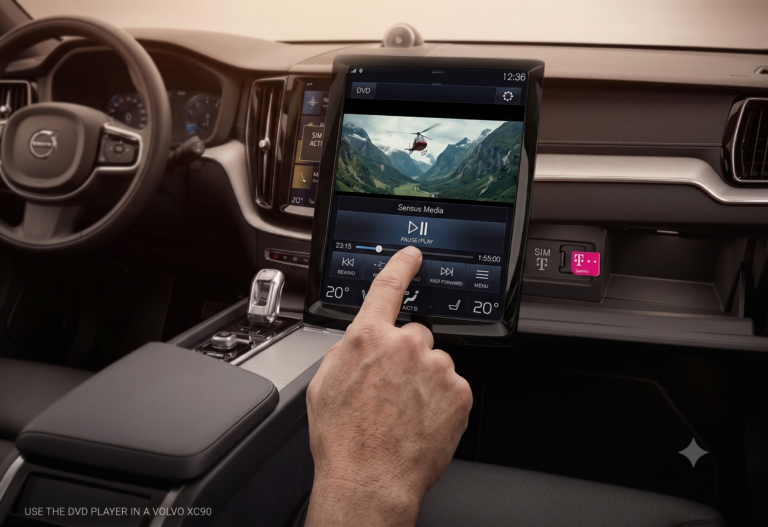
If your XC90 is a second-generation model from the mid-2010s to early 2020s, you almost certainly have Sensus. Since 2015, all Volvos have been equipped with the Sensus infotainment system, an ecosystem built around integrated navigation, media, and Volvo On Call connectivity.
Sensus was genuinely notable when it launched — a large portrait-oriented touchscreen was unusual for the segment at the time. But it also had real limitations that owners came to know well: Sensus debuted without a “home” button, which made it harder than it should have been to jump between different functions, and its overall feature set was more fixed and limited compared to what came later.
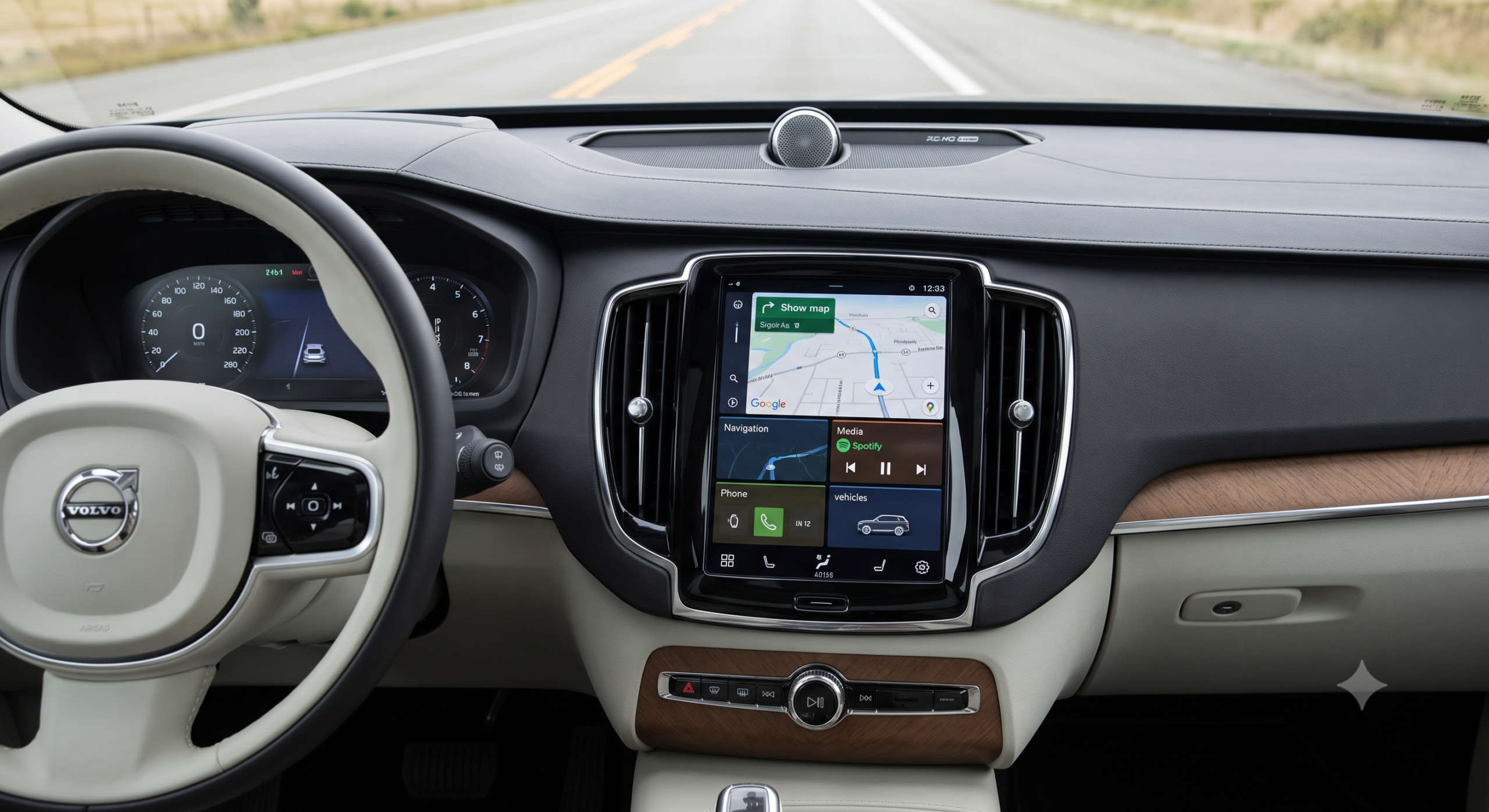
Quick Tip: If you’re not sure whether your XC90 has Sensus, look for a large vertical touchscreen without any Google apps or app store — that’s the clearest visual giveaway.
Google Built-In: The Android-Based Upgrade
Starting around the 2023 model year, Volvo shifted the XC90 to a fundamentally different platform: Google built-in, running on Android Automotive OS (AAOS) rather than Volvo’s own proprietary Sensus software.
This is a much bigger change than a simple UI refresh. Bold takeaway: the new AAOS system instead allows you to use your car like another smart device by downloading apps directly from the Google Play Store — audiobook apps, music streaming, even video apps for use while parked — something Sensus never supported.
With Google built-in, you also get a real choice of navigation software rather than being locked into one system — Google Maps is built in natively, and Apple CarPlay users can still bring their own navigation preference through their phone.
The 2025 XC90 and the Newest Software Update
This is the most recent chapter, and it affects far more cars than just the newest ones. Volvo debuted a heavily reworked infotainment interface with its EX90 and EX30 electric models, and that same experience made its way to the 2025 (and 2025.5) XC90, including a larger 11.2-inch center screen.
What makes this notable is that Volvo isn’t keeping the update exclusive to brand-new cars. The company is porting the new interface back to existing Google built-in models built as far back as 2020 through a free over-the-air update — though as of late 2025, that broader rollout had been delayed and was expected to reach eligible vehicles in early the following year.
Expert Insight: “Eligible” is the key word here — this update only applies to XC90s that already have the Google built-in system. If your car runs Sensus, this specific upgrade simply isn’t coming to it, regardless of how new the car otherwise is.
Comparison Table: XC90 Infotainment by Era
| System | Approx. Years | Key Trait | App Store? |
|---|---|---|---|
| Pre-Sensus (first-gen) | 2003–2014 | Basic screen, CD-based nav on some trims | No |
| Sensus | ~2015–2022 | Large touchscreen, proprietary software, no home button | No |
| Google built-in (AAOS) | ~2023–2024 | Android Automotive OS, native Google Maps/Play Store | Yes |
| Volvo Car UX (updated Google built-in) | 2025+ (rolling out to eligible older models) | Faster, fewer taps, redesigned home screen | Yes |
The takeaway: the single biggest dividing line for functionality isn’t the model year alone — it’s whether your XC90 has Sensus or Google built-in, since only the Google-based cars are eligible for ongoing software improvements.
Real-World Scenario: Shopping for a Used XC90
Say you’re comparing a 2021 XC90 and a 2023 XC90 at a similar price point. On paper they might look like the same car with a couple of years’ difference, but the infotainment experience is genuinely different generations of technology — one owner discovered exactly this after buying a 2020 XC90 and learning from dealership staff that it wasn’t eligible for the newer Google-based update everyone was talking about.
If app access, Google Maps integration, or long-term software support matters to you, it’s worth confirming which system a used XC90 actually has rather than assuming based on how recent the model year sounds.
Pros & Cons by Owner Type
The Sensus Owner
- Pros: Simple, stable, purpose-built for core functions like navigation and media
- Cons: No app store, no home button, and permanently excluded from the newer Google-based software updates
The Google Built-In Owner
- Pros: Access to the Play Store, native Google Maps, and eligibility for Volvo’s ongoing software improvements
- Cons: Some owners have reported sluggish performance tied to older, less powerful processors compared to the newest hardware
The Latest-Generation Buyer (2025+)
- Pros: Fastest, most refined version of the interface, with a larger screen and fewer taps to reach common features
- Cons: A meaningfully higher purchase price compared to shopping used
Alternatives Worth Considering
Aftermarket head unit upgrade (Sensus cars) — choose this if you own a Sensus-equipped XC90 and want app-store functionality Volvo won’t be adding natively; several owners report solid results from aftermarket Android-based units, though installation takes real effort.
Wait for the OTA update (eligible Google built-in cars) — choose this if your XC90 already has Google built-in and you’d rather get the newer interface for free through an update rather than buying a newer car.
FAQ
What infotainment system does my Volvo XC90 have? It depends on model year — Sensus for roughly 2015 through 2022, and Google built-in (Android Automotive OS) for around 2023 and newer.
Can I upgrade my Sensus XC90 to Google built-in? No — this isn’t a software update Volvo offers for Sensus cars; some owners pursue aftermarket Android head units instead, but that’s a hardware replacement, not an official upgrade.
Does the 2025 XC90 use a different system than 2023–2024 models? It uses an updated version of the same Google built-in platform, with a redesigned interface and larger screen — and that updated software is being rolled out to many older Google-equipped models too.
How do I know if my XC90 is eligible for the newest software update? If your car already has Google built-in (roughly 2020 and newer, depending on model), it may be eligible; Sensus-equipped cars are explicitly excluded from this particular update.
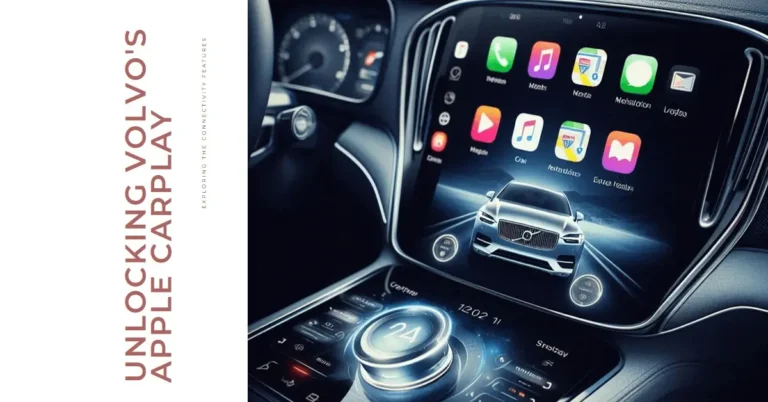
Does the Google built-in system support Apple CarPlay? Yes — Google built-in XC90s support Apple CarPlay alongside native Google Maps and Play Store access, giving you a choice of navigation and app ecosystems.
Key Takeaways
- Sensus powers most XC90s from roughly 2015 through 2022, with no app store or home button.
- Google built-in (Android Automotive OS) arrived around 2023, adding native Google Maps and Play Store access.
- The 2025 XC90 debuted a further-refined version of Google built-in, which is being extended to many older eligible models via free update.
- Sensus-equipped XC90s are permanently excluded from the newer Google-based software updates.
- First-generation XC90s (2003–2014) predate all of this and use much simpler, non-touchscreen-based systems.
Next Step
If you’re shopping used, ask specifically whether the XC90 has Sensus or Google built-in — it’s a bigger functional difference than the model year alone suggests, and it determines whether the car will keep getting software improvements.