Does the Volvo XC40 Require Premium Gas?

Standing at the pump wondering whether your Volvo XC40 needs the pricier fuel is a very normal moment of hesitation — and the short answer isn’t as simple as “yes” or “no.” Most XC40 engines are designed around premium fuel but won’t break if you use regular. I’ve researched fuel specs across the Volvo lineup for years, and the XC40’s requirements actually vary by engine and even by market, which is where a lot of the online confusion comes from.
TL;DR
- For most U.S.-spec XC40s (B4, B5 engines), Volvo recommends premium 91 octane but the engine can safely run on regular 87 without damage.
- Some Volvo support documentation for other markets (like Canada) lists premium as required, not just recommended, for B4, B5, B6, and T8 engines — so your specific market matters.
- The now-discontinued XC40 T4 engine is the clearest exception: it runs fine on regular 87 with no performance caveat mentioned.
- Using regular gas won’t void your warranty or damage the engine, but you may notice slightly reduced power and efficiency.
- The all-electric XC40 Recharge needs no gasoline at all.
The Core Answer
For the Volvo XC40 sold in the U.S., premium gas (91 octane or higher) is recommended, not strictly required. The turbocharged engine is tuned to perform best on higher octane, but Volvo’s own documentation confirms engine reliability isn’t affected if you use regular 87-octane fuel instead.
That said, this isn’t universal across every version of the car. Volvo’s Canadian support documentation for the XC40 mild hybrid states premium fuel is required for the B4, B5, B6, and T8 engines, with 93 octane recommended for best results. That’s a stricter stance than most U.S. dealer explanations, so the honest answer depends partly on your specific engine and region — check your fuel filler flap or owner’s manual for the definitive word on your car.
Pull-quote: “Your XC40 won’t stall or break on regular gas — it’ll just quietly give up a little pep and efficiency.”
Why Volvo Recommends (or Requires) Premium in the First Place
Turbocharged engines like the XC40’s are more sensitive to fuel quality than non-turbo engines. Turbochargers compress air before it enters the combustion chamber, raising pressure and heat — conditions where lower-octane fuel can ignite prematurely and cause “knocking.”
Premium fuel resists that early ignition, letting Volvo’s engineers calibrate ignition timing more aggressively for better power and efficiency. That’s true across the Volvo lineup, not just the XC40 — the XC60 and XC90 share similar turbocharged 2.0-liter architecture and carry the same general recommendation.
Quick Tip: Check the inside of your fuel filler flap. Volvo places a decal there on vehicles that officially require premium fuel — it’s the fastest way to settle the debate for your specific car.
What Actually Happens If You Use Regular Gas
Nothing catastrophic — but you’ll likely notice a difference. Multiple Volvo-affiliated sources confirm that using 87-octane regular fuel in an XC40 built for premium won’t cause engine damage or void your warranty.
What you may notice instead is a rougher-feeling ride under acceleration and a modest efficiency drop, since the engine’s computer may pull back ignition timing to protect against knock when it detects lower-octane fuel. For most daily commuting, that difference is subtle; for towing, hot weather, or high-altitude driving, it becomes more noticeable.
Here’s how the XC40’s engine options compare on fuel needs:
| Engine | Fuel Status (Typical U.S. Guidance) | Runs Fine on Regular? |
|---|---|---|
| T4 (discontinued) | Regular 87 octane is fine | Yes, no caveat |
| T5 / B5 | Premium 91 recommended | Yes, but with reduced performance |
| B6 | Premium 91 recommended (required per some markets) | Yes, with reduced performance |
| T8 Plug-In Hybrid | Premium 91 recommended for the gas engine | Yes, when gas engine is running |
| XC40 Recharge (EV) | No gasoline needed | N/A |
Pros & Cons by Reader Type
Daily commuter watching fuel costs
- ✅ Can safely use regular 87 octane without damaging the engine
- ✅ Savings add up over a year of city driving where performance loss is less noticeable
- ❌ Slightly reduced acceleration and efficiency versus running premium
Performance-minded XC40 owner
- ✅ Premium fuel unlocks the engine’s intended power and smoothness
- ✅ Better fuel economy over time, partially offsetting the higher price per gallon
- ❌ Premium costs more at every fill-up, which adds up on high-mileage driving
Used XC40 shopper unsure which engine they’re getting
- ✅ Fuel filler flap decal tells you definitively if premium is required on that specific car
- ✅ Older T4 models offer the most fuel flexibility
- ❌ Engine badges (B4, B5, B6, T5, T8) look similar and require double-checking before assuming fuel needs
Real-World Scenario
Picture a family road trip: an XC40 loaded with luggage, climbing through mountain passes in July heat. This is exactly the kind of “demanding driving condition” Volvo’s own documentation flags — high heat, altitude, and sustained load — as a scenario where switching to higher-octane fuel helps the engine maintain full power and traction.
For that same car on a flat daily commute to the office, the difference between 87 and 91 octane is far less likely to be something you’d notice behind the wheel.
Alternatives Worth Considering
- Choose the XC40 Recharge if you want to skip the octane debate entirely — it’s fully electric and needs no gasoline at all.
- Choose a used XC40 T4 if fuel flexibility matters most to you — it’s the one XC40 variant most consistently described as fine on regular gas without a performance caveat.
FAQ
Will using regular gas damage my Volvo XC40’s engine? No — Volvo’s own documentation confirms engine reliability isn’t affected by using 87-octane regular fuel in most U.S.-spec models.
Does premium gas actually improve XC40 performance? Yes — turbocharged engines like the XC40’s are tuned to deliver more power and smoother acceleration on higher-octane fuel.
Is premium fuel required or just recommended for the XC40? It depends on your market and engine — some regions’ official documentation lists it as required for certain engines, while most U.S. guidance calls it recommended but optional.
Does the XC40 Recharge need premium gas? No — it’s fully electric and doesn’t use gasoline at all.
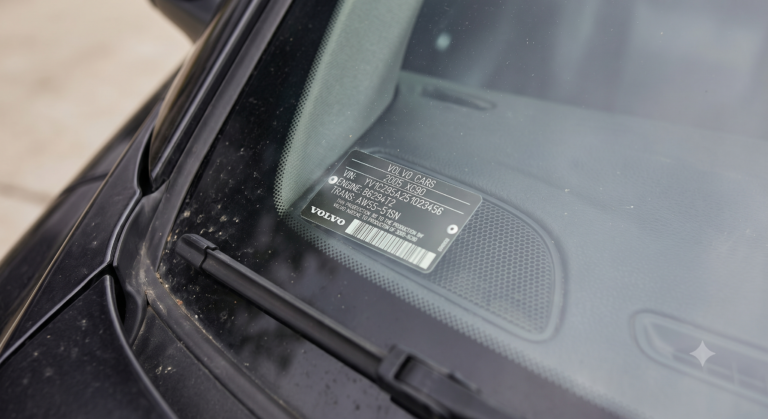
How do I know for sure which fuel my specific XC40 needs? Check the decal inside your fuel filler flap or consult your owner’s manual — that’s the definitive source for your exact model and engine.
Key Takeaways
- Most U.S.-spec XC40 engines recommend, but don’t strictly require, premium 91-octane gas.
- Some markets’ official Volvo documentation lists premium as required for certain engines, so guidance isn’t identical everywhere.
- Regular 87 octane won’t damage the engine or void your warranty — expect a minor dip in performance and efficiency instead.
- The discontinued T4 engine is the clearest exception, running fine on regular gas without caveats.
- Check your fuel filler flap decal for the definitive answer on your specific car.
Next Step
Check the decal inside your XC40’s fuel filler flap to confirm exactly what your specific engine requires.