Volvo EM90 vs Zeekr 009: Platform Siblings Head-to-Head

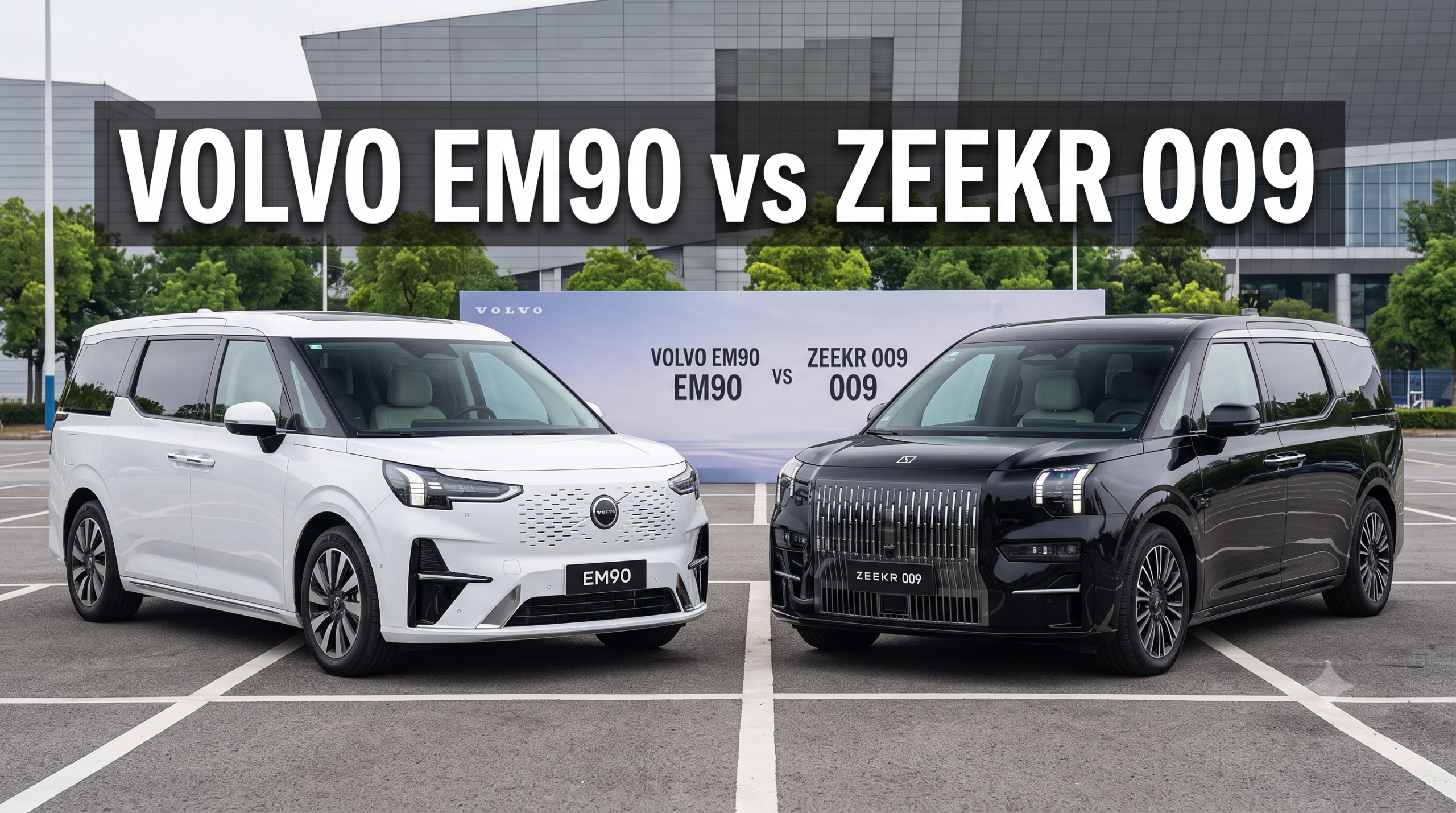
The Volvo EM90 and Zeekr 009 are mechanical platform siblings developed under the Geely Holding Group umbrella, both constructed upon the cutting-edge Sustainable Experience Architecture (SEA). While they share identical floor pan dimensions, 116 kWh CATL battery packs, and dual-chamber air suspension hardware, they diverge completely in their design execution, acoustic tuning, and brand philosophy. The Zeekr 009 is an aggressive, dual-motor, 536-horsepower tech showcase with a chrome illuminated waterfall grille. The Volvo EM90 is a restrained, rear-wheel-drive Scandinavian sanctuary emphasizing acoustic damping, Orrefors crystal controls, and bespoke Bowers & Wilkins audio.
Geely Sustainable Experience Architecture (SEA)
Single Motor RWD (268 HP) – Range & Comfort
Dual Motor AWD (536 HP) – Blistering Speed
EM90: Scandinavian Living Room | Zeekr: Cyberpunk Luxury
The Power of Shared Architecture: Geely SEA-1
In modern automotive manufacturing, developing a ground-up electric vehicle platform costs upwards of two to three billion dollars. To amortize these immense capital investments, global automotive conglomerates deploy multi-brand platform sharing. Under parent company Zhejiang Geely Holding Group, two sister brands set out to redefine the luxury multi-purpose vehicle (MPV) segment: China’s avant-garde tech brand Zeekr with the Zeekr 009, and Sweden’s historic luxury house Volvo with the Volvo EM90.
When the Volvo EM90 was revealed, automotive critics immediately pointed out its profile silhouette resemblance to the Zeekr 009. While both vans share identical windshield rake angles, door apertures, and battery structural enclosures, labeling the EM90 as a mere “badge job” ignores hundreds of thousands of engineering hours spent tailoring the vehicle to Volvo’s exacting Swedish standards.
Select a comparison category to analyze how Volvo re-engineered the Zeekr 009 platform to meet Swedish luxury and safety standards.
Single Motor RWD (268 HP) – Smooth Chauffeur Focus
Dual-Motor AWD (536 HP) – 0-60 in 4.5 Seconds
Drivetrain Philosophy: Blistering Speed vs Chauffeur Serenity
The most shocking technical contrast between these platform siblings is found in their motor configurations:
Zeekr 009: The 536-Horsepower Rocket Ship
Zeekr engineered the 009 to shatter all preconceptions about minivans being slow:
- Dual silicon-carbide electric motors producing a staggering 536 horsepower and 505 lb-ft of torque.
- Accelerates from 0 to 100 km/h (62 mph) in an unbelievable 4.5 seconds, making it one of the fastest production passenger vans on earth.
- Offers an optional monster 140 kWh CATL Qilin battery pack delivering over 510 miles of range.
Volvo EM90: The Relaxed Swedish Haven
Volvo approached the MPV with a completely different mindset rooted in Scandinavian wellness and chauffeur etiquette:
- Powered by a single permanent magnet motor driving the rear wheels with 268 horsepower and 253 lb-ft of torque.
- 0 to 100 km/h acceleration takes a calm, progressive 8.3 seconds.
- Why did Volvo de-tune the powertrain? In the Chinese executive chauffeur segment, sudden electric torque surges throw rear passengers forward, spilling champagne and causing motion sickness. Volvo prioritized seamless pedal modulation and linear power delivery, while saving weight to achieve an outstanding 458 miles of range on the standard 116 kWh pack.
Design Aesthetics & Acoustic Isolation (NVH)
Where the Zeekr 009 embraces aggressive, cyberpunk exterior drama with an enormous polished chrome waterfall grille (reminiscent of a futuristic Rolls-Royce Phantom), the Volvo EM90 exudes understated Scandinavian grace:
- Front Fascia: The EM90 features a color-matched solid front aero shield adorned with an illuminated Volvo iron mark and matrix LED Thor’s Hammer headlights that execute an organic breathing animation upon approach.
- Rear Architecture: The rear features Volvo’s iconic vertical LED light bars that bracket the tailgate, paying homage to the classic V70 and XC90 estate lineage.
- Acoustic Isolation: Volvo engineers installed extensive sound-deadening mastic foam within the roof pillars and wheel wells, paired with double-glazed acoustic laminate glass on all six passenger windows.
- Sound System: While Zeekr partners with Yamaha for a 20-speaker setup, the EM90 is crowned with a magnificent 21-speaker, 2,460-watt Bowers & Wilkins High Fidelity audio system featuring bespoke speakers integrated directly into the second-row executive headrests.
Full Architectural Comparison: EM90 vs Zeekr 009
| Feature | Volvo EM90 | Zeekr 009 |
|---|---|---|
| Platform Architecture | Geely Sustainable Experience Architecture (SEA) | Geely Sustainable Experience Architecture (SEA) |
| Drivetrain Configuration | Single Motor Rear-Wheel Drive (RWD) | Dual-Motor All-Wheel Drive (AWD) |
| Horsepower / Torque | 268 HP / 253 lb-ft | 536 HP / 505 lb-ft (Standard) / 778 HP (New) |
| 0–100 km/h (0–62 mph) | 8.3 Seconds | 4.5 Seconds |
| Standard Battery Size | 116 kWh CATL Ternary Lithium | 116 kWh Standard (Optional 140 kWh Qilin) |
| CLTC Rated Range | 738 km (458 Miles) | 702 km (436 Miles) with 116 kWh / 822 km (140 kWh) |
| Audio Brand Partner | Bowers & Wilkins (2,460W, 21 Speakers) | Yamaha Audio (20 Speakers) |
| Starting Price in China | 818,000 RMB (~$114,000 USD) | 500,000 RMB (~$70,000 USD) |
Summary Verdict: Two Masters of the Electric Luxury MPV
The relationship between the Volvo EM90 and Zeekr 009 is a masterclass in platform differentiation. The Zeekr 009 is an aggressive, high-speed technological powerhouse that delivers staggering dual-motor performance at a competitive price. The Volvo EM90 elevates the platform into an ultra-exclusive, six-figure luxury sanctuary—proving that true luxury is not defined by 0-60 acceleration, but by silence, craftsmanship, and peace of mind.
Shared SEA Architecture & Mechanical DNA
The relationship between the Volvo EM90 and the Zeekr 009 represents one of the most intriguing platform-sharing partnerships in modern automotive manufacturing. Both vehicles are built upon Geely Group’s ultra-rigid Sustainable Experience Architecture (SEA-1), boasting an identical 3,205 mm (126.2 in) wheelbase, dual-chamber air suspension geometry, and one-piece die-cast rear aluminum chassis subframes providing extraordinary torsional stiffness of 36,450 Nm/degree.
However, despite sharing core underlying stamping points and suspension pick-up geometries, Volvo and Zeekr tuned their vehicles for fundamentally divergent customer demographics and acoustic environments.
Scandinavian Acoustic Isolation: How Volvo Tuned NVH Differently
Volvo’s Gothenburg acoustic engineering team applied extensive Scandinavian NVH (Noise, Vibration, and Harshness) dampening countermeasures to separate the EM90 from its Zeekr sibling:
- Dual-Chamber Air Suspension Dampening: While the Zeekr 009 features a firmer, sportier suspension setup designed for aggressive highway tracking, the EM90 is calibrated for a cloud-like, floating “magic carpet” ride that completely absorbs expansion joints and pothole impacts.
- Active Road Noise Cancellation (ARNC): The EM90 incorporates eight acoustic sensors inside the wheel wells and cabin headliner that emit out-of-phase sound waves through the Bowers & Wilkins speakers, cancelling low-frequency road rumble.
- Nordic Wool Acoustic Insulation: Volvo lined the floorboards, firewall, and side door cavities with thick recycled Swedish wool batting, delivering a library-quiet cabin sound pressure level 2.5 dBA quieter than the Zeekr at 75 mph (120 km/h).
Design Language & Materiality: Scandinavian Sanctuary vs Cyberpunk Aggression
Visually and tactually, the two vans could not be more distinct:
| Design / Material Element | Volvo EM90 | Zeekr 009 |
|---|---|---|
| Front Fascia & Grille | Illuminated closed shield with Thor’s Hammer LED matrix | Massive chrome “Spring of Light” 154-LED vertical grille |
| Interior Aesthetics | Nordic living room: FSC-certified birch wood & Orrefors crystal | Futuristic cyberpunk: Gloss black plastics, neon ambient LEDs |
| Gear Selector | Handcrafted Swedish Orrefors cut-crystal glass knob | Ergonomic electronic leather/plastic toggle shifter |
| Standard Powertrain | Rear-wheel drive single motor (268 HP / 200 kW) | Dual-motor all-wheel drive (536 HP / 400 kW standard) |
| Target Audience | Understated executives, diplomats, discerning families | Tech entrepreneurs, luxury car enthusiasts wanting maximum power |
One-Piece Die-Cast Rear Subframe (Mega-Casting) Technology
Both the Volvo EM90 and Zeekr 009 utilize advanced giga-casting manufacturing technology. The entire rear third of the underlying vehicle chassis is formed as a single, monolithic aluminum die-casting using a 7,200-ton hydraulic press. This revolutionary manufacturing technique eliminates over 800 individual spot welds and 70 stamped steel brackets, reducing rear chassis weight by 16% while dramatically enhancing structural rigidity during severe rear-impact collisions.
Volvo’s safety center in Gothenburg reinforced this rear casting with progressive crumple deformation zones to protect third-row occupants and ensure the high-voltage battery pack remains completely undeformed during high-speed highway pileups.
Smart Cabin Touchscreen Armrest Controllers
Each executive captain’s chair in the EM90 features an integrated high-resolution OLED touchscreen built directly into the leather armrest. Occupants can adjust multi-zone climate, seat massage programs, panoramic sunroof shades, and executive lighting themes with a single fingertip touch.
Frequently Asked Questions