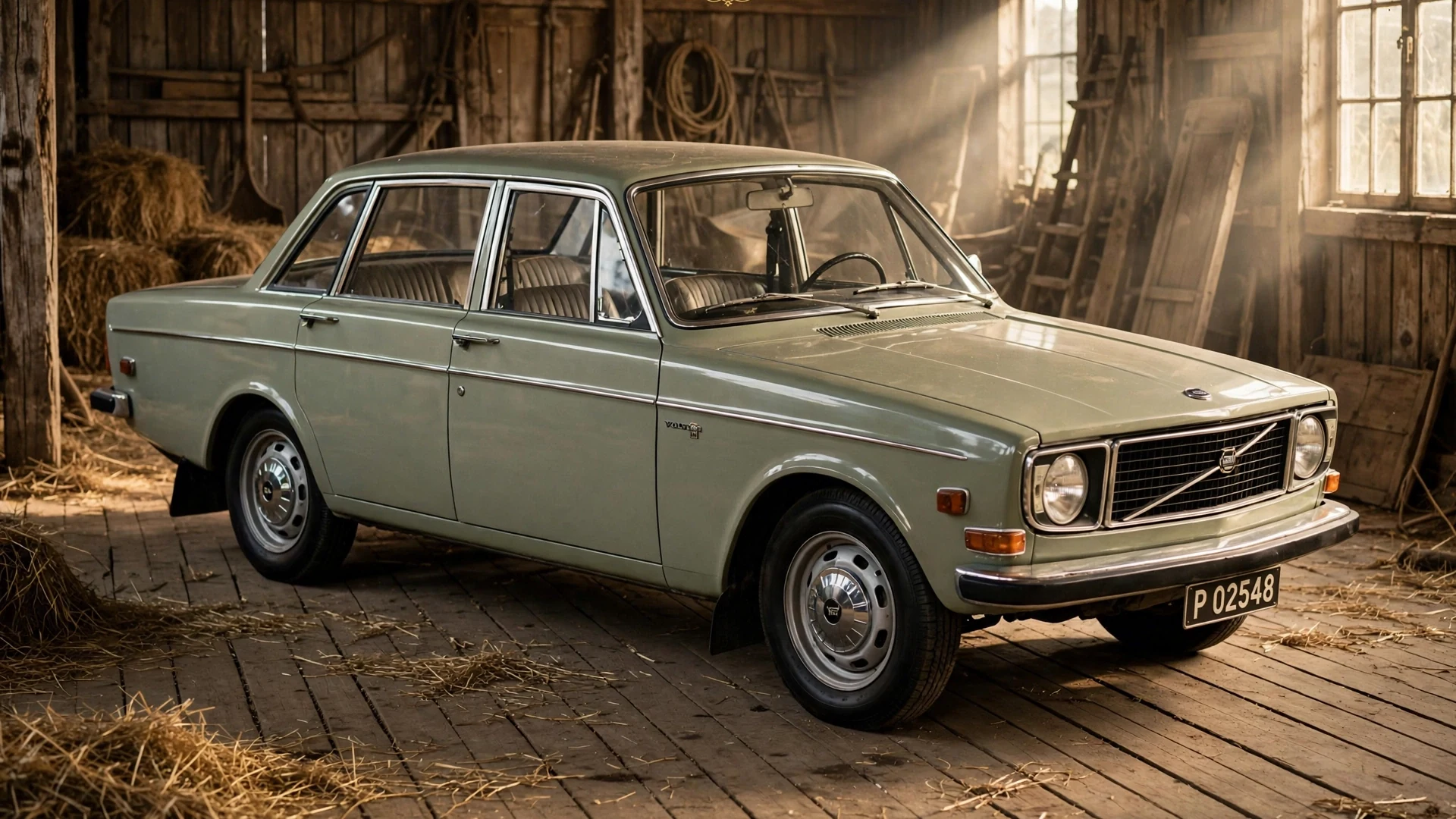
Volvo 140 Series Review (1966–1974): Specs, History & 2026 Buying Guide

Before the 240 became the default image of a Volvo, the car that actually put the company on the world map was the 140 series. Between 1966 and 1974, Volvo built 1,251,371 of them — the 142 coupe, 144 sedan and 145 wagon — making the 140 the company’s first million seller and the financial foundation for everything that followed. It also smuggled in safety engineering that the industry would spend the next two decades catching up with: dual-circuit disc brakes, crumple zones, a split steering column and a three-way brake-circuit split that kept most of your stopping power even if a line failed.
This is the full story: what the numbers on the badge mean, how the engines evolved from the B18 to fuel-injected B20, why 1974 cars look different from 1966 cars, and what to check if you are thinking of buying one in 2026.
Key Takeaways
- 1,251,371 built (1966–1974): the 140 series was Volvo’s first million seller and funded its rise to a global manufacturer.
- Three body styles, one chassis: 142 (2-door), 144 (4-door sedan), 145 (wagon) — plus the 145 Express van and the six-cylinder 164 sibling.
- Engines: 1.8L B18 (75–96 hp) gave way to the 2.0L B20 in 1969 (82–100 hp), with Bosch D-Jetronic fuel injection adding a 120 hp option from 1971.
- Safety pioneer: disc brakes front and rear, dual-circuit system with three-way split, crumple zones, split steering column, headrests and seat-belt reminders — most of it standard years before rivals.
- Buying in 2026: rust is the dealbreaker — sills, wheel arches, floors and window channels. Mechanical parts are mostly available; trim and body panels are not.
Cracking the Code: What 142, 144 and 145 Actually Mean
Volvo’s 1960s naming system was gloriously literal, and it is the key to the whole range. Three digits: the first is the series (1 = the 100 series), the second is the number of cylinders (4 = four-cylinder), and the third is the number of doors. So:
- 142 — 100 series, 4 cylinders, 2 doors (the coupe, launched 1967)
- 144 — 100 series, 4 cylinders, 4 doors (the sedan that started it all in 1966)
- 145 — 100 series, 4 cylinders, 5 doors (the wagon, from 1968)
The same logic explains the oddballs. The 164, launched in 1969, was the luxury sibling: same 100-series body stretched at the nose, 6 cylinders, 4 doors — a 3.0L inline-six B30, which is essentially a B20 with two extra cylinders. And the 145 Express (1970) was a tall-roof delivery-van version built for tradesmen and, famously, as specially-built taxis.
Timeline: Eight Years That Made Volvo
The 144’s launch on August 17, 1966, at Gothenburg’s Lorensberg Hotel was pure theater — Volvo craned the show car into the venue while the city was on alert during a manhunt — but the substance mattered more. Production started two days later, and the car was an instant hit in Scandinavia. The 142 coupe followed in 1967 and the 145 wagon in 1968, giving Volvo a complete family range for the first time.
1969 was the big mechanical year: the 1.8L B18 was replaced by the 2.0L B20, and the 164 arrived with its 3.0L six. The 1970 facelift brought a new grille and revised trim; the 145 Express van joined the lineup the same year. From the 1971 model year, Bosch D-Jetronic electronic fuel injection became available — first on the 142E two-door, then across the range — lifting output to 120 hp DIN. When production of the 142, 144 and 145 ended in the summer of 1974, 1,251,371 cars had rolled off the line, and the thoroughly reworked successor emerged as the 240 — which borrowed the 140’s chassis and went on to some 2.8 million cars.
Engines: From B18 to Fuel-Injected B20
All 140s used Volvo’s famously rugged pushrod inline-fours — iron-block, simple, and nearly indestructible with basic maintenance. Here is the full lineup:
| Engine | Years | Induction | Power (DIN) | Fitted to |
|---|---|---|---|---|
| B18A | 1966–1968 | Single carburettor | 75 hp | 144 (launch engine, from the Amazon) |
| B18B/D | 1966–1968 | Twin carburettors | 96 hp | Sportier 142/144 versions |
| B20A | 1969–1974 | Single carburettor | 82 hp | Base 142/144/145 |
| B20B | 1969–1974 | Twin carburettors | 100 hp | 142S/144S/145S |
| B20E | 1971–1974 | Bosch D-Jetronic injection | 120 hp | 142E/144E/145E (top models) |
The power story in one chart:
Why Engineers Still Talk About the 140’s Safety Kit
The 140 was not just a sales success; it was a rolling safety laboratory. Much of this arrived standard, years before competitors caught on:
- Dual-circuit disc brakes, front and rear — with twin hydraulic circuits at the front giving a three-way split, so a single circuit failure still left both front brakes and one rear brake working.
- Reducing valves to prevent wheel lockup under heavy braking — a solution Volvo used first.
- Crumple zones and a protective roll cage built into a chassis Volvo described as extremely resistant to twisting.
- Split steering column and a dashboard with a collision-protected frame.
- Headrests, retractable seat belts and seat-belt reminders added as standard equipment over the model run.
- The big energy-absorbing bumpers that became the 240’s trademark were previewed on the 1974 model-year 140s, having first appeared on Volvo’s VESC safety experiment vehicle.
This is the direct line to the 240’s reputation: the 240 was essentially this chassis, reworked and re-skinned, carrying the same 2,600 mm wheelbase Volvo had used since the PV444 of 1944.
Buying a 140 in 2026: Rust Decides Everything
The B18 and B20 engines will outlive their owners if maintained — the bottom ends are famously tough — but 140s rust, and they rust expensively. Enthusiast forums are blunt about it: bodywork is the money pit, and panels are increasingly hard to find. Check these areas first, in this order:
- Sills and jacking points — the classic 140 rot spot; poke, don’t just look.
- Wheel arches, front and rear — mud traps that hide corrosion until it is structural.
- Floor pans — lift the carpets; damp interiors have been quietly eating the floor for years.
- Window channels, especially the rear glass — rust here is a specialist repair, and replacement glass is getting scarce.
- Trunk floor and spare-wheel well — another documented weak point on 140s.
- Fuel tank and pickup — pre-1978-style tanks can develop rust holes in the internal feed pipes; check the fuel-level sender works too.
Mechanically, budget for the age-related items owners actually report: the fibre timing gear can let go with little warning; brake booster rebuilds run a few hundred dollars; heads eventually need guides and hardened valve seats to live happily on unleaded fuel; and D-Jetronic cars want their wiring and injector seals inspected. None of this is exotic — the 140 shares its mechanical DNA with the Amazon and early 240, so the knowledge base is deep — but price it in.
On parts: mechanical components are generally available through specialists and the 240 interchange helps enormously, but trim, lenses and body panels are expensive or simply unavailable new. A straight, complete car with tired paint is a better buy than a shiny one hiding filler. Market-wise, enthusiast forums put clean drivers in the mid four figures and genuinely immaculate examples well into five figures — the 145 wagon and 142 coupe tend to command the strongest money.
Volvo 140 Series FAQs
How many Volvo 140s were built?
1,251,371 cars — the 142, 144 and 145 combined — were built between 1966 and the summer of 1974, making the 140 series Volvo’s first million seller.
What is the difference between the 142, 144 and 145?
Same 100-series platform; the last digit is the door count. The 142 is the 2-door coupe, the 144 is the 4-door sedan, and the 145 is the 5-door wagon.
What engines did the Volvo 140 series use?
The 1.8L B18 (75 or 96 hp) from 1966 to 1968, then the 2.0L B20 (82 or 100 hp) from 1969. From 1971, Bosch D-Jetronic fuel injection offered 120 hp in the E models.
Is the Volvo 140 a good classic to buy in 2026?
Yes, with one big condition: buy on body condition, not mileage. Rust in sills, floors, arches and window channels is expensive to fix, while the B18/B20 mechanicals are simple and well supported by specialists.
What replaced the Volvo 140 series?
The Volvo 240, introduced in the summer of 1974. It was a thorough rework of the 140’s chassis — same 2,600 mm wheelbase — and went on to about 2.8 million cars over 19 years.